Archive
Early spring? Not for grapes, who like it warm
That the winter has been warmer than usual doesn’t surprise many people, but the degree to which it’s been warmer might. “Our average (daily) high is running about 5.5 degrees warmer than average,” said Horst Caspari, state viticulturist at the Orchard Mesa Research Station.
It’s not yet a big or long-term trend, since Caspari noted the previous year was cooler than average. But even with the warmer temperatures, it still hasn’t been warm enough long enough to cause grape vines to break dormancy and start sending out new shoots.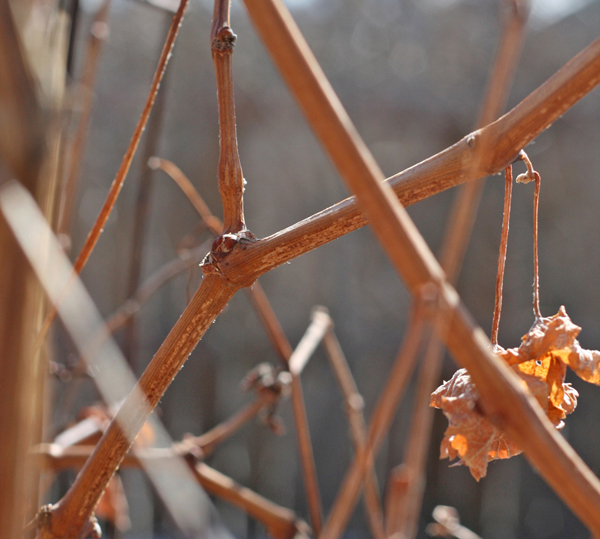
“We’ve seen this before and if we get two to three cold weeks in February everything will slip back,” he said. Those two weeks turned into one week, culminating in Sunday’s storm and by Tuesday temperatures again were edging back in the 40s.
According to Caspari, the magic temperature (magic in the way that plants start to respond) is 50 degrees, but it takes more than simply reaching 50 degrees to begin the processes of spring. Plants (and it differs with nearly every plant) need a certain number of growing degree days, when the 24-hour temperature average is 50 or above, to start their growth cycle.
Hitting 50 or 58, as it did briefly earlier this winter, isn’t enough to signal it’s spring, because the temperature still was dropping well below that threshold every evening. And even receiving two weeks of warm weather in January and February, with winter still ready to come roaring back, aren’t enough to break that winter’s sleep.
“A really warm day in March makes up for 15 warm days in January,” Caspari said. Meaning a plant will respond greater to a warm March spell than what pass for warm days in Janauary, when warm might mean touching 45 for an hour or two and then plunging back to single digits at night.
Now, with February entering its final week, spring or it’s thermographic equivalent might really be around the corner. “We don’t get real heat degree days until late February,” Caspari said, which means you can expect to see some action any day now.
If you’re really curious, you can figure growing degree days by taking the day’s high temperature, adding the low temperature and divide the result by two. Subtract the base temperature (50) and you get degree days.
How ever solid your math, grape growers have an added advantage over the orchardists since late-breaking grape buds aren’t as susceptible to early spring frosts. Late frosts, though, such as the one last May that damaged vines across the valley, are a distinct danger, which is why grape growers have invested in wind machines and frost alarms expect to get little sleep until well into May.
Climate trends are all the news and there is one being followed in the North Fork Valley. Caspari said grape growers there who a decade ago were growing pinot noir with ease now are struggling to get that notoriously fickle grape to mature.
“There’s been a few years when they’ve had extremely cold winters, early freezes and later springs,” Caspari said. “They started out with a few good years from 1996 to 2000 but pinot noir doesn’t grow well right now.”
During a conversation with Paonia winemaker Eames Peterson, who delights in making excellent pinot noirs, he mentioned the 2011 harvest was a bit rough. “It got cold and froze and I was forced to harvest in October, which for me is not really late, but it was late in the sense the grapes were just barely ripe enough,” said the founder and winemaker for Alfred Eames Cellars. “But they shut down and I couldn’t wait.”
Grape growers closer to the valley floor didn’t see the same cold as Peterson and he said it was because a breeze kept the cold air moving. Freezing causes grape vines to stop growing, cutting off the stream of nutrients to leaves and fruit, and grapes start to dehydrate on the vine.
“The fact the wind was blowing down there in the canyon saved them,” he said. “That sometimes happens here. If it hadn’t be blowing down there, it would have frozen them more than us.” Peterson said grapes were in short supply to the point where this year he won’t be making an estate reserve pinot noir.
Peterson said his last big harvest was 2009, when he made 1,700 cases of wine. He ranks that vintage as the best he’s made.

ExpressionEngine 1.6.9 – © Copyright 2003 – 2010 – EllisLab, Inc.
Script executed in 0.1494 seconds 18 SQL queries used
Build: 20100430
A little shift in power gives TTB another life
Questions over the fate of the TTB (the Alcohol and Tobacco Trade and Tax Bureau) have apparently been answered with this week’s release of the 2013 federal budget proposal. Word was out earlier this fall that the Obama Administration was considering eliminating the TTB in the 2013 federal budget as a way to save funds, rolling that agency’s duties into the FDA and the IRS (acronyms enough, you said?).
But it appears the TTB is alive and well, at least according to Wednesday’s The Gray Report, the newsworthy blog by W. Blake Gray, who happens to be in Portugal and enjoying every minute of it.
The idea of eliminating the TTb puzzled many onlookers, although at least one website urged the President to axe the TTB to save some $80 million. That’s not going to have much affect on a $15.4 trillion national debt but just like love, every little bit counts, right?
We’ll wait to see how the Republicans might respond, since they’ve been pushing for some budget savings while being loathe to admit anything the Dems do might be a good idea.
Ask any winemaker and he or she can talk at length on the bonding, licensing, and other regulations they have to follow in order get their product on your table (or on the store shelf, given the three-tier system). Trying to figure out the machinations of another agency, or finding that the new agency might even be bit anti-alcohol, as some claim the IRS is, would only lead to more confusion, more frustration and more delays (read that: cost).
The only change in the regs, says Gray, allows the IRS to investigate and prosecute tax code violations. And allow the TTB to continue its usual sterling job of approving wine labels in its bright-eyed and expeditious manner.
Earlier, the Lehrman Beverage Law site quoted Wine & Spirits Daily as saying “One of the biggest complaints last year was the TTB’s slow response time when it came to approving labels – a result of less funding by Obama and inevitable lay-offs. As a remedy, the TTB proposed shifting its duties more towards enforcement rather than label pre-approvals, but the industry fought it.”
Wine & Spirits goes on to say: “[I]t doesn’t seem likely that disbanding the TTB would save much money because theoretically it would require the same amount of people to complete the same functions now performed by the TTB, which ‘is pretty bare bones as it is.'”
Apparently the Obama bunch felt the same way since the new budget proposal doesn’t mention slashing the TTB. Now, about that tax code…
Wine prices may rise as ocean of bulk wine shrinks
Don’t be surprised to see wine prices increase this year, says the always entertaining and informative writer W. Blake Gray on his blog, The Gray Market Report.
Gray lists smaller vintages oin California, Italy and Spain as warning signs that the world’s ocean of wine has shrunk considerably over the past few years, forcing prices up as demand, particularly in the U.S., continues to grow.
Forget arguing over to what degree quality affects wine prices, he says.
“Pricing is all about supply and demand,'” Gray writes in his latest blog entry.
His argument makes sense: As stocks of bulk wines shrink, distributors will be harder pressed to satisfy the demand from consumers accustomed to finding California Cabs for $20.
Bulk wines include not only the lesser-quality juice commonly used for blending but also situations where top wineries have produced more wine than they can sell and market that surplus to small-company labels or to mass-market distributors (think Bronco Wine Company’s popular “Two-Buck Chuck”) for private label bottling.
Bulk-wine volumes in California (those being sold by vintners to other vinteners) reached 15 million to 20 million gallons since 2000, according to a report in the Jan. 19 issue of North Bay Business Journal out of Sacramento, Cal.
The story, citing Brian Clements and Marc Cuneo of Novato (Cal.)-based Turrentine Brokerage at the 21st annual Sonoma County Winegrape Commission Dollars & Sense seminar, said aggressive marketing efforts by wineries to reduce that inventory, along with the three successive smaller harvests, “have siphoned the bulk-wine inventory down to 4 million gallons now.”
The varietal most affected, the grape brokers said, has been cabernet sauvignon.
“This is the first time I’ve been involved in a market flip that was not about sales,” Mr. Clements said. “This flip has been about inventory.”
“If wine sales continue as they have, we can look for a very deep shortage of cab in the North Coast,” he said.
Clements also warned of a potential shortage of chardonnay, which continues to be the favorite white wine of American consumers and, according to Reuters, the No. 1 white wine in the world.
Stories from Italy remind us that winter is everywhere
It’s largely been a snow-free winter in the high-desert valleys of western Colorado where I spend most of my time. An inch, maybe two at most, of new snow has fallen during any one storm since a larger snow in October, one that remains in memory only. That’s OK if you’re not happy about shoveling snow but it means concern for our summer water supplies, since snowmelt provides water for domestic use as well as irrigation for animals and the many vines and fruit trees across the region.
Even the mountains have seen a dry winter, although some recent storms, perhaps thanks to all sorts of efforts to appease the snow gods, have revived the hopes and spirits of skiers and snowboarders and the resort who cater to those crowds. I sat down last night to read the latest entries from Alfonso Cevola (aka The Italian Wine Guy) on his recent travels through the Langhe and Barbaresco region of Italy’s Piemonte. It’s always fascinating to gain insights into a wine region that otherwise takes years to know, and Alfonso shares his wisdom and experience freely and without dread.
Plus, his art-quality photos reflect the quiet chill that winter brings to northern Italy, and the fog-shrouded vineyards seem like another world from the sun-drenched views and emerald vineyards we see on our spring and summer forays into Italy’s wine country.
Oh, wait, here are my resolutions
Surely it’s not too late for a few New Year’s resolutions? It’s seems so soon to be a few days into the New Year. I was busy trying to find last year’s list, just to see what I missed out on procrastinating about. Just say I’m just well-practiced in putting off making (and breaking) those pesky resolutions. So here goes, a partial salute to the New Year and a look ahead to months of swirling, sipping and scribbling.
Taste more Colorado wines – Notice I specifically didn’t say “drink” more Colorado wines.
There are many in-state wineries whose tasting rooms I’ve yet to sully, and this year I plan to sully as many as possible.
That said, there also are some (many? few?) Colorado wineries who wines aren’t worth drinking, sad to say.Over-reaching, under-ripe, too many chemicals and too few years’ experience all add up to undrinkable. I’ll taste as many as possible and steer away from those who deserve steering away from.
Find the hidden gems – Sounds great, too bad it’s already taken by Colorado Ski Country USA.
Those wise marketing folks at Ski Country know a winner when they market it and I hereby resolve to let you in on the better-kept secrets of Colorado winemaking.
You won’t ready anything about the plonk (see No. 1) but each year I find some gems at the Colorado Mountain Winefest.This year, I’ll take you with me when we swing around the state.
Encourage wine drinkers to use better glassware – Sure, you can use a jelly jar for drinking wines, but then you could drive a Yugo to the Indianapolis 500, too. Good stemware, the kind that allows you to hold, swirl and sniff, isn’t expensive and lets you enjoy the flavors, bouquets and beauty of the wine.
If you think it’s chi-chi or stuck-up or fancified, that’s OK, too. Some day you’ll be served a nice wine in a decent glass and you’ll wonder what took you so long.
Drink more sparkling wine – Like, this might be possible only if they add a few days to the calendar. Don’t save sparkling wines only for “special occasions.” There are some fun sparklers out there costing under $10 and some killers in the $20 and under range.
Besides, haven’t you noticed how opening a sparkling wine – a sparkling wine other than Cold Duck, that is – makes any occasion special?
This also is the year to explore grower Champagnes, wines from farmers who once sold their grape to immense wine houses but now are bottling their own labels.
Try more (domestic) chardonnay – I’ll admit it: Domestic chardonnay is getting better. By “better,” I mean it’s trending away from the over-blown, over-oaked, over-ripe, peaches-and-cream flavors that ruined California chardonnay for millions of former fans. Winemakers are starting to rediscover the taut minerality and vibrant acidity that made chardonnay America’s favorite white wine. South America and South Africa also are producing some excellent chardonnays but the finest chardonnays still come from France.
Explore more – Speaking of California chardonnay, did you know some excellent (not chardonnay) white wines come from Spain (viura), Italy (trebbiano), Germany (riesling), New Zealand (sauvignon blanc) and South Africa (chenin blanc), to name a few varieties? Not to mention Bulgaria (traminer), Portugal (albariño) and Austria (riesling).
Ditto for red wines. There’s really no excuse for falling into a wine-drinking rut.
Stay out of a wine-drinking rut – Enough said.
Another resolution: Enjoying sparkling wines year-round
It’s almost New Year’s Eve, and the popping already has begun.
Not the fireworks, although those too will surely come as the clock counts down to midnight, but the sound of corks being jettisoned from bottles of sparkling wines. For many people, ending one year and beginning the next with Champagne or some other sparkling wine is a tradition.
If so, it’s one indelibly linked to the economy. According to the Wine Institute, which tracks things like this, in 2007, with the economy still rollicking along, the U.S. consumed 13.8 million wine-bottle cases of sparkling wines, which includes Champagne.
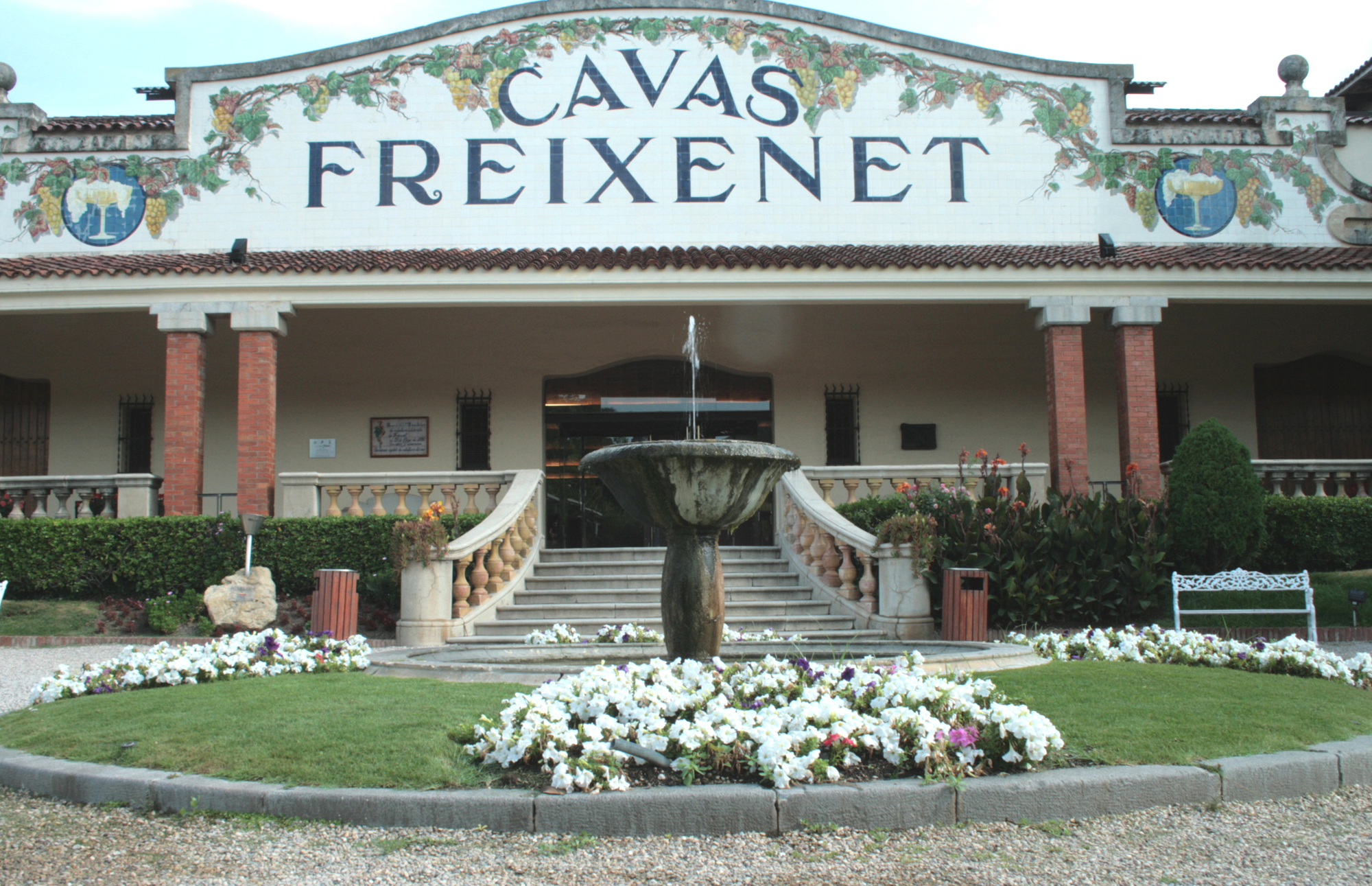
Freixenet is the world's largest producer of sparkling wine made in the methode champenoise, which includes hand riddling some of the more-expensive cuvees.
Two years later, the consumption was up to 13.9 million cases, but the increase came in domestic (mostly California) sparkling wines as foreign sparkling wine sales sagged. By 2010, foreign wine sales were up as 15.4 million cases of sparkling wine were consumed, indicative not only of the recovering U.S. economy but also the strength of the dollar compared to sagging economies in Europe.
California, not surprisingly, leads the U.S. in sparkling wine production and last year produced just more than 8 million cases (96 million bottles) of sparkling wine, which allows American consumers the luxury of more choices from more countries than, say, Britain. But the Brits, perhaps it’s tradition or simply because they don’t have as wide a range of selections as their American counterparts, consume nearly three times as much Champagne each year.
Champagne, as we all know, is a name protected by law and comes only from the Champagne region of northeast France; all other bubblies are properly called sparkling wines. While nearly all Champagnes are based mainly on three grapes – Pinot Noir, Chardonnay and Pinot Meunier – you can find sparkling wines made from shiraz and other varietals.
I know of only one Colorado winemaker producing a sparkling wine and that’s strictly a small-batch, private bottling. Because the costs of production and bottling are so much greater in making a sparkling wine, size of scale plays a role in who can afford to produce them. Extra thick bottles, special stoppers and the labor involved keeps the cost of a sparkling wine higher than a producing a still wine.
Freixenet (fresh-eh-net), located near Sant Sadurni d’Anoia in Spain’s Catalonian region, is the world’s largest maker of sparkling wine made in the traditional method (also often referred to as methode champenoise or methode traditionelle), producing 100 million bottles of cava each year. This traditional method includes hand riddling, the gradual turning of each upended bottle to clear the unfiltered wine of sediment,for the higher grades of Freixenet’s cavas.

Tony Domenech of Freixenet explains how that company still uses the time-consuming and labor-intensive technique of manually riddling bottles during the production of Freixent's premier cuvees. Freixenet, headquartered in Spain, is the world's largest producer of traditionally made sparkling wines.
Non-traditional methods, in case you wonder, may include such short cuts as blasting the still wine with carbon dioxide to produce bubbles. Fermenting the wines in immense stainless steel tanks rather than individual bottles is called the Charmat method and is used to make Italian Proseccos.
According to the Champagne Bureau, 40 percent of all sparkling wine sales occur around the holidays. That might be due to what New York Times wine columnist Eric Asimov called the myth of “black-tie urbanity” connected to Champagne. In his column Dec. 19, Asimov pointed out that “Champagne is one of the world’s most versatile and pleasing wines. That’s another crucial point: Champagne is a wine, though this may not be obvious to some, and it needs to be thought of in that context.”
And in a Twitter post from 2010, he wrote “Drink Champagne because you want to, not because some marketing fool tells you it’s ‘Champagne Day.’”
That extends to all sparkling wines, which range in price and value from under $10 for some imported bubblies to several thousand dollars for the ultra-prestige labels. Which means you can splurge on that $50 bottle of Champagne during the holidays and still enjoy something with bubbles the rest of the year.
When looking at labels, remember sparkling wines range in sweetness from Extra Brut (driest), Brut (the most common), Extra dry, Dry, Demi-Sec and Doux (sweetest).
If you want the traditions of Europe without the cost, look for some of the American wineries with their roots in Europe. These include such familiar names as Gruet, Schramsberg, Roederer Estate, Mumm Napa, Domaine Carneros (Taittinger), and Gloria Ferrer (of Spain’s Freixenet family). Other names to watch for include the J Wine Company and Robert Mondavi (California); Freixenet and Codorniu (Spain); and Bortolomiol, Bisol and Drusian, all from Italy.
If it’s Thursday, it’s Beaujolais Nouveau
It’s the third Thursday in November, which means Thanksgiving is near and Beaujolais Nouveau is here.
It’s hard to miss notice of the arrival of Beaujolais Nouveau, the vin de primeur that French law says can only be released at 12:01 a.m. on the third Thursday of November, and so renown it has its own coming out parties, sort of a Fat Tuesday (on the third Thursday of November) for wine.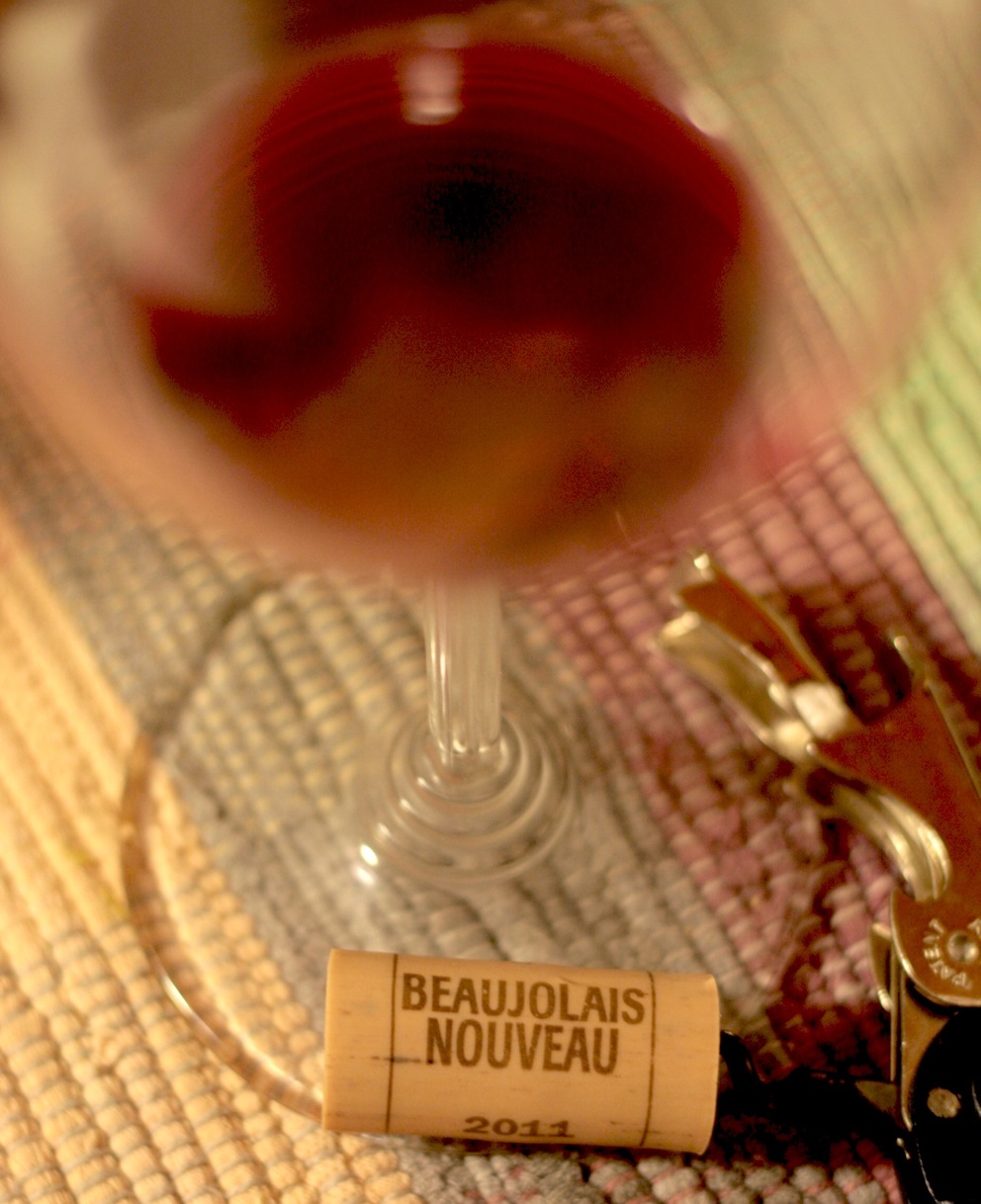
Noting the success Beaujolais Nouveau producers have had with their up-front “How do you like me so far?” introduction, other wine regions now have similar introductory celebrations but none have enjoyed the mystique or international popularity of Beaujolais Nouveau.
Much of that you may lay at the feet of one Georges DuBoeuf, the French wine producer whose fertile mind first conceived of selling the mass markets on a young, fruity wine that’s both affordable and fun to drink.
DuBoeuf , now 78, is a French farm boy who grew up to be one of his country’s largest wine producers, annually shipping out to 120 countries about 30 million bottles of wine with his name on them. And while he’s not the only Beaujolais on the market, his is the best-selling brand in the U.S.
And that’s saying a lot, considering it’s estimated 65 million bottles of Nouveau will be consumed this year plus the Beaujolais Crus, which won’t appear for another year. Nouveau means new, which means young, which means these grapes were picked in early September and in your glass by mid-November.
Beaujolais Nouveau originally was made to serve the harvest workers at the end of harvest, not simply to celebrate but to give them a literal taste of their efforts. To do so, it had to be made quickly so the grapes are not fermented in the traditional style but rather using whole-berry carbonic maceration. No crushing; simply pour the grapes into whatever fermenter you’re using and let the juice ferment inside the berries.
The juice is put in tanks briefly to finish (today it’s stainless steel, wood is to slow and too costly) and soon you have Beaujolais Nouveau. Light, fruity, with just enough tannic structure to add a comfortable edge to all that fruit.
DuBoeuf says this year’s Beaujolais Nouveau “2011 will be a great millésime in Beaujolais – complex, serious, solid and rich in delicious flavors. There is something divine about it.”
He’s said something similar about the last few vintages but he insists this one is better than the previous releases.
“After having tasted several hundred samples of the wine, I am astounded by this terrific vintage,” DuBoeuf said in a statement. “It looks like it will top every excellent year in the Beaujolais wine hall of fame.”
Maybe it’s climate change, maybe it’s just the nature of the Gamay grape, but millions of Beaujolais Nouveau drinkers will again prove him right.
The wine is available just about everywhere, and for $10 it’s a good choice to decorate your Thanksgiving table.
Holding out hope that Prosecco won’t change (more)
OMG, I’m so torn about this: According to some friends in Italy, Wine Enthusiast magazine has dubbed that country’s lovely Prosecco DOC as that fish wrapper’s magazine’s “Wine Region of the Year.”
Can you say “kiss of death”?
Don’t get me wrong, I love Prosecco. I enjoy savoring it, I admire, respect and appreciate the people who grow, make and supply us Prosecco and I don’t even mind too much someone bestowing another of the never-ending Italian DOC classifications on the area. I even order it in restaurant, just to see how many wine stewards are aware that Italy, too, makes a lovely sparkling wine.
But hearing that noise of WE jumping on the Prosecco bandwagon (where have you people been all this time?) only makes me wonder what the future holds for Prosecco in general.
Some people consider this announcement a great thing for Prosecco, and maybe if I were a advertising type I would also. A press release today (Tuesday) says the award will be bestowed Jan. 30 in New York City, but already the Italian apparatchiks are basking in the heat-ray glow of Prosecco’s newly bestowed fame.
Here’s what the Italians are saying (and saying and saying):
“The Wine Enthusiast’s award provides recognition for the hard work of a small community made up of 15 communes in the hilly area between Conegliano and Valdobbiadene, where the people have shown constant faith in a single wine, Prosecco,” said Innocente Nardi, president of the Conegliano Valdobbiadene Prosecco Superiore D.O.C.G. “This area still has an important role today in setting quality standards. Here, in fact, quality reaches its utmost expression, as is also demonstrated by the excellent results obtained in the Italian wine guides, which have bestowed their highest accolades on some of our wines.”
And wait, that’s not all:
Fulvio Brunetta, president of the Prosecco D.O.C., gushed, “Obtaining this award bears witness to the correctness of the choices we have made. The reasons for the prize, in fact, can be ascribed to the ability of the production system to take courageous decisions like those of limiting the production area and raising quality standards, in the knowledge that to compete on international markets one has to be able to offer volumes that are consonant with the demand”.
Hmmm. Sorry, Fulvio, but I thought you guys jumped on the DOC train because other producers outside the area were “offering volumes (of Prosecco) that are consonant with the demand.”
You know, sometimes not getting high numbers or international recognition might be good, if for no other reason it allows winemakers to continue to make their wines as they have for years, rather than stumble trying to meet someone else’s expectations. Or trying to meet a rising demand. A rising tide might mean a tsunami, you know.
My friend The Italian Wine Guy has blogged/written about this a couple of times and if I can find the links I’ll post them here.
In the mean time, “Congratulazione, Prosceco, e megliori auguri.”
Heading into the holidays with winter wines
Suddenly November is half over and winter wines are transitioning to dominate dinner tables and wine bars. Winter wines, those medium to full-bodied, rich reds (and whites, if you find the right ones) that stand up to the hearty stews and meat-centric dishes of the dark season.
Here is a mixed list of a few of my latest, all of which would find balance on any Thanksgiving table:
Plum Creek Cellars Palisade Red – a well-done blend of cabernet sauvignon, merlot, cabernet franc and sangiovese. As are all Plum Creek wines, this is 100 percent Colorado grown fruit.A medium-bodied red wine, soft tannins and lots of fruit. A friend and I enjoyed it at Inari’s Bistro (970.464.4911) in Palisade along with items off the new fall menu: a lamb burger and a Colorado Red Bird chicken breast with Palisade pears in gorgonzola sauce. It paired very well with the medium-rare lamb. $24 off the wine list.
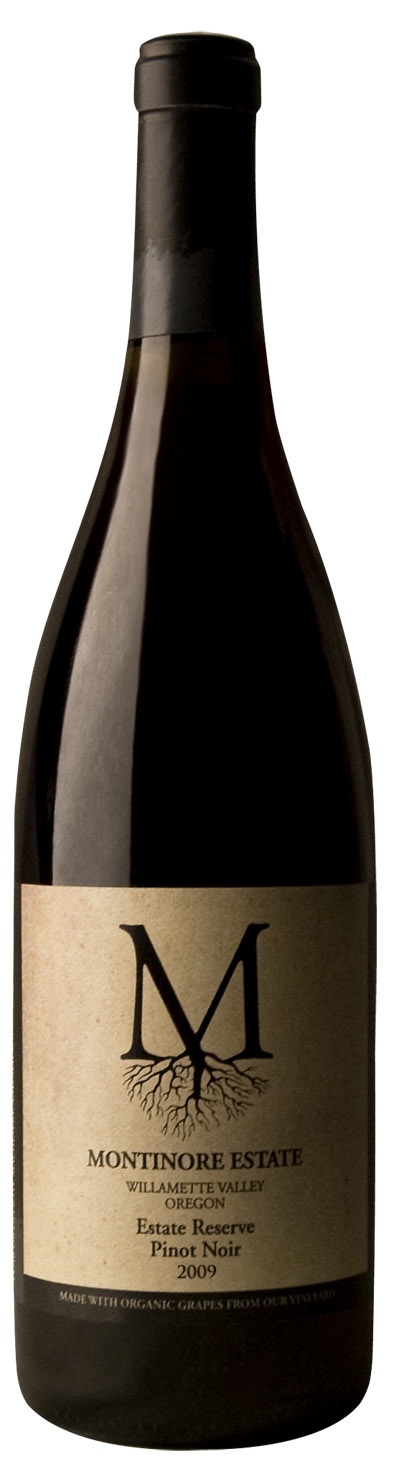
Montinore Estate Reserve Pinot Noir
Hermosa Vineyards late Harvest Rkatsiteli – Hermosa Vineyards owner Ken Dunn enjoys aging some of his white wines in oak (“I love what a little tannin does to white wine,” he affirmed) but missed the opportunity and happily so with this 2006 Rkatsiteli, a cold-hardy white grape from Georgia (think Soviet Union, not Atlanta). This wine is fermented to off-dry (he says sweet) with enough acidity to balance the high residual sugar. $15 at the winery.
Bennett Lane 2006 Maximus Napa Valley – This latest version of winemaker Grant Hermann’s full-throated red (it’s subtitled “Red Feasting Wine”) initially was dense, closed and awfully tight, refusing to show its flavors and depth, when first opened. I kept it open on the counter overnight and the next evening it began to open; by the third day it finally was approachable and I wish I had decanted the whole thing earlier. Full of deep dark fruits, a hint of chocolate and coffee encased in soft tannins. Knock out your holiday guests with this blend of 65% Cabernet Sauvignon, 20% Merlot, 10% Syrah, and 5% Malbec. A bargain at $35.
Montinore Estate 2009 Willamete Valley Pinot Noir – Affordable pinot noirs generally have been a real disappointment recently but this delicious medium-bodied selection from Montinore Estate is rich with ripe cherries, red raspberries and plums with a hint of spice and mocha. $20.
Montinore Estate 2009 Estate Reserve Pinot Noir – Oregon’s Willamette Valley steadily produces outstanding pinot noirs and this offering from Montinore Estate is an outstanding example. Flavors of bright red and black raspberries, Bing cherries, red plums and spicy-mocha comfortably supported by smooth round tannins. $28.
El Coto Rioja – This DOC crianza (two years aging, at least six months in oak) is reminiscent of the fine and very affordable reds I sampled on a whirlwind tour of Rioja this summer. Aged in American oak for added spice, the wine’s chewy tannins and red fruit flavors paired well with a pot of chicken-tortilla soup. $14.
Parker makes call on the future of wine
Well-known wine critic Robert Parker, speaking this week at Wine Future Hong Kong 2011, foresees the steady decline in corks as wine stoppers, the continued rise of Spain as a key wine-producing country and bidding wars becoming common-place for the higher-echelon, collectible wines.
The much-heralded Parker, who might have as many fans as he has detractors in the wine world, played his role as Oracle to the hilt. Among his other predictions: The “total collapse” of the three-tier distribution system in the U.S.; the mainstreaming of wine-oriented online sites; France getting squeezed by the globalization of the world wine market; unoaked wines will continue to grow in popularity (this from Parker??); and “once-backwater Italian viticultural areas such as Umbria, Campania, Basilicata and the islands of Sicily and Sardinia will become household names by 2015.”
Read the rest of his predictions here.
 Wine Openers