Archive
Millennials, especially women, flexing their wine muscle
If you’ve been out cruising downtown any night this winter, you’ve probably noticed how busy some of the city’s more-popular restaurants have been.
And if you looked twice, you might also have noticed how many of those guests with a glass of wine in front of them were younger women.
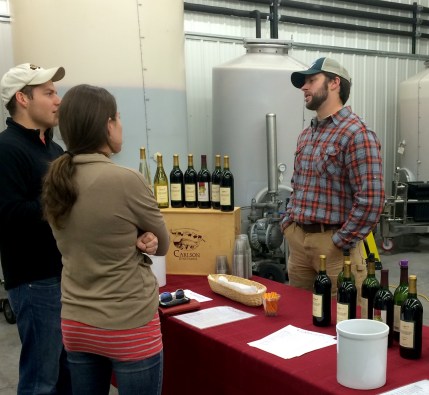
Winemaker Garrett Portra talks business during a open house at Carlson Vineyards. A recent survey says Millennialls last year purchased 42 percent of all wine drunk in this country.
That trend gets analyzed in a recent report from the Wine Market Council, which says people in their 20s and early-to-mid 30s now drink almost half the wine bought in the US.
What’s more, in what’s called the “high-frequency drinker” segment, women under 30 women are out-purchasing men two-to-one when it comes to wine.
Now, “high-frequency drinker” isn’t as lascivious as it sounds. According to the WMC, it refers to someone who drinks wine more than once a week. That faction buys and consumes 81 percent of all the wine drunk in America, says WMC.
Again, the WMC report says Baby Boomers account for the largest group in the high-frequency class, but Millennials (those people born between 1978 and 1995) are right behind them, making up 30 percent of frequent drinkers.
How fast the kids grow up. Read more…
Kroger proposal could change the way we see wine
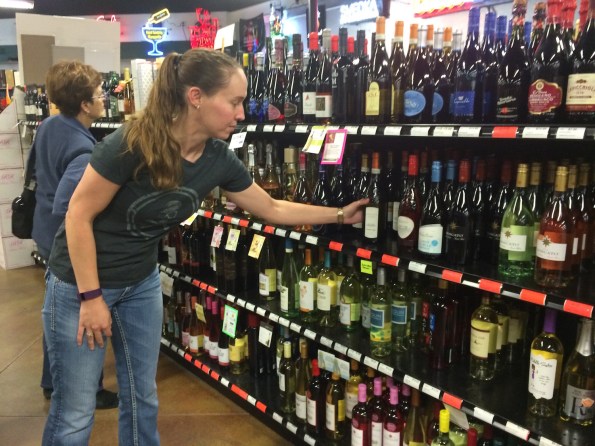
Wine buyers seeking a specific brand or label may find it harder to locate if shelf space becomes a pay-for-presentation reality.
As this space noted earlier, voters in Colorado will face the question whether to allow grocery stores to sell wine, spirits and full-strength beer.
Since that posting, a new consideration has arose.
Kroger Co., the country’s largest supermarket chain and owner of the eponymous Kroger grocery stores as well as King Soopers, City Market and others, has “proposed a plan that would let a private distributor oversee how much prominence brands get in stores,” according to the Wall Street Journal.
Plus, the WSJ goes on, the alcohol companies will be asked to pay for the distributor to find shelf space. (The original article is behind the WSJ paywall but you can read a summary here in an article from Money magazine).
In other words, pay for exposure.
Already this sounds like bad news for locavores supporting small-batch producers.
Not every small winery, brewer or distiller will notice the change. Many of them are too small to use state or national distributors and many of them sell most of their product through the front door.
But for those who depend on a distributor, or simply rely on the willingness of a retailer to find room on a shelf, the Kroger proposal is bad news.
Finding a place to sell small-batch wine, beer and spirits already is tough; just ask the winemakers, distillers and brewers who make weekly rounds of stores, making sure they haven’t lost shelf space to large distributors also trying to find space for their products.
Competing for premium shelf space just got harder, as writer W. Blake Grey assets here, against national distributors who can pay for better positioning.
Vines on a mountain: Elevation as terroir in Colorado winemaking
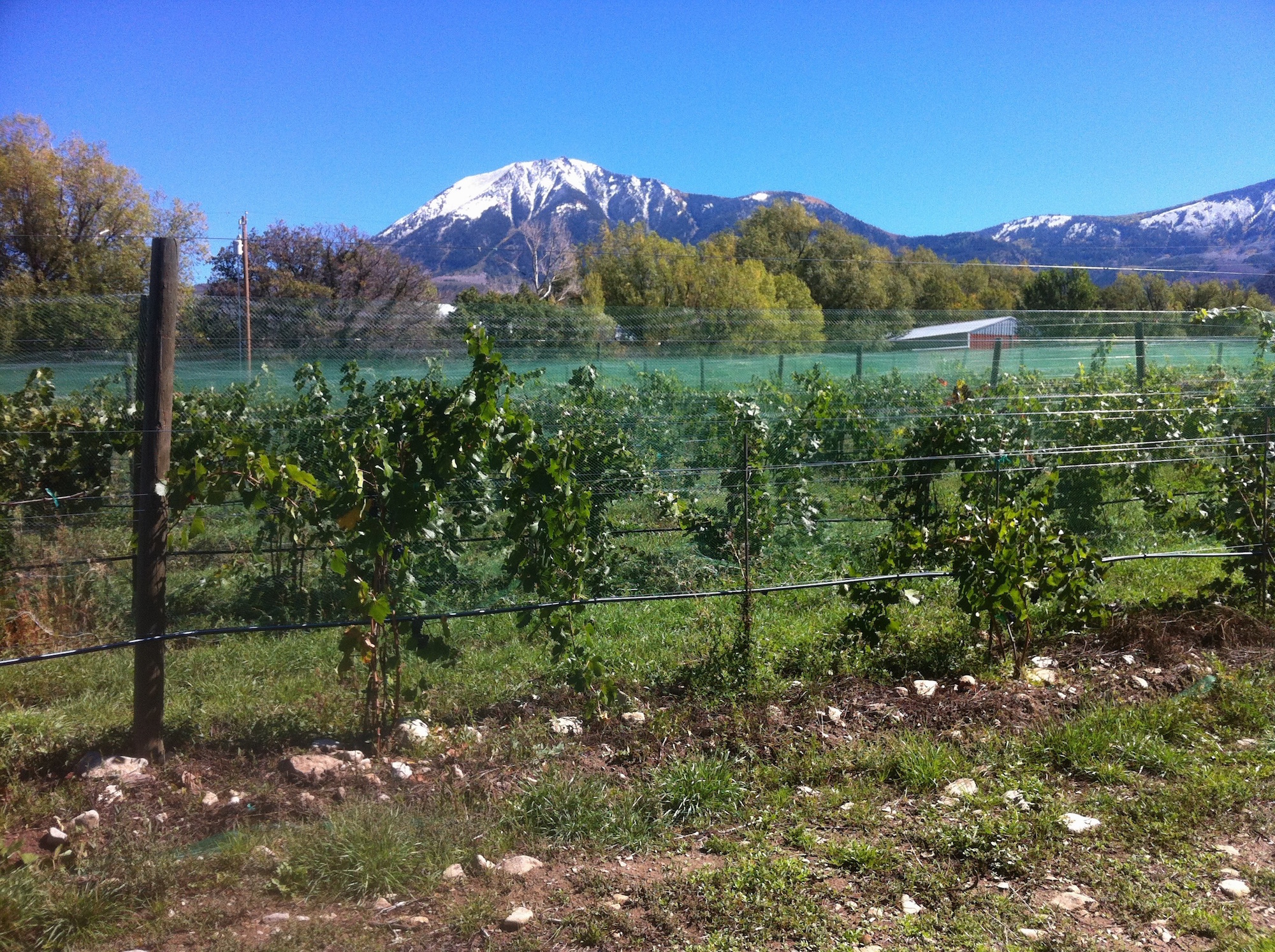
The concept of terroir, says winemaker Warren Winiarski, includes all things not man-made. In Colorado, that includes growing grapes at high elevation. These Gewurtztraminer vines, thriving at 6,200 feet elevation near Paonia, Co., are among the highest vineyards in North America.
The question of whether Colorado wines reflect a unique terroir has no easy answer.
Supporters of “terroir” – the concept that the place a wine comes from is reflected in its taste and determines its quality – claim they can identify a wine’s distinct origins simply by blind-sampling the wine.
Do Colorado wines reflect their provenance and is it enough to be unique?
For some ideas and possible answers I turned to Warren Winiarski, the winemaker who produced the 1973 Stag’s Leap Cellars Cabernet Sauvignon, the wine that won the 1976 Judgment of Paris and made America a wine-drinking country. Before that, however, Winiarski in 1968 helped Denver dentist Gerald Ivancie set up Colorado’s first modern commercial winery.
During a mid-May tasting of Colorado wines at Metropolitan State University in Denver, Winiarski said how impressed he was with some of the samples. Read more…
One last wrap on the Colorado Urban Winefest
DENVER – Gee, I survived almost too-much-fun Friday night at Row 14, waded through the 1,500 or so wine enthusiasts that kindly showed up for the third annual Colorado Urban Winefest on Saturday (where I paired a grilled PBJ with smoked bacon on whole wheat with a Boulder Creek 2010 Cabernet Franc) and then took a serious stumble Monday when I screwed up misstated the facts in my column for my real job at the The Daily Sentinel.
Arrgghh, as pirates would say.
I got confused, or distracted, or just simply wasn’t being mindful. Fortunately, you don’t have to see the crash, although there are a few readers in Grand Junction and elsewhere who this morning are mightily surprised to find out several winemakers have moved to new digs, courtesy of my writing.
So, ugh, let’s move on, shall we?
Overall, Colorado Urban Winefest continues to improve with age, not unlike the Colorado wine industry itself. Final attendance numbers for Saturday’s third annual Colorado Urban Winefest presented by Westminster Total Beverage came out Monday and indicated around 1,500 wine enthusiasts showed up Saturday at Infinity Park in Glendale.
When I spied Kyle Schlachter of the Colorado Wine Industry Development Board schlepping a bit of lunch through Saturday’s crowd, he mentioned strong last-minute tickets sales and healthy walk-up traffic as contributing to the pleasant turn-out.
“I’m really happy with the turnout ,” said Cassidee Schull, director of the Colorado Association for Viticulture and Enology and it seems everyone else was, also. It’s also likely the temperate weather (unlike 2012 when the thermometer was topping out at around 102) – Saturday’s mix of sun and clouds with a cool breeze along with the extensive acres of grass fields – kept fest-goers and winery representatives comfortable all afternoon.
“Yeah, this is a great place,” agreed Mike Thompson of Boulder Creek Winery, one of the 36 wineries present. “I really like the layout here.”
Among the selections Thompson was pouring was the Boulder Creek 2011 Colorado Dry Rosé, which Friday was one of the dry rosés competing for the Governor’s Cup Wine Competition.
Many people familiar with rosé automatically drift away from what they think will be something sweet but a recent trend among Colorado winemakers (Canyon Wind Cellars and Garfield Estates also offer dry rosés) to produce a dry rosé with great fruit has revived interest in the wine.
“It takes a little education, and you have to get them to taste it, but once you do, it’s really popular,” Thompson said. The winemaker is his wife, Jackie Thompson, whose wines always show well in competitions.
The competition must have been close, but the 47-Ten 2012 Grand Valley Rosé from Canyon Wind Cellars was named Best Rosé at the Governor’s Cup. Jay and Jennifer Christianson of Canyon Wind Cellars also won a Double Gold for their 2010 Grand Valley Petit Verdot.
Michelle Cleveland of Creekside Cellars also produces a delightful dry rosé but it’s light-gold in color, similar to a pinot grigio. I wasn’t able to talk with her during Saturday’s crush of people but will get back to you on that item.
As we mentioned Sunday, Michelle was the winner of the Governor’s Cup Wine Competition with her 2010 Grand Valley Cabernet Franc, which I diligently paired with that grilled PB&J with smoked bacon on whole-grain wheat. Highly recommended.
Around 225 wines were judged by the tasting panel of experts including restaurateurs, sommeliers, writers and chefs, most of whom seemed quite pleased with their task.
“They showed tremendous excitement over all the Bordeaux red grapes produced in Colorado, including merlot,” said Doug Caskey, executive director of the CWIDB. No, I don’t know why he singled out merlot, but you can ask him.
One of the judges, wine blogger Jeff Siegel (“The Wine Curmudgeon”), noted the competition “was easily the best showing from Colorado in the decade or so I have judged its wines.”
I appreciate Jeff’s remarks, since he’s attended several Drink Local Wine conferences and has a good idea of how the “other 47” are doing in their wine production.
I just hope he doesn’t read my newspaper version of this column. Arrgghh.
Creekside Cellars continues the reign of Colorado cab franc
It’s Sunday, 95 degrees, and I’m recuperating from Colorado Wine Week.
I missed a Colorado Wine Week post or two Friday and Saturday but really, I honestly have a good excuse.

Winemaker Michelle Cleveland still shows her surprise and pleasure after her Creekside Cellars 2010 Colorado Cabernet Franc was named winner of the Colorado Wine Governor’s Cup competition. The wine won Double Gold for Best of Show and Best Bordeaux varietal.
Friday night’s Day 6 Wine Week Challenge was the Governor’s Cup Awards presentation, and I opened (or had opened for me, which is even better), scads of tasty Colorado wines, including the Best of Show and Double Gold Cabernet Franc from Creekside Cellars.
Saturday, well, Saturday was the Colorado Urban Winefest (lots of nice remarks coming from that event) plus I woke up hungover out of sorts and needed some time to gather my thoughts, which mostly were “Where am I?” and “How did that happen?”
But important things first, right?
Congratulations and a well-deserved high three (it’s a long story but how many fingers does Pluto have?) to Michelle Cleveland, talented winemaker and all-around great person for Creekside Cellars in Evergreen, for winning the 2013 Governor’s Cup Best of Show and Double Gold for her 2010 Cabernet Franc.
Dark, luscious, lots of fruit and a judicious 24 months in Appalachian oak (she said it’s the same species of oak tree used to make French oak barrels) to balance.
Too bad there’s not any left.
Funny story: Michelle said she made 44 cases (that’s about 100 gallons or so) of the wine, which grew in the 10-acre Creekside vineyards in the Grand Valley, (Hey, almost all – 87 percent – of Colorado grapes grow in the Grand Valley) but had only 1 (one, uno, half of two) case left by the weekend.
“I didn’t know how fast it would sell,” she said, but at least she had enough to share with the light intimate crowd at the Governor’s Cup Awards at Metro State University.
Michelle really likes Colorado cabernet franc (the bottle’s label reads simply “Franc,” and underneath says “Colorado’s Cabernet”) and she and Kyle Schlachter of the Colorado Wine Industry Development Board have this plan to promote cab franc as Colorado’s best red grape.
I’m all for it after tasting some of the excellent cab francs being produced by various Colorado winemakers. Curiously, the other double-gold medal Bordeaux-red winner this year also was a 2010 Cabernet Franc by Jackie Thompson of Bookcliffs Vineyards, and the 2012 Gov’s Cup winner was yet another cabernet franc, this one by the enigmatic Matt Cookson of the Winery at Holy Cross Abbey.
“We’ve been making cabernet franc since we opened (2000),” said Michelle, who said she began as a beermaker before making the switch to fermenting grapes.
As for the oak, well, “We like oak,” she said with a sly smile. “But it has to balance with the fruit and the 2010 vintage was huge fruit. The only problem is cab franc needs a long growing season but we haven’t had any problems.”
And for those who are aware of this year’s tribulations in the vineyards (sounds like something Danielle Steel might write, eh?), everyone I’ve talked with are saying (fingers crossed behind their back) their cab franc is one of the few vines to be healthy after the January freeze and the April frost.
And remember 2010 was a light vintage, too, but Michelle had no problem wringing a Best of Show from the grapes.
The rest of the Governor’s Cup winners are here, and among the top award-winners were Glenn Foster (Talon Wines); Jackie Thompson (Bookcliff Vineyards); Jay and Jennifer Christianson (Canyon Wind Cellars); and Matt Cookson (The Winery at Holy Cross Abbey).
There were 225 wines submitted for the competition but Governor John Hickenlooper, who is a great supporter of Colorado wine, wasn’t able to make his usual appearance.
After the awards, I headed over to Row 14, one of the Denver restaurants hosting the Sips & Snacks, pairing a glass of Colorado wine with a larger-than-an-appetizer but smaller-than-your-appetite plate.
Row 14 was pouring the 2011 Two Rivers Winery Syrah and paired it with carnitas tacos. Good food, great wine, nice people, lots of fun. Lots.
Colorado Wine Week Challenge Day 2
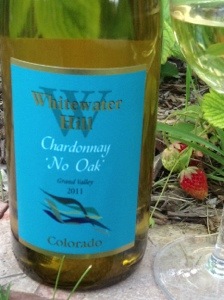
the 2011 “No Oak” Chardonnay from Whitewater Hill Vineyards on Orchard Mesa.
It’s Day 2 of Colorado Wine Week and my personal Colorado Wine Week Challenge, where your task – such as it is – is to open and share a Colorado wine every day during this special week.
My selection today is the 2011 Chardonnay ‘No Oak’ ($14) from winemaker/owner Nancy Janes at Whitewater Hill Vineyards on Orchard Mesa.
Like many of us who enjoy chardonnay, Nancy quit drinking chardonnay for a couple of years after she was put off by the over-oaked wines that swept to popularity a few years ago.
“I like a little oak but that was too much for me,” she said, and the ABC (Anything But Chardonnay) crowd agreed.
She finally gave in, but instead of drinking one of the all-oak, no fruit wines, she decided to make a “no oak” because she wanted something to drink that reflected the heritage of the chardonnay grape.
This wine is a pure reflection of the Chardonnay grape, with a bright, minerally nose and no malolactic fermentation to disguise the grape.
The wine recently received an 87 from the Beverage Tasting Institute.
She also makes a lightly oaked chardonnay for those who just have to have a little oak.
Nancy will be among the winemakers in Denver this weekend for the Governor’s Cup Awards presentation Friday at Metro State University and the Colorado Urban Winefest presented by Westminster Total Beverage at Infinity Park in Glendale.
Colorado Wine Week Challenge, Day 1
This is the first day of Colorado Wine Week 2013, a weeklong (or did you know that?) celebration of this state’s vibrant wine industry and the best opportunity you may have to sample Colorado wines.
And great food.
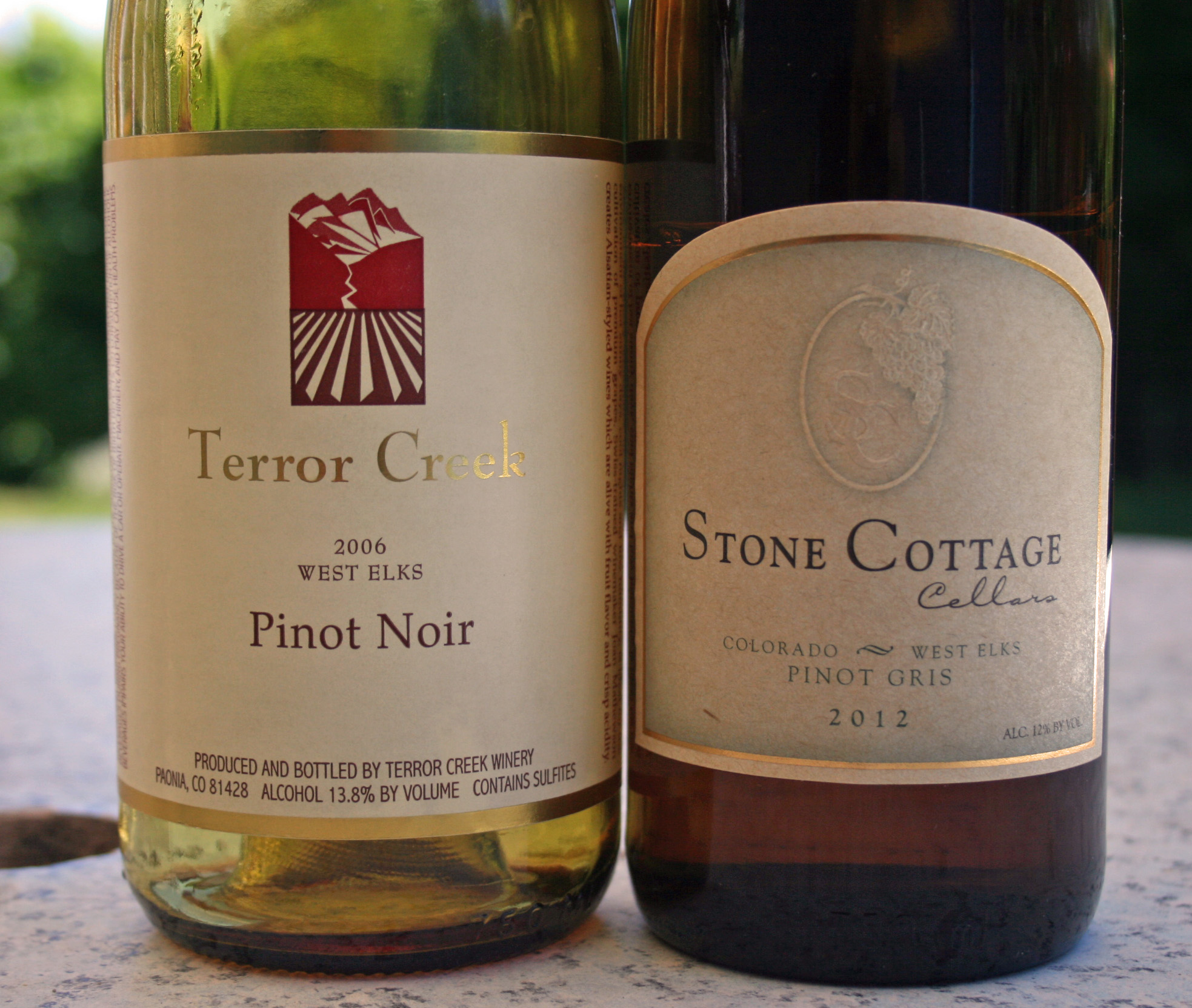
Two first-day selections for Colorado Wine Week Challenge 2013.
And Colorado wines and great food, together.
While the week is sort of, kind of, a statewide thing, its really designed as a Front Range get-together, which for those of you who don’t live in Colorado (that’s fine, don’t move here) means everything east of the Continental Divide.
Which really means the event is aimed the 8 jillion or so people in the urban strip from Fort Collins (north) to Colorado Springs (mid-state).
My blogging and Colorado wine colleague Jacob Harkins of Godot Communications and Local Winos Media has been doing the heavy lifting, which means trying to herd cats with press releases, emails, etc and etc.
You can get all the information you need here, but in short, the week culminates in the third annual Colorado Urban Winefest (presented by Westminster Total Beverage, I have to add), which this year roosts at Infinity Park in Glendale, an innr-suburb of Denver, which obviously is THE place to be Saturday. Around 46 wineries, including many you need to know, pouring their hearts out to please your palate.
That is, if you like Colorado wine, are curious about Colorado wine or know someone who is either or both.
As for me, here’s my contribution – A Colorado Wine Week Challenge: Open and share a Colorado wine every day this week.
Yeah, I know it’s already Sunday but give it a try.
Tell you what. I’ve already opened two local wines, so you can use one for your starter (there’s a glass or two left in the bottle). The rest of the week is up to you.
My first-day choices are the 2012 Pinot Gris from Stone Cottage Cellars ($22) and the 2006 Pinot Noir ($26, if available) from Terror Creek Winery. Both are West Elks AVA wineries and situated near each other (like 500 feet apart) just west of Paonia, high above the valley of the North Fork of the Gunnison River.
And when I say high, I mean that Joan Mathewson of Terror Creek is making her elegant and thoughtful wines at 6,417 feet, making hers the highest winery in the north hemisphere.
And Stone Cottage Cellars Pinot Gris has a body and heft, hints of melon, fig and almonds, that recalls how well-made pinot gris tasted before the demands of the market onslaught ruined it, just as the same overweening push for profits ruined merlot. Thank you, Brent and Karen Helleckson of Stone Cottage Cellars.
That’s the end of the Sunday sermon.
Take the week to explore some of the restaurants and bars offering food and Colorado wine pairings, menus available here.
Keep me posted on what you’re drinking, and tomorrow I’ll share the Day 2 selections for the Colorado Wine Week Challenge.
Let’s see, where is that corkscrew??????
Delayed bud break has grape growers waiting
Those shaggy-maned grape vines you see around the valley haven’t been ignored, they’re actual serving a purpose.
It’s bud break in the Grand Valley, a time when most of the valley’s grape growers finish pruning their winter-long vines on the bet those still-tender roseate buds will survive anything Mother Nature might throw their way.
However, with this spring a series of warm/cold, then warm-and-cold again fluctuations, nobody’s quite sure how to prune, which means growers are leaving some vines undocked until it’s known with certainty which plants survived the winter cold.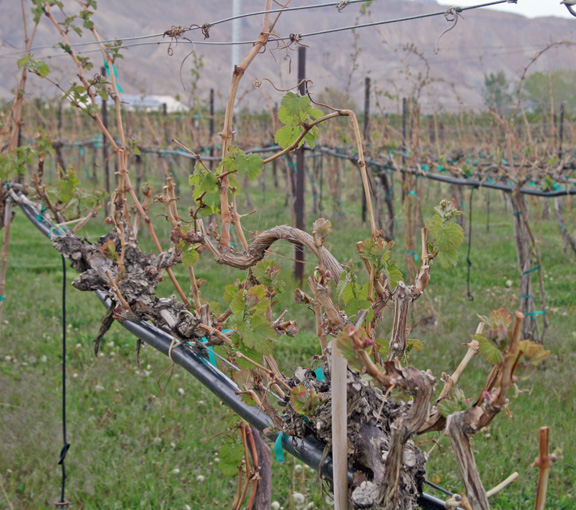
(Right: The uneven arrival of bud break in spring 2013 has grape growers waiting, hoping the green returns to signal life in the vines after the deep cold of January.)
Bud break normally occurs irregularly around the region, spread out among the many micro-environments and grape varietals dotting the area, but this year, what’s normal?
“It’s just all over the place this year,” said state viticulturist Horst Caspari. “It’s abnormal even by Colorado standards.”
He said an extended bud break isn’t unexpected “but now we’re seeing plants 100 percent out and unfolding their leaves and next to them are plants that are barely into bud break.”
When bud break starts, though, it seems to happen overnight. The first rush of growth comes quickly; vines that were winter-dormant Monday will have swollen buds Tuesday and tiny green leaves Thursday.
“It really happens fast, once it gets started,” said Nancy Janes of Whitewater Hill Vineyards, walking last week through the vineyards near her winery on 32 Road.
Some of the canes (branches) in her vineyard are whiplike and long, flocked with bits of green from emerging leaves and mini-clusters, all a bit of insurance to protect the buds closer to the main stem, she said.
“Normally we cut this off, leaving these two buds on a short cane,” she said, showing where a pruner would remove much of the longer canes. “The less vine, the more the energy goes in the grapes and not into growing the canes.”
The vines are apically dominant, which means the end bud releases a chemical (auxin) that retards the development of lateral buds closer to the stem.
If the apical bud is removed, the other buds start to grow. Controlling the growth of those lateral buds through careful pruning is how grape growers control their vines and also how bonsai trees and espalier (growing a plant two-dimensionally against a wall) are created.
Topiary is the three-dimensional version. Think of those Mickey Mouse trees at Disneyland and you get the idea.
Tomatoes are not apically dominant, which is why they spread out instead of up. This widening eliminates competition by creating a cleared area around the plant.
Cutting the apical buds spurs growth in buds closer to the trunk or stem but once buds break dormancy they are more-susceptible to frost.
Historically the average last day for frosts in the Grand Valley is May 13, a comment that brings a laugh from my friend Neil Guard.
“Yes, but Mother Nature doesn’t read the calendar,” said Guard, who grows grapes and peaches on his farm and vineyard on East Orchard Mesa.
“It’s really a gamble at this point,” Guard said Sunday afternoon as he walked part of his vineyard. “We had the crew prune the riesling because we know that usually does fine but look at the tempranillo, there’s hardly anything there at all.”
The name “tempranillo” comes from the Spanish world for “early” but you’d never know it by looking at Guard’s vines. While nearby rows of cabernet franc ware flush with new buds and leaves, the rows of tempranillo are showing slight signs of life and he’s purposely left those vines long and wild until he sees what grows.
“Look here,” he said, grabbing at a nearby vine. “I’ve got vines with lots of buds and leaves right next to vines that look like their dead, which they might be after last winter.”
He sighed and stood up to survey the rows of vines.
“We’re going to wait,” he said cautiously. “We still have almost two weeks and why spend the money on pruning something when you might end up cutting it off at the ground?”
 Wine Openers