Archive
Wines from Spain a big draw at Food & Wine Classic
ASPEN – Cruising the Grand Tasting tents at the Food & Wine Classic can be an elbow-squeezer for room but among the most-popular areas this week is the Wines From Spain tent.
But it’s not just at Aspen where Spanish wines are finding a growing audience, said Helen Gregory, representing the Wines from Spain trade association. She noted that last year Spanish wine exports increased by more than 21 percent.
One reason is “People recognize the artisanal nature of Spanish wines, most of which come from small, historic family-owned wineries,” Gregory said.

Alvaro Comenge of Bodegas Comenge, Ribera del Duero
Among the favorites this week were wines from the Ribera del Duero in northern Spain. Tempranillo reigns here, where vines grow short and bushy in the high altitude (2,500-2,800 feet).
Alvaro Comenge (at right) was showing off his Bodegas Comenge wines, among them the line of Don Miguel wines topped by the fruit-driven Riserva made from select, small-plot vines. Don Miguel Comenge, Alvaro’s grandfather, literally wrote the definitive book on Spanish wines, his La Vid y los Vinos Espanoles, in 1940.
Also notable was the Malleolus from Bodegas Emilio Moro. One sip of this powerful Tinta del Pais (aka tempranillo) and you understand why its continually gets high points from major critics ( priced accordingly at $100-$140).
The Wine Spectator called Malleous “massively structured, powerful and unyielding, as if chiseled from granite.” Don’t let that scare you away; underneath all that power is a base of dark fruit, minerality and rose-like floral notes.
And for a real change, and because I’m such a Reisling fan, there were several stops at the German Riesling table, where I was attracted to the Weingut Donnhoff 2010 Dry Slate, its crisp acidity and lots of minerality, green apple and pear note making it a perfect food wine.
Hands-on seminars popular at Food & Wine Classic
ASPEN – Midway in his seminar on “Butchery for Beginners” at the Food & Wine Classic in Aspen, Chef John Besh looked up from his carving up of a Colorado lamb at the Food & Wine Classic cooking tent and peered into the audience.

Chef John Besh
“Are there any vegetarians in here?” to a round of laughter. Surprisingly, there was one, and Besh (pictured at right) knew her. “Well, in case you decide to eat meat, here’s how to get it,” said the New Orleans-based Besh.
This year’s Food & Wine Classic added some hands-on seminars including Besh’s “Butchery for Beginners” and “Knife Skills 101,” indicative of the Classic’s efforts to keep the event fresh and consumer friendly.
“People don’t want to just watch and listen, they really want to know how to make it at home,” said Christina Grdovic, publisher of Food & Wine Magazine. “It’s part of the greater trend of understanding where our food comes from.”
More in-the-kitchen know-how, blended with equal parts of stand-up comedy, was imparted by many of the best-known names in the food prep business, including Besh, Emeril Lagasse, Jacque and fusion-cooking star Ming Tsai, who told those watching his Saturday seminar on Asian barbecue, “When you cut an onion, do it at a 45-degree angle so you don’t cut your fingertips off — that would be bad, unless you’re a criminal.”
Along with all the gala over the weekend, there also is talk of the High Park Fire near Fort Collins.
Ben Parsons, owner and winemaker at the Infinite Monkey Theorem winery in Denver, said he is donating the proceeds from his ever-so-popular Smuggler Mine party to local firefighters.
“In response to the High Park wildfire near Fort Collins, Colo., The Infinite Monkey Theorem (IMT) is turning tonight’s highly anticipated S’Wine at the Mine party at the Food & Wine Classic into a benefit for the Aspen Volunteer Fire Department, who is sending a team to battle the blaze,” Parsons said in a news release.
“The Denver-based urban winery IMT – as well as event co-sponsors The National Pork Board, Tender Belly, Novelis, Ball Corporation, Basta and Masterpiece Delicatessen – have all agreed to donate funds, and guests will also be asked to contribute donations at the door.
“We’re very fortunate to be able to celebrate Food & Wine weekend in Aspen with a party of this magnitude,”Parsons said. “And we’re excited that we can also use our event to help make a difference for this devastating natural disaster.”
Late reports say the High Park fire has burned about 85 square miles, making it the third-largest in recorded Colorado history.
Goin g to ‘summer camp’ at the Food & Wine Classic
ASPEN – The 30th annual Food and Wine Classic in Aspen opened Friday morning and like all notable anniversaries this one has been long in the planning.
A special concert by Elvis Costello, a 5k charity run benefitting Grow for Good with super-chefs Bobby Flay and Marcus Samuelsson changes in the lineup of chefs has breathed new life into this long-time high-gloss favorite, the one Dana Cowin, editor-in-chief of Food and Wine magazine, calls “summer camp for foodies.”
It’s also notable that this is the first year since 2008 the Classic has sold out in advance.
It may the economy really is better but Christina Grdovic, vice president and publisher of Food & Wine, said this being the 30th anniversary also attracted the crowd.
“The fact that this is a special year might have made people say, ‘this is one I don’t want to miss,’” Grdovic told Kelly Hayes of the Aspen Times.
Among the many memories since the International Wine Classic began in 1983 (the name changed in 1986 when it was taken over by Food & Wine Magazine) include appearances by the late Julia Child, who made her debut in Aspen in 1990, the first in a continuing string of sell-outs in 1997 and simply the immense growth in the awareness of eating and drinking well.
“It was one of the first places you could see chefs perform,” said Cowin in story by Stewart Oksenhorn. “Ten years before The Food Network came along, the Classic was essentially doing food shows with food personalities.”
Among the personalities returning this year is author Mark Oldman, whose “Oldman’s Guide to Outsmarting Wine: 108 Ingenious Shortcuts to Navigate the World of Wine with Confidence and Style” is a great tool for wine drinkers wanting to increase their knowledge of things grape.
Oldman’s seminar Saturday morning featured sparkling wines from regions other than Champagne.
He wowed the audience with his demonstration of “sabering” a bottle of sparkling wine and then called to the audience for volunteers to try it themselves.
“It’s really not difficult, you could teach a child to do it,” He said, although he made sure to provide safety goggles for the cautious but eager volunteers. “But I wouldn’t recommend that unless you want to raise your kid right, right from the start.”
There a several thousand “kids” here this weekend, all eager to learn and eager to have something to take back home, even if it’s the most massive hangover from drinking wine at Aspen’s rarified 7,900-feet elevation.
Call it the schooling part of summer camp.
The 30th annual Food & Wine Classic in Aspen runs through Sunday.
Taking the high road to the Food & Wine Classic in Aspen
Next week the Food & Wine Classic in Aspen celebrates its 30th year in Glitter Gulch and I’ll be there, trying to blend in.
Thanks to the generosity of the folks at Food & Wine Magazine and its advertising agencies, I’m attending again this year as a working guest of the Food & Wine Classic.
Well, me and scads of reporters, journalists and photographers, many of whom actually will be working and others, well, enjoying the Food & Wine Classic.
Everyone always asks about the crazy parties taking place around town but we (meaning the singular I) rarely get invited to the best or craziest parties since those typically are reserved for sponsors, really tight friends of sponsors, or well-heeled, really tight friends of sponsors.
But that’s cool, since I’ll still knock elbows with my share of celebrities and semi-celebrities and receive cordial invites to more events than I can make, including the always entertaining Wines From Spain barbecue at José Andrés’ house, the unique Smuggler Mine outing (or inning, since it’s a party inside a real working gold mine) and other get-togethers taking place inside and outside around Aspen.
But in spite of reaching out to a wide audience, most of this sold-out week isn’t for the masses. The Classic is geared toward what others have called the 1-percent (or maybe 2-percent), since the remaining 98 percent can’t afford $1,225 (not including lodging and meals) for three days of revelry, no matter how close you may get to Mario, David (Chang) or Michael (Nischan).
This certainly is not a knock on either the Classic or the haves. Since its resurrection in 1946 from ghost town to a ski town, Aspen has honed its reputation for attracting the beautiful people and this week is a continuation of that amazing run. One look at the well-tanned shoulders, the expensive pedicures and the Sophie Theallet sundresses and you realize it’s simply Aspen in summer.
And it’s not like the people aren’t fun to be around. Generally the crowds are pleasant but perhaps a bit harried as they hurry from venue to to venue, often on a tight time schedule, despite the occasional festival goers (which you find at any festival) too impatient to stand in even the shortest line. Mostly, though, it’s the loafers-sans-socks crowd, trying to relax between text message, emails and notes from the Right Coast.
The world may be going to the devil but the road is lined with great wine and well-sourced food.
Grilling season a good match with wine
Every neighborhood has a diehard who grills year-round, but for most us the Memorial Day weekend marks the official start to the summer grilling season. Now that we’re already a week into grilling season, you’ll have abundant opportunities to discover how wine fits into your favorite backyard meal.
Whether you are firing that grill for hot dogs, thick steaks, sausages or portobellos and veggies, don’t hesitate to grab a glass and enjoy the recommendations. The appeal and joy of hot dogs and burgers is they are easy and popular, but they also tend to get a lot of distracting side flavors, so pick your wine to fit the main dish. Hot dogs, which can range from bland to super-spicy, find their match with a chilled light red (see below) or fruity, crisp white wine such as a dry or off-dry Riesling, sauvignon blanc or Gewurtztraminer.
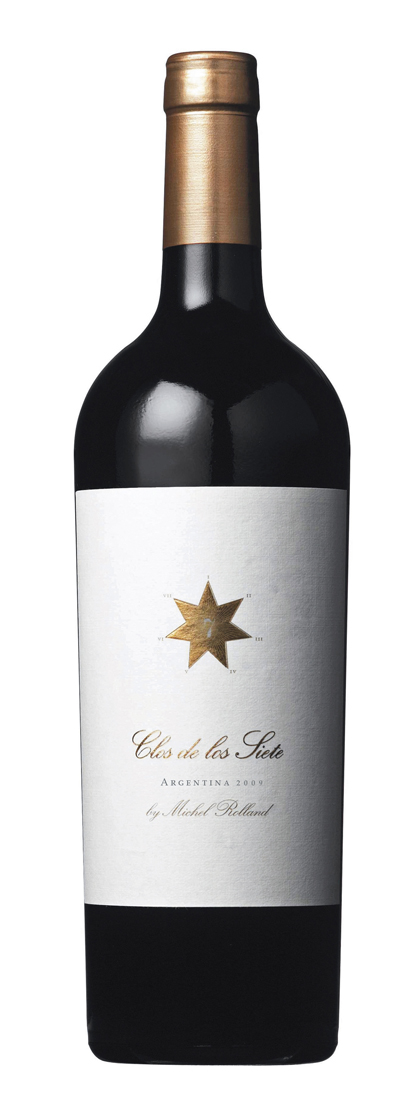
Clos de Los Siete 2009 Argentina Malbec
For burgers, chicken and other grilled meats, you want something smoky to complement the charred meat along with little sweetness (fruit, not sugar) to bring out the sauce and offset the char from the coals. Light-sauced chicken and pork also beg for Riesling and Gewurtztraminer but if the sauce is rich and heavy, better a zinfandel or cabernet franc.
I’d suggest avoiding both harsh tannins (most American cabernet sauvignons and zinfandels, Australian shiraz), which tend to be drying, and high-alcohol wines, which make you full and sleepy.
Simple burgers call for a simple red, with soft tannins, bright fruit and a little heft to stand up to the extras pile on top. Some favorites include medium-weight zinfandel, Garnacha or Tempranillo.
When you move to the heavy lifting, those thick steaks or racks of ribs call for something with bit more heft, darker fruit and bit of structure so they aren’t overwhelmed. Some examples include malbec, Rioja, mourvedre or shiraz. Just remember that wine is a condiment; use the spice, pepper and fruit to highlight your summer grilling menus.
Argentinians really love their malbec and their beef, eating an average of 121 pounds of beef per year (Americans chomp down 92 pounds each), so it makes sense an Argentinian malbec is a great barbecue wine.
Most can be enjoyed young, offering bold but not overwhelming flavors of dark fruit and spices. And since most of us spend a great deal of time entertaining around the ‘cue, it’s good to know there are plenty of delicious malbecs available for $20 and less.
For grilled mushrooms and other vegetables, I’d go with a pinot noir, a full-bodied, dry sparkling rosé or an unoaked chardonnay for the white wine fans.
A note for serving summer wines: The last thing you want on a hot day is a hot drink. Summer heat often means reds are served too hot; 30 minutes in the refrigerator before serving can perk up a lot of summer reds. Not all reds: chilling deadens heavy, oaky reds, which lose their flavors and become blocks of alcohol, tannin and oak. Lighter reds — delicate pinot noirs, Italian merlots, Barberas and Beaujolais-Villages — chill beautifully.
Recommended: Malbec — Clos de los Siete 2009 Argentina Malbec, $15. This wine, with a delicate balance between dark fruit and oak, is made under the watchful eye of Bordeaux-based but international in scope winemaker Michel Rolland.
Others: Los Alamos Malbec 2009, $13; Doña Paula 2010 Los Cardos Malbec, $9; Crios de Susana Balbo 2010 Malbec, $14.
Rosés are a natural for summer quaffing and, thanks to their growing popularity, the selection, quality and affordability are better than ever. Look for rosés that are crisp, low-octane and food friendly. I’m convinced the best rosés still come from France, Spain (rosados) and Italy (rosatos), with plenty of choices available under $15.
Start your coals: Memorial Day marks beginning of wine and grilling season
Every neighborhood has the die-hard who grills year-round, but for most us the Memorial Day weekend marks the official start to the summer grilling season.
Now that we’re already a weekend into grilling season, you’ll have abundant opportunities to discover how wine fits into your favorite backyard meal. Here are a few suggestions gleaned from years of tending hot coals and hungry friends.
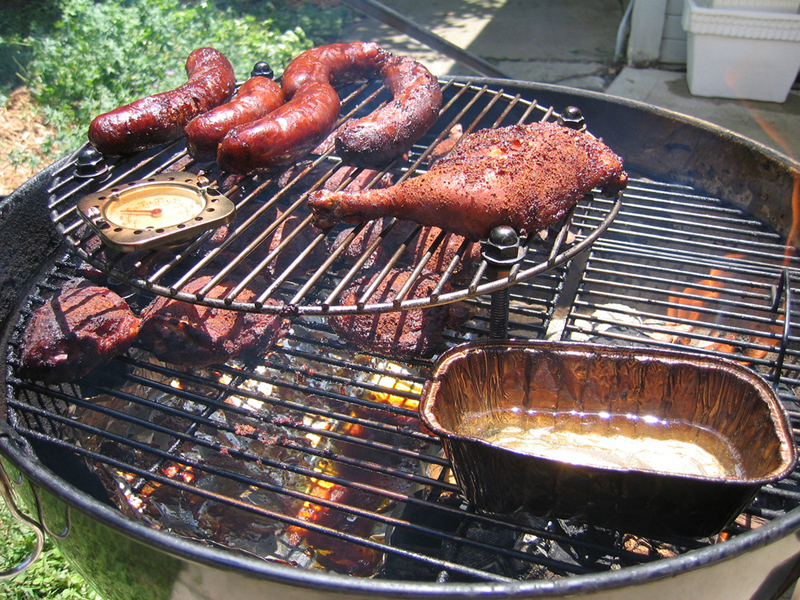
Kidmissile via Flick’r Creative Commons
Summer means grilling season, whether you prefer a double-decker or single deck to feed the croiwd. Finding a wine match is just as easy, with many affordable options for backyard dining.
It matters not whether you are are firing that grill for hot dogs, thick steaks, sausages or portobellos and veggies, don’t hesitate to grab a glass and enjoy the recommendations.
The appeal of hot dogs and burgers is they are easy and popular, but they also tend to get a lot of distracting side flavors, so pick your wine to fit the main dish.
Hot dogs, which can range from bland to super-spicy, find their match with a chilled light red (see below) or fruity, crisp white wine such as a dry or off-dry Riesling, sauvignon blanc or Gewurtztraminer.
For burgers, chicken and other grilled meats, you want something smoky to complement the charred meat along with little sweetness (fruit, not sugar) to bring out the sauce and offset the char from the coals.
Light-sauced chicken and pork also beg for Riesling and Gewurtztraminer but if the sauce is rich and heavy, better a zinfandel or cabernet franc.
I’d suggest avoiding both harsh tannins (most American cabernet sauvignons and zinfandels, Australian shiraz), which tend to be drying, and high-alcohol wines, which make you full and sleepy.
Simple burgers call for a simple red, with soft tannins, bright fruit and a little heft to stand up to the extras pile on top. Some favorites include medium-weight zinfandel, Garnacha or Tempranillo.
A thick steak or ribs call for something with bit more heft, darker fruit and bit of structure so they aren’t overwhelmed. Some examples include malbec, Rioja, mourvedre or shiraz.
Remember that wine is a condiment; use the spice, pepper and fruit to highlight your summer menus.
Argentinians really love their beef, eating an average of 121 pounds of beef per year (Americans chomp down 92 pounds each), so it makes sense an Argentinian malbec is a great barbecue wine.
Most can be enjoyed young, offering bold but not overwhelming flavors of dark fruit and spices. And since most of us spend a great deal of time entertaining around the ‘cue, it’s good to know there are plenty of delicious malbecs available for $20 and less.
For grilled mushrooms and other vegetables, I’d go with a pinot noir, a full-bodied, dry sparkling rosé or an unoaked chardonnay for the white wine fans.
A note for summer wines: The last thing you want on a hot day is a hot drink. Summer heat often means reds are served too hot; 30 minutes in the refrigerator before serving can perk up a lot of summer reds.
Not all reds: chilling deadens heavy, oaky reds, which lose their flavors and become blocks of alcohol, tannin and oak. Lighter reds — delicate pinot noirs, Italian merlots, Barberas and Beaujolais- Villages — chill beautifully.
Recommended: Malbec, of course, with the best coming from Argentina. — Clos de los Siete 2009 Argentina Malbec, $15. This wine, with a delicate balance between dark fruit and oak, is made under the watchful eye of Bordeaux-based but international in scope winemaker Michel Rolland.
Others: Los Alamos 2009 Malbec, $13; Doña Paula 2010 Los Cardos Malbec, $9; Crios de Susana Balbo 2010 Malbec, $14.
Rosés are a natural for summer quaffing and, thanks to their growing popularity, the selection, quality and affordability are better than ever.
Look for rosés that are crisp, low-alcohol and food friendly. The best rosés still come from France, Spain (rosados) and Italy (rosatos), with plenty of choices under $15.
Viewing the latest Italian earthquakes from afar
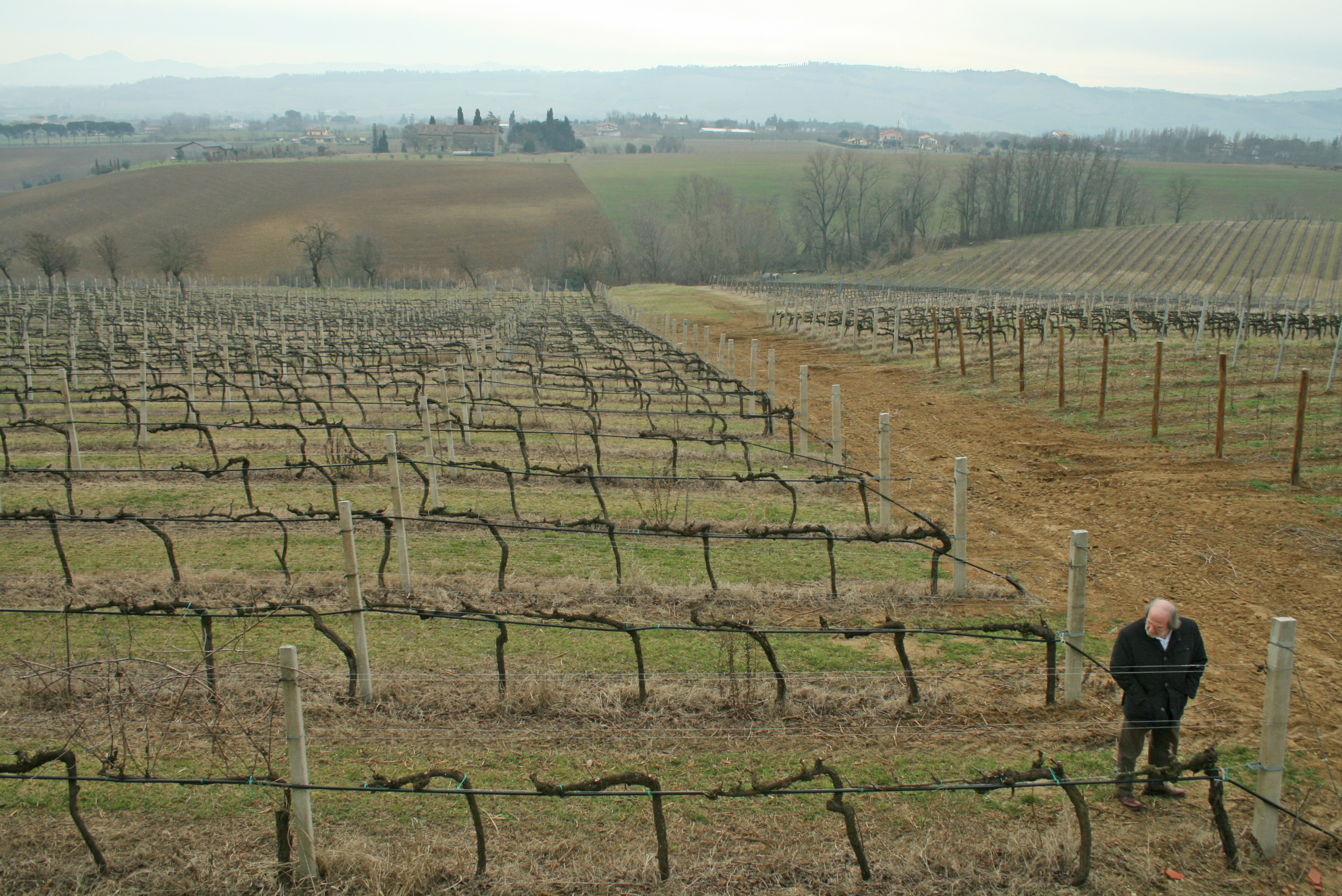
A rainy afternoon spent walking the spring-time vineyards on the Drei Dona estate in Emilia Romagna.
News of the series of earthquakes (and here) that since early Sunday have been hitting the north-central Italy region of Emilia Romagna brought concerns for the many winemakers and artisans in the area.
Famous for its cheeses, ceramics and Sangiovese-based wines, among other things, Emilia Romagna has to me been one of the cherished off-the-tourist map areas of Italy.
Of course, I’m sure I’m not seeing how really busy the region can be, since all my visits have come in early spring, well before the weather warms and the tourists begin their migration to the so-called Romagna Riviera on the Adriatic Sea, where they frolic on the longest beach in Europe.
Early spring is when the winemakers are relaxed and vineyards are deserted, wines quietly evolving in the tanks and barrels and vines just starting to reflect the change of season.
I’ve walked the rolling vineyards of Fattoria Zerbina with winemaker Cristina Geminiani, a determined woman who took on the naysayers of a skeptical Italian wine press and wine industry to produce her lovely Scacco Matto (“Checkmate” in English), a passito made from Alabana di Romagna grapes. Are the wine barrels she stacked so carefully quite as neat as they were before the terremoto?
Is that massive porcelain elephant still standing in the International Museum of Ceramics in Faenza? It stands high as a man’s head and that’s not including the Hindu-like riders mounted on its back.
And I wonder if the 15th century watchtower on the Drei Dona estate Tenuta La Palazza, around which the main house was built and where Giovanna Drei Dona showed off some of the wineries oldest and its finest labels, all named for the estate’s horses , still stands.
We can only wait and hope.
Memorial Day and the start of something big
Memorial Day marks the beginning of what Team Wine Openers refers to as the summer holiday party season (not to be confused with winter holiday party season), when you’re faced with buying wine to match a picnic or other outdoor get-together where you may not know either the menu or all the guests.
Buying wine for a crowd (even a small crowd of, say, two) doesn’t have to be confusing. It doesn’t even have to the very expensive. First, remember it’s not your job to make sure everyone is happy (unless, of course, there ARE only two of you and then you might at least act as if it were your responsibility). No matter what you open, someone is bound to be disappointed and probably will remind in you in their loudest voice.
Second, unless it’s a special occasion or you’re sharing this wine with that special friend (meaning someone who will appreciate the wine and you), don’t spend a lot of money. I’m not saying price is the sole determinant of quality; there are way too many under-$10 wines out there refuting the “high dollar, great wine” theory. It’s often true you get what you pay for, but if you’re careful, you’ll get more than you pay for.
Third, buy quantity. If your tasked to have enough wine for six people, don’t stop at two bottles. Figure about two glasses apiece (with four servings per bottle). Large-format bottles (magnums and up, see tip No. 4) usually cost less per glass and will ensure you don’t run out early.
Fourth, be resourceful, thrifty and environmental – serve a boxed wine. The acceptance of boxed wine has grown in recent years, with big-name writers such as Eric Asimov and Ray Isle giving at least modest approval of non-glass containers.
Boxed wines commonly hold three liters (equal to four bottles), are easy to pour and stay fresh longer than an opened bottle. They also are less-expensive per glass and an added plus: they don’t break, in case your party involves a river raft or two.
Fifth, buy something you know a little about. You may get asked about the difference between the sauvignon blanc you brought and an over-oaked California chardonnay, and it makes everyone feel smarter when you give a reasonable and honest answer.
Six, focus on low-alcohol wines. Summer meals can range from grilled meats to light salads, and while a zinfandel goes great with the former, high-alcohol wines have a tendency to fill you up and make you sleepy, which puts a damper on most parties.
Seven, don’t worry about glassware. Plastic glasses are just fine, thank you, for informal backyard picnics where the dog and the Frisbee may be bounding around the crowd. If you want a nicer glass, the so-called Libby glass (because that manufacturer makes a decent inexpensive wine glass) can be your out. Our advice is to leave home your $139 Riedel sommelier black glass.
Finally, bring a wine you like and enjoy yourself.
Wines I’ve enjoyed lately:
Cupcake 2011 Cupcake Vineyards Riesling ($13.99, srp) – Cupcake sources fruit from many of the world’s best growing regions for its line of wines, and this Riesling comes from Germany’s famed Mosel region, where vineyards grow on near-vertical hillsides lining the river. Lots of citrus, melon, and zingy acidity.
Lapostolle Cuvee Alexandre 2008 Merlot ($17-$23) – A long growing season in Chile’s Apalta, a sub-region of the Colchagua Valley, allow Lapostolle’s merlot to reach prime ripeness and ideal maturity, qualities reflected in this elegant, intense wine. Offers a mouthful of complex flavors, from spice to dark blueberries and red fruit, with a hint of complementary oak. With 15 percent Carmenere.
Folie a Deux Russian River 2010 Chardonnay ($18, srp) – The touch of French and American oak enlivens this California-style chardonnay, with crisp green apple, pineapple and tropical fruit across the palate and a lingering finish.
Finding sustainabilty in the wine business
DENVER – We all learned a couple of things from the recently concluded DrinkLocalWine 2012 conference here, among them that Colorado Gov. John Hickenlooper, who played a key role in the early days of the state’s micro-brewery industry, is a staunch supporter of Colorado wine.
Hickenlooper made a couple of much-appreciated appearances (well, one that I know of, but he was agile enough it seemed like he was several places at once, a sure sign of a capable politician) during the conference, including the opening dinner Friday night where he encouraged and challenged the visiting bloggers to explore Colorado wines.

Colorado Commissioner of Agriculture John Salazar and Gov. John Hickenlooper were welcome guests for the opening dinner of the DLW 2012 conference in Denver.
“What the Colorado wineries are doing right now, it’s so similar to what Colorado brewpubs and microbreweries were doing 25 years ago,” said Hicklenlooper. “They’re beginning to see that success.”
Thanks to Jacob Harkins at localwinos.com and Colorado Urban Winefest for the video.
How do you measure success? I think Colorado winemakers, and here you can substitute any state except maybe the Big Three (Cal., Wash., Ore.), are struggling to find the secret to success. Success, like eternal happiness, true love or the perfect apple pie, has many interpretations.
Maybe it’s “economical sustainability,” a phrase from state enologist Steve Menke. “Colorado is running out of room (to grow) vinifera” grapes, Menke said, suggesting hybrid varietals may spur further growth in the industry.
While some winemakers dream of reaching bigger markets and pushing more cases out the door, I don’t think Colorado is alone in having a handful of its 100 or so licensed wineries seemingly not concerned with growth. If, that is, you mean turning what really is a full-time hobby into a full-time profession.
Many winemakers seem quite content to make their 500 or so cases of wine each year, an amount they can sell easily to the tourists wandering off the highway. Do the winemakers make a living doing that? Probably not, but there are a lot of second-income winemakers in Colorado who don’t rely on wine sales to pay the bills. That doesn’t mean they don’t want to make great wine, it just means they don’t have to make great wine to hear compliments on their wine.
Colorado’s not unique that way. Winemaking regions worldwide have benefited from fortunes big or small made elsewhere. And often that money allows winemakers the freedom to experiment, making everyday good wines while moving toward that great wine.
However, having that back-up bankroll may keep us from improving. State viticulturist Horst Caspari often reminds winemakers in the cool-climate North Fork Valley that getting a grape crop every third year is not the road to economic sustainabilty. Still some winemakers carry on, making elegant pinot noirs and cabernet francs every year they have the grapes and cultivating a following that waits patiently for every vintage.
Would the industry benefit if some winemakers quit pinning their hopes on temperamental pinot noir and started focusing on hardy nonvinifera varietals such as noiret, baco noir or traminette? Can’t say. Some of the nonvinifera hybrids I tasted last weekend weren’t very good. I had a Norton from Pennsylvania that was smooth, balanced and similar to a cabernet franc, but right next to that was a Norton from Virginia that was foxy, a bit rank and hard to swallow. The grape or the winemaker?
Economic sustainability? You have to give consumers what they want or think they want. Sweet reds, oaky whites, fruit-forward wines with soft tannins and berry pie flavors. Maybe not the most-complex wines but they sell.
Personal sustainability? Making elegant pinot noirs every third year may not pay all the bills, but it soothes the soul.
“An exciting time” to eat, drink locally
DENVER – The DrinkLocalWine 2012 conference wrapped up today but it didn’t go without leaving many things to ponder about small wine markets and how they succeed.
Friday night’s opening dinner with the Guv was more than simply a photo op (for Hickenlooper and the DLW folks), as noted by state ag commish John Salazar, who was standing in the back when he quietly reminded a few of us how much Hickenlooper supports the ag businesses in Colorado.
“He’s got this feet in both worlds,” said Salazar, referring to Hickenlooper’s political demands and his respect for the citizens living on and working the land.
Saturday morning was filled with seminars, and they all offered great insights from very different perspectives. Evan Faber of Salt Bistro in Boulder is relentless in his support of Colorado wines and local foods, and this weekend DLW attendees saw a similar spirit revealed in Chef Jensen Cummings of Row 14 Bistro and Wine Bar in Denver. The two chefs shared a panel, along with René Chazottes of the Pacific Club in Newport Beach, Cal., on why local food and wine don’t like each other.
But you’d never know such thing was possible listening to Faber and Jensen, who spent most of their allotted 50 minutes arguing that local foods and wines both benefit from the growing locavore eat/drink local drive.
“It’s an exciting time to be drinking local,” said Faber, who along with Salt Chef Kevin Kidd headlined the 2011 Colorado Mountain Winefest. “People have a new sense of excitement and adventure when they go out to eat.”
And Jensen followed that with “people are getting more and more adventurous” when they go out to eat.
Curiously, or maybe not when you think about it, Jensen said in his hometown it’s easier to get tourists to try Colorado wines than it is to get residents to try their home-grown wines. Again, it’s that sense of adventure shown by tourists and missing in locals “just going out to eat, nothing special.”
One cure? “We have to get the wine in their mouths, get them to know it and believe in it,” Jensen offered.
And Chazottes reminded those listening who sell wine for a living, either in store or restaurant, that guests may come in expecting to find Colorado wines tasting just like their favorite (California, Oregon,. French, New Zealand, etc) wine. Make sure they know that the same varietals may and probably do taste different from different terroirs.
“Don’t confuse, don’t disappoint the consumer,” Chazottes said with his heavy French accent reflecting his old-world sense of respect for food prepared with care and grace. “Don’t drive a consumer willing to try something new back to something familiar.”
Which reminds me of a comment by Master Sommelier Sally Mohr about how there are way too many terroirs in Colorado to come up with a typical Colorado wine. More on that next time.
 Wine Openers