Archive
Enjoying the oldest winery in Italy
I was wandering the aisles of Crossroads Liquors when owner and friend Jerry Sica stopped to ask if I had anything in particular in mind.
“Other than a Chianti or Tempranillo, no,” I said, and he unhesitatingly pointed me toward the Barone Ricasoli Brolio 2010 Chianti Classico.
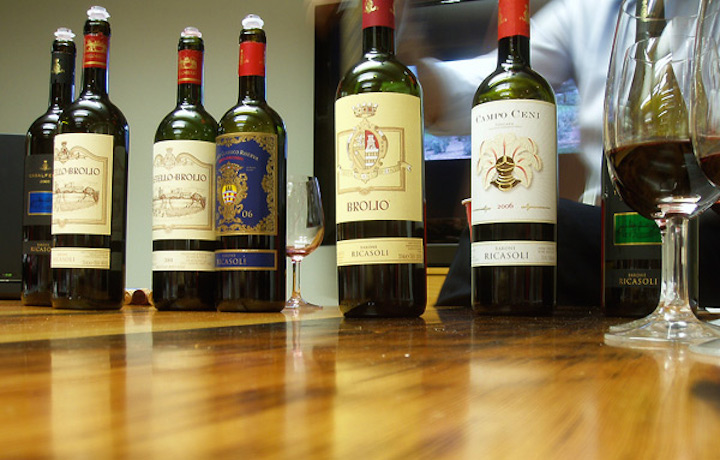
A line-up of Ricasoli wines from a tasting at La Quercia in New York City. Photo courtesy of Cherries and Clay.com.
“You know these guys” he asked, and I nodded.
I was familiar with the Ricasoli family of wines, having met the current (and 32nd) Barone, Franceso, at VinItaly a few years ago.
Although I didn’t know it before our meeting, Barone Ricasoli is the oldest winery in Italy and, according to the magazine Family Business, the fourth longest-lived company in the same place and the second such in the wine sector.
My friend hauling me around VinItaly told me a bit about the Ricasoli history, including the Ricasoli family ties with the town of Florence going back to the 12th century, and where they still spend the summer in the family castle at Brolio, in the hills between Siena and Florence.
He also noted it was the Barone Bettino Ricasoli, known as the “Iron Baron,” who is credited with first writing the Sangiovese-based formula for Chianti Classico wines in 1872.
We finally stopped at stopped at one booth and, pointing to the by-now famiiar name, he asked, “How do you pronounce that?”
After I had stumbled a few times through my deficient Italian, he looked dismayed, grunted, “How very American,” and corrected my pronunciation.
He then guided me over to meet the Barone and with a hiss, warned, “Try not to say anything too American.”
Chianti Classico rules allow up to 20 percent of non-Sangiovese red grapes and both the Brolio Chianti Classico and its big brother, the Ricasoli Castello di Brolio Chianti Classico, typically are 80 percent Sangiovese, 15 percent Merlot and 5 percent Cabernet Sauvignon.
Both wines are ruby red, with violets, red fruit and cherry notes amid earthy Sangiovese minerality with a hint of spice on the end.
If you pay attention to such things, the wines received 90 points from both The Wine Advocate and the International Wine Cellar.
The Ricasoli website says the 2010 vintage is “the best Sangiovese we have ever seen.”
Which, coming from a winery dating back to 1141, is something notable.
For more about Ricasoli Brolio Chianti Classico, please see what my friend and fellow blogger Susannah Gold, who also was at that edition of VinItaly, has written on her blog, avvinare.
Barone Ricasoli Brolio 2010 Chianti Classico, $25; Castello Brolio Chianti Classico, $45. Prices may vary.
One other note: The ribbon on the label insignia says “Rien sans Peine,” which translates from the French to “Nothing without pain.”
Or, as Americans are wont to say, “No pain, no gain.”
Note: Photo courtesy of Cherries and Clay.com.
It’s the memories, not simply what was the best
Early January found me rummaging through my wine cellar (which is cleverly disguised as the basement laundry room) and remembering the wines I had the pleasure of enjoying in 2013.
I can remember for two reasons: One, I keep decent (though not great) notes. The best note-taker I’ve ever witnessed in person is the multi-talented author and Master Sommelier Andrea Robinson, whom I once followed around (no, honest, I wasn’t stalking her) in the Grand Tasting Tent at the Food & Wine Magazine Classic in Aspen.
Never before had I witnessed anyone who could move at a fast pace tasting 100 different wines, write incisive and accurate notes and still make it back to the St. Regis Hotel in time for her presentation to a packed house.

Was this the best wine of 2013? Perhaps, but there were many memorable bottles. Next to the elegant wine is the not-so-elegant plastic blender pitcher we used as an emergency decanter.
Second, I save lots of empty bottles, which means the recycle guy will have his hands full sometime later this winter but they serve as physical reminders of what those bottles once held.
Did I have a favorite? Maybe it was one of the brilliant Italian wines – the 2005 Castel Giocondo Brunello di Montalcino, or the 2005 Arnaldo – Caprai 2005 Sagrantino di Montefalco, or the 2007 Rocche Costamagna Rocche dell”Annunziatia Barolo.
Or was it French, maybe something simple yet elegant, such as the 2009 Domaine Lucien Jacob Les Toussaints?
Was it one of the mind-blowing German Reislings shared by Rielsing-meister Paul Grieco at last summer’s Food & Wine Classic?
Or, perhaps, it was closer to home, such as the memorable 2011 Tempranillo from Eames Petersen in Paonia, a thoughtful, expressive wine, much like the winemaker himself, enjoyed with dear company and a room full of joy.
Asking an ecumenical and wide-ranging wine drinker “Which was your favorite wine?” is like asking Father Flanagan, “Which is your favorite child?”
It’s neither an unfair nor unanswerable question but the world of wine is immense, not only in breadth but depth, a virtual (in every sense of the word) ocean of grape juice.
It’s as my friend and Jedi Master of blogging Alfonso Cevola wrote about his first (vinous) love, the wines of Italy: There is no easy way to understand wines without plunging forward.
“As for the mystery of Italian wine, lately some of the fog has lifted,” wrote Cevola in his much-read blog, “On the Wine Trail in Italy.” “But every time I think I get a handle on it, another perplexing clue surfaces.
“I’m okay with that, but in my day job, the task of trying to make something that can be very complicated into something easily explainable and understandable is still a big order.”
It’s a task all serious wine drinkers understand.
So I stand surrounded by wine bottles, some empty, some still full of the promises made many harvests ago in countries around the world.
And I smile at the challenge of new discoveries.
Increased wine-market share doesn’t detract from the local appeal
Wine writer Fred Tasker, now retired from the Miami Herald but still writing about wines via McClatchy-Tribune News Service, recently noted that Americans drank more wine last year for the 19th year in a row, up 2 percent to 360 million 12-bottle cases, according to wine consultants Gomberg, Fredrikson & Associates.
And second, Americans love American wine: California makes 58 percent of all the wine we drink. That’s not surprising, considering California produces about 90 percent of all U.S. wine.
That’s 207.7 million cases worth an estimated $22 billion in retail sales. Colorado can’t quite match those numbers, producing 141,000 cases in fiscal year 2013 with reported sales of $28.2 million (up $9.1 million from 2012) and an economic impact of $144 million.
However, a study recently released by Colorado State University, from which the above Colorado wine statistics were taken, says Colorado wines are grabbing an increasing market share, up last year to 5.48 percent of total wine sales in Colorado. That means that for every $20 spent on wine in Colorado, $1 goes to a Colorado wine.
And second, that Coloradans, on average, drink 3.1 gallons of wine per year, 24 percent more than the national average.
Why Colorado, whose 5.1-million population ranks 22nd, would consume more wine per capita than California, Texas, or any of the 19 other larger states, may be that we attract tourists not afraid to open their wallets for wine.
“The tourist business is so big and attracts so many people to Colorado and particularly to the big three resorts of Aspen, Vail and Telluride,” said Doug Caskey, executive director of the Colorado Wine Industry Development Board. “Just in those three areas there is an awful lot of wine consumed.”
That’s not to say other resort areas, such as Crested Butte, Summit County, Steamboat and Winter Park don’t pour their share of wines, but it’s really in the highest-money markets where most of the juice gets shared.
“Those three markets really change and elevate the rest of the Colorado wine market,” Caskey said.
That almost-5.5 percent of the market share is a 1.66 percent increase over 2012. Part of that growth, among many reasons, has to do with more wineries, particularly Western Slope wineries, finding shelf space in Front Range liquor stores and restaurants.
This helps build that market share on the populous Front Range, which is good, but also means some of those Denver-Boulder-Colorado Springs wine drinkers might not visit the Western Slope as often.
In past years, I’ve heard visitors here for the Colorado Mountain Winefest and the Grand Valley Winery Association’s annual barrel tasting say they make several trips each year to the Grand Valley and elsewhere to stock up on wines unavailable on the Front Range.
But this year several local wineries said their tasting room visits in 2013 were down compared to years past.
That indicates some wine buyers are finding their favorite Colorado wines closer to home, not needing those four or five trips across the Divide to fill their cellars.
However, that doesn’t mean the Grand Valley will lose its appeal for wine lovers.
Tickets for the 2014 Barrel Into Spring tasting, sponsored by the Grand Valley Winery Association, went on sale Jan. 1 and four days later 75 tickets had been snapped up.
Bob Witham, owner of Two Rivers Winery and Chateau and secretary of the winery association, said he expects both weekends (April 26–27 and May 17–18) to sell their allotments of 350 tickets each. (Tickets cost $70 per person. Information: 241-3155 or here).
This tells Cassidee Shull, executive director of the Colorado Association for Viticulture and Enology, that the Western Slope will continue to draw people eager to share the experience of visiting their favorite wineries.
“We offer them the destination weekends and the events in the vineyards that they can’t get anywhere else,” Shull said. “Maybe they don’t come here as many times each year as they did before Colorado wines were so available but that doesn’t mean they will stop coming. It’s these unique adventures and the excitement of things like tasting the wine where it’s made and meeting the winemaker that will bring these people back every year.”
A short (day) look at Kim Crawford wines

Kim Crawford vineyards at Hawkes Bay, North Island, New Zealand
The shortest day of the year leaves us little time to write about wines, although plenty of time (if you drink after sunset) to enjoy them. I’m catching up a bit before the year ends on some wines I’ve enjoyed the past few months.
A selection of wines from Kim Crawford reminded me why New Zealand might be one of the most-dynamic wine-making regions in the world today and the No. 1 selling luxury New Zealand wine in the U.S., according to the website. Fair enough.
2011 Marlborough Sauvingon Blanc – ($12). I’m not the only one who likes this bright, taut wine showing notes of tropical fruits, fresh grass and citrus: Wine Spectator gave the wine 90-plus points for seven straight years.
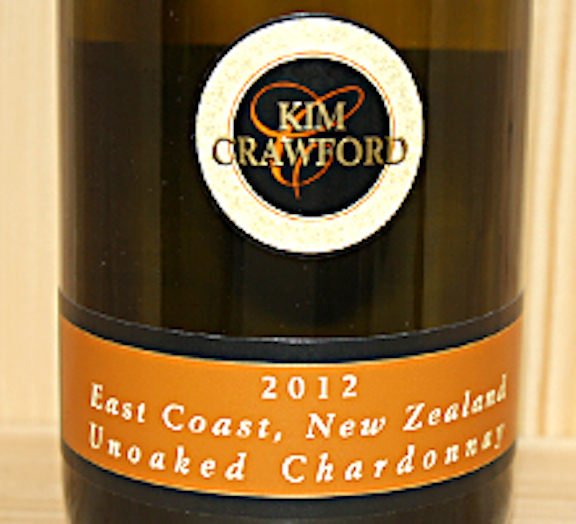 2012 Unoaked Chardonnay – ($13.99). You’re forgiven if you sometimes feel a bit burned out on what passes for Chardonnay. Too fat, too buttery, too “pillowy,” if that’s a word. There are many reasons why unoaked chards (with thanks to writer Bill St. John) are taking a bigger share each year out of the chardonnay pie, and this Kim Crawford offering is among the better unoaked chardonnays on the shelf.
Kim Crawford sources his grapes from the Marlborough region (South Island) and Hawkes Bay (south-east coast of the North Island), offering tropical and white peach/apricot flavors with nice acidity and a bit of pleasing body lost in other leaner unoaked chardonnays.
Certain white wine grapes, led by Riesling but certainly including Chardonnay and, to some extent, Sauvignon Blanc, are particularly prized for their clarity, the ability to reflect and express the specific terroir they are raised. Additionally, maybe to some degree of danger, is Chardonnay’s clarity allows it to be manipulated by the winemaker.
The winemaker, of course, has to be willing to let the grape shine through, and Kim Crawford winemaker Anthony Walkenhorst has that ability.
2011 Pinot Noir – ($18). Maybe it’ the soils, maybe it’s the proximity of the sea, maybe it’s the … well, who knows for sure, but New Zealand produces some beautiful Pinot Noir. This one from the South Island vineyards is among the better ones, and the fact it’s listed as sold out on at least one site attests to its popularity. Bright red fruit, with notes of tart and sweet cherries and ripe strawberries, with just enough spice and sweet French oak to give the wine some heft.
BookCliff Vineyards keeps Colorado in the Cups
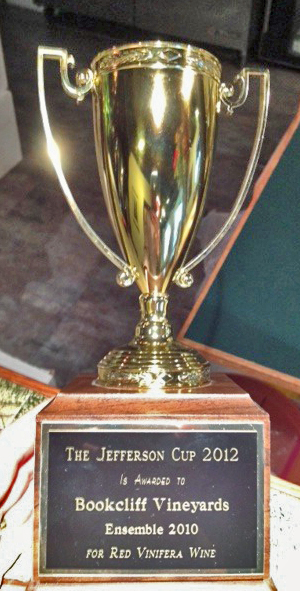
BookCliff Vineyards 2012 Jefferson Cup. Yep, it’s a real cup. The winery’s 2013 Cup is in the mail.
As I noted earlier today on (both???) my Facebook page(s) – which is a frustrating story all its own – John Garlich and Ulla Merz of BookCliff Vineyards in Boulder recently won their third Jefferson Cup award, the top prize in the annual Jefferson Cup Invitational Wine Competition.
That makes three (2010, 2012, 2013) wins in five years for BookCliff, with other Colorado wineries winning in 2009 (Boulder Creek) and 2011 (Canyon Wind Cellars).
This year’s winning wine was the BookCliff 2011 Reserve Cabernet Franc, and we’d like to think the win demonstrates at least a couple of promising developments about the Colorado wine industry. One, that Colorado wine can hold its own against any wines produced in the U.S. and two, that Garlich and Merz (and assistant winemaker Justin Jannusch) have learned how to make the best of what might soon be Colorado’s signature red grape.
A bit about the Jefferson Cup, devised by the renowned wine writer Doug Frost (who also graciously wrote the forward to my latest book, “Drink It In: Wine Guide to Western Colorado”) and one of the more-prestigious wine competitions in the U.S. today.
The Jefferson Cup is the only wine competition that recognizes top wines from all of America’s wine regions. This year, 22 states took home honors with 12 states having wineries awarded the highest award, the Jefferson Cup. In all, 25 Jefferson Cups were awarded. And this is a real cup, not a round doubloon hanging from a colored ribbon but something Ulla compared to a football trophy, easily big enough to drink your wine from.
And, unlike other, open-to-all wine competitions, the Jefferson Cup is an invitational (hence the name, right?) where 700 wines are pre-selected to “exemplify top viticulture and winemaking throughout America,” as the press release says.
What’s also important, especially for Colorado winemakers who might be wondering what the future holds if this year’s cold weather serves up another short crop of other vitis vinifera grapes, is Cabernet Franc might be cold-hardy enough to be the industry’s savior.
That’s a whole ‘nother topic, one for next week’s column, but after the double-whammy cold snaps of winter and spring 2013, which decimated the wine grape crop in most of western Colorado, Cabernet Franc was the only red grape this summer to have substantial survival (Riesling was the best-surviving white grape). No Tempranillo, almost no Merlot, very little Syrah/Shiraz, Cabernet Sauvignon did a meager OK, Petit Verdot so-so, but Cab Franc lived through it all. Just sayin’, is all.
BookCliff was a pioneer in making a Cab Franc varietal bottling and as Ulla said during a phone call Thursday, they soon discovered Cabernet Franc fits BookCliff’s winemaking style.
“Our first (Cab Franc vintage) was 2002,” she said. “I think we were one of the first wineries to make 100 percent Cab Franc.”
Usually used as a blending wine to add finesse and pepper, violets and a bit of tobacco hints to heavier Bordeaux-style wines, today many wineries in Colorado are making a Cab Franc varietal bottling.
“Cabernet Franc has worked well for us, it seems to fit our style of winemaking,” said Ulla, noting that among other awards the 2010 Reserve Cabernet Franc won a gold medal and was named the Best Cab Franc under $30 at the Los Angeles International Wine Competition and also received a double gold in the 2013 Colorado Governor’s Cup wine competition.
BookCliff uses only French oak in making Cabernet Franc, the barrels made by a specific barrel-maker familiar with the winery, Ulla said. “What happened in 2002, we found we had only one or two barrels, and it’s been (small production) since,” she said. “Every winemaker has to find what works for them and its always been French oak for us on the Cabernet Franc.”
BookCliff also has a 2013 Jefferson Cup nominee (just under the Cup winners) with its 2012 Colorado Petit Verdot plus its Ensemble 2011 Red Blend and the 2012 Colorado Malbec won Medals of Merit.
Other Colorado wineries also winning awards at the 2013 Jefferson Cup included Anemoi, Canyon Wind Cellars, Grande River Vineyards, and Winery at Holy Cross Abbey. Congratulations to all.
Colorado wine industry tabs out at $144 million
Colorado wine is showing up on more tables and consumers are willing to pay more it, according to a report released Wednesday by the Colorado Wine Industry Development Board.
The report, done by Colorado State University for the CWIDB, says that not only are Colorado wine consumers drinking more wine than their national counterparts – 3.41 gallons per year compared to the national level of 2.7 gallon – the amount of Colorado wine being bought also has increased.
The report also notes that that the Colorado wine industry’s economic impact in sales, employment and other considerations has more than tripled to more than $144 million since a similar study was conducted in 2005.
“Our $144 million is very small, but it’s a key linchpin in the state’s $40 billion agriculture industry,” said Doug Caskey, executive director of the Colorado wine board. ““The significant expansion of the Colorado wine industry’s impact through tourism is particularly exciting.”
The wine industry has become “imperative” to the marketing efforts of the Grand Junction Visitor & Convention Bureau, said Mistalynn Lee Meyeraan, Marketing & Public Relations Coordinator.
“This is the way Grand Junction, and the entire Grand Valley, distinguishes itself from the rest of the destinations,” Meyeraan said. “It’s our ‘umbrella’ brand. This is wine country.”
CSU researchers said wine tourism generates $103 million annually in direct and indirect economic activity, with an estimated $144 million in sales, employment and secondary economic impacts.
Caskey said the wine industry “encouraged state residents to contribute $56.3 million to Colorado’s economy by attending wine festivals and events, or visiting tasting rooms instead of taking their money to wineries in another states.
“We are very gratified that Colorado wine adds one more item to the long and exhilarating ‘to do’ list that the state offers its visitors,” he said.
According to the report, the state’s wine industry, barely a quarter-century old in its modern iteration, remains small by most standards, accounting for just 2 percent (up .2-percent) of all wine sales (by volume) in Colorado and 5.5 percent of the wine dollars spent.
The later in part is due to the higher prices Colorado wine fetches. The average price of a bottle of Colorado wine last year was $16.64, up from $12.86 in 2005 and well above the $6.14 average cited for other wines.
But that last is a bit misleading, since “other wines” includes the ocean of cheap brands such as box and jug wines, Yellowtail and Two Buck Chuck.
According to the report, sales of local wines jumped from $19.1 million in fiscal year 2011 to $28.2 million last year.
“What that says is $1 out of every 20 spent on wine in this state goes to Colorado wine,” Caskey added.
Production in Colorado grew to 335,000 gallons, up 14 percent (17,000 gallons) from 2012 and a reflection of the bountiful harvest grape producers enjoyed in 2012.
The secret to Thanksgiving wines is no secret
That fully loaded, sag-in-the-middle Thanksgiving table might be the biggest source of stress in a wine drinker’s year. A big roasted bird (or ham or wild beast), sweet dishes, sour dishes, tofu dishes, roasted, fried or canned vegetables, an assortment of relishes and finger food, the list goes on.
And then someone tells you, “I can’t drink red wines, they give me headaches.” We call that a hangover, but you get the idea.
You could serve Coke or Coors with the dinner, but that’s only if NASCAR is on TV.
Wine? The rules really are simple. Stay away from the big, jammy reds, which don’t go with any food known to man. Ditto with the heavily oaked whites, which fortunately are disappearing from your store shelves, and the sweet wines (red or white), at least during the meal.
Rick Rozelle, wine manager at Fisher’s Liquor Barn, noted he drinks little wine during the meal even though he may have glass of it near his plate.
“It’s tough to match all the flavors on that table, so I may have sip or two but most of my wine drinking happens before the meal,” he said, a sentiment shared with many wine lovers.
Some of my favorite wines for that narrow slot of Thanksgiving acceptance: dry or off-dry sparkling wines; off-dry or dry Rieslings and Gewurtztraminers; Chablis-style chardonnays,; Sauvignon Blanc; dry and off-dry rosés; Pinot Noirs, Barberas, Syrahs, lighter Grenaches or for lovers of bigger red blends, try the Grenache/Syrah/Mourvedre blends (think Chateauneuf du Pape but go for the less-expensive Gigondas or Vacqueyras).
I said “favorite,” because it’s no secret that the secret always is to drink what you like, whether it’s Thunderbird or Silver Oak.
You might peek at the alcohol content, since there’s already plenty of food to weigh you down, and some of the bigger reds (Zinfandel, are you listening?) can top out above 15 percent, which makes the post-meal nappy-time come very early.
This meal also may be the most locavore-centric holiday of the year, with home-grown turkeys, veggies and drinks taking over the table.
If you are taking the local approach, don’t forge your locals wineries, and Colorado wineries offer a great selection of Thanksgiving wines.
Some ideas include the elegant dry rosés at Canyon Wine, Garfield Estate and Mesa Park wineries; a variety of Rieslings and Sauvignon Blancs from Carlson Vineyards, Plum Creek Cellars and Whitewater Hill; Pinot Noirs from the North Fork Valley; and Cabernet Francs from Garfield Estate, Grande River or Boulder Creek.
Nearly all the local wineries offer a dessert-style wine, from Port-style reds to luscious whites. A fine alternative to wine is the hard apple cider from Delicious Orchards in Paonia.
Last week, a friend shared what might be the best anti-stress, pre-meal preparation ever.
An hour or so before the guests arrive, he and his wife disappear into the basement bar, where they have some quiet time to relax and have a drink (or two) before the hubbub starts.
It’s a time to gather thoughts, ingest some social lubricant (the coarser among us might consider it pounding down a few) and get ready for the busy day.
You may not please everyone, but the key is to please yourself. Again, drink what you like, let the others follow.
Don’t judge a Moldavian by the price
Despite a frost warning in the mountains surrounding town, today was warm enough (mid-70s) for a vodka tonic to cut the dust and I was pleased to try a new and very affordable ($10 for a .750l) vodka.
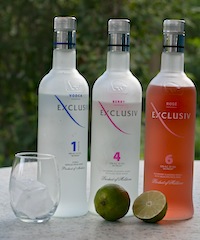
Exclusiv vodka was introduced to the U.S. this spring and already has beeen adopted by many reviewers.
Exclusiv vodka was introduced to the U.S. earlier this year and anyone Googling the name will find many reviewers of this Moldava-made spirit already have adopted this import as one of their favorite vodkas.
A $10 vodka attracts new drinkers simply because of the price but don’t let that stop you – this is a very nice vodka despite its lower-shelf price point.
Here is what one PR notice said: “The Double Gold medal winners in the 2012 San Francisco World Spirits Competition prove that spending more money for a bottle of Vodka doesn’t guarantee better taste.
In a surprising upset, Vodka newcomer, Exclusiv Vodka, beat out several major brands including Absolut, Chopin, Smirnoff, Finlandia, and others and costs a fraction of the price.
“Exclusiv Vodka stood up to more than 1,200 spirits being judged this year—the largest group of entries in the 12-year history of the competition.”
Heady stuff for any spirit, much less one you never heard of before this spring.
There’s something about the water used in this vodca (that’s how the website spells it, sort of early Moldavian) as being a factor in its smooth entry and pleasant taste but I’ll leave that to the experts.
I found it quite pleasant with tonic and in dirty martinis. Exclusiv also comes in several flavored styles (the numbers on the bottles relate to the flavors), including Berry and Rosé, both of which brightened up mixed drinks.
Keep Exclusiv vodka (no matter how you spell it) around for the holiday season, you’ll find plenty of reasons to use it.
‘It’s a Tough Enough Business’ for winemakers
Amid the bustle of Saturday’s (Sept. 22) Festival in the Park, the popular day-long highlight of the Colorado Mountain Winefest, was the sight of Mike Thompson wearing a neck brace and doing his best not to help too much.
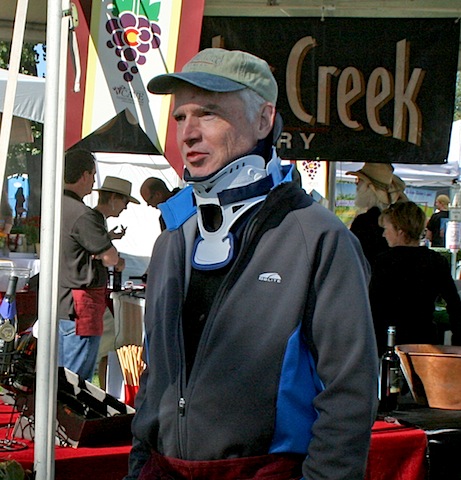
Injured earlier this month in a bike accident while training for a half-marathon, Mike Thompson of Boulder Creek Winery nevertheless showed up Saturday at the Colorado Mountain Winefest.
Thompson and his wife Jackie own Boulder Creek Winery in Boulder and when he isn’t involved with the winery, Mike usually can be found running or riding his bike in preparation for an upcoming marathon or half-marathon.
It was while training earlier this month for a half-marathon that Mike had a bike accident leaving him with four fractured vertebrae, one in his neck and three mid-spine.
He said he was riding along a Boulder bike path when he ran into a mountain biker who had stopped on the trail to answer his cell phone.
“It was all my fault,” said Mike, a bright-pink scar etched on his forehead where part of his injuries needed nine stitches. “I saw him and thought he was far enough ahead, so I put my head down and didn’t see he had stopped.”
The other rider wasn’t injured.
While Thompson’s injuries heal, he’s wearing the neck brace and limited to light work, which can be tough duty for a guy not accustomed to simply standing around.
“He shouldn’t be lifting at all,” said Jackie, eyeing her husband as he fidgeted about the booth. “He refused to stay home so I have him running the cash machine today.”
The good news is Mike expects to be back training soon, although when suggested he’ll be running by November, Jackie looked skeptical.
“Maybe,” she said. “He’s hard to keep quiet.”
The accident came at the worst time for a winemaker – the Thompsons had a crew picking their sauvignon blanc grapes that very day in the Grand Valley, and the timing of getting grapes to the winery is critical.
“Mike was just getting out of the hospital so I decided I would make the 10-hour drive over here and pick up the grapes and then we’d figure out how we were going to get them crushed and everything,” said Jackie, an award-winning winemaker,including the Best Rosé at the 2012 Governor’s Cup competition. “I was not looking forward to that and then John (Garlich) called.”
Garlich and his wife Ulla Merz operate Bookcliff Vineyards in Boulder and grow 35 acres of grapes in the Vinelands area south of Palisade.
Garlich, who is quite familiar with the long drive from Boulder to his vineyards 250 miles away, volunteered to drive to Palisade, pick up the Thompson’s grapes and get them to Boulder.
“He did even more,” Jackie said. “John got the grapes and had them crushed and pressed at his winery and then he put the juice in a portable tank and trucked it to my winery.”
“It saved the day for me and saved that batch of wine.”
It’s not unusual, said Garlich, for Colorado’s winemakers to lend a helping hand when other winemakers are in need of assistance.
“It’s a tough business already, why make it tougher for each other?” he asked, downplaying his role.
Wineries hit by flooding
Several wineries were hit by the flooding that destroyed homes and businesses and did an estimated $500 million in damage across the Front Range.
The website for Creekside Cellars in Evergreen shows a brooding Bear Creek climbing close to the winery, and several people this weekend said winemaker Michelle Cleveland was able to save her wine despite some water in the winery.
Snowy Peaks Winery in Estes Park wasn’t damaged but was inaccessible for several days, as was the entire town.
With access to Estes Park limited to the Peak-to-Peak Highway or across Trail Ridge Road, the winery’s website offers an upbeat view, saying the tasting room has re-opened and grapes will start arriving this week.
Mike Buell of Turquoise Mesa Winery in Broomfield said his winery will help Snowy Peaks make it through the vintage.
The website for Caitano’s Winery, whose tasting room at the Rock N River Day Resort in Lyons suffered extensive damage, says the winery is closed until further notice.
On a brighter note, the Colorado Association for Viticulture and Enology announced Monday an estimated 5,846 people attended the Festival in the Park, setting a 22-year attendance high.
The fall harvest can be a wild time
The bounties of the land, and not just the bounty in your garden or vineyard, are never easier to find than late summer and fall.
Berries are ripening, greens are sprouting, mushrooms are blasting through the soil.
The recent rains brought new life to the mountains, which were starting to look a bit parched, all part of the long-term West-wide drought frustrating a lot of dedicated foragers.
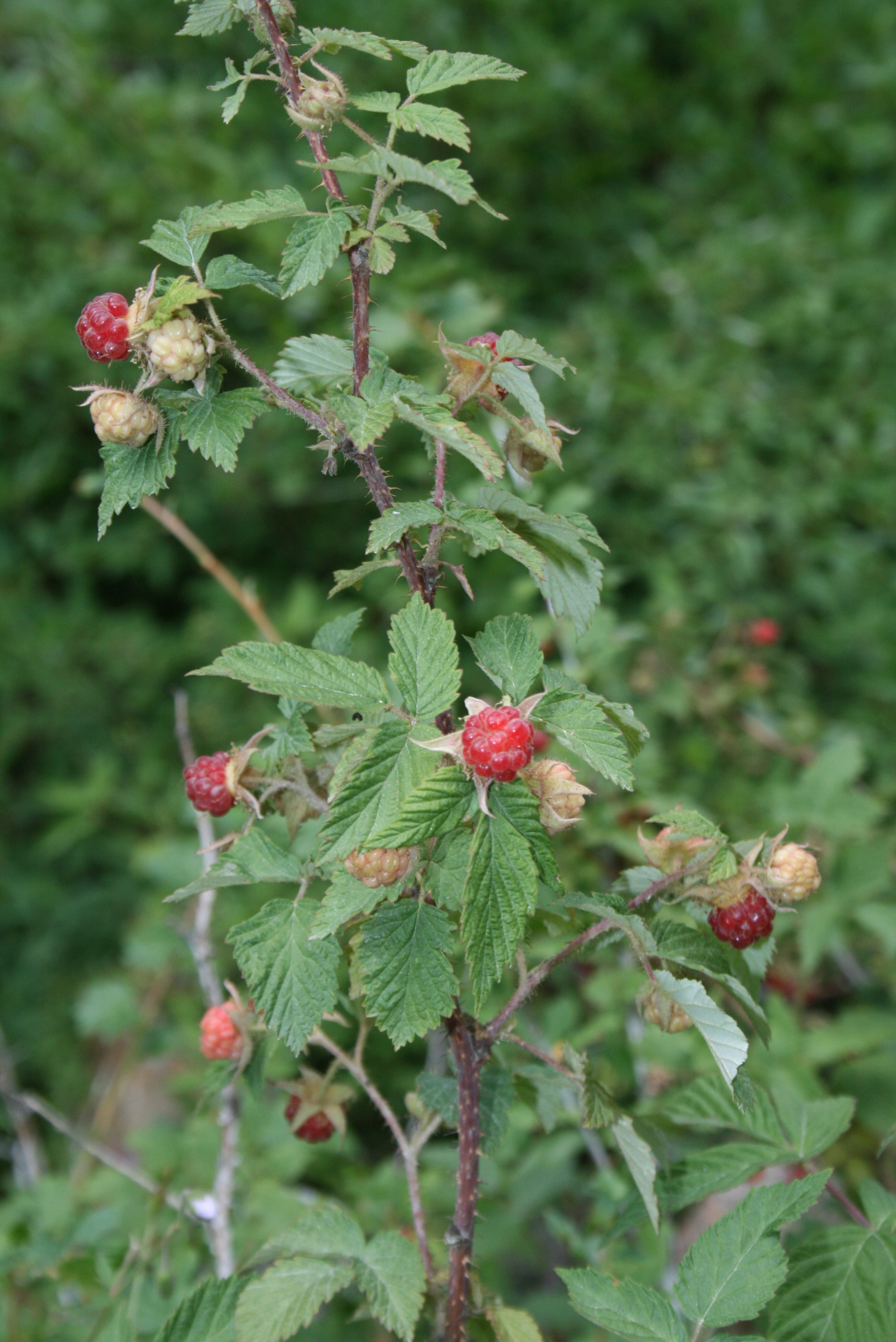
Wild raspberries, tiny but ultra-sweet, are common in the Colorado mountains.
However, a couple of weeks of rain changes everything, and a recent encounter with my ‘shroom-hunting friends from the North Fork Valley, where “eating local” takes on a whole new meaning from the ground up, indicated the time had come to stomp around a few favorite places.
The first stop was to drop in on Yvon Gros at Leroux Creek Inn and Vineyards on Rogers Mesa. If you didn’t know the amiable Gros was French, you might deduce it from his immense talent of wresting a delicious meal from things you and I might overlook.
In the spring, he forages among the still-bare vines for wild greens. In the fall, when he isn’t filtering and bottling wine or harvesting the acres of wine grapes growing in his Provence-like landscape, he’s out hiking the backcountry plucking mushrooms.
Earlier this summer, after a particularly memorable meal had guests begging for a recipe, he simply laughed, grabbed a small kitchen knife and said, “Come, I’ll show how hard it is.”
A few steps into the vineyard, he bent over, swiped the knife across the ground and stood, his hand full of…dandelions?
“See? In the spring and summer when these are young and tender, they are delicious,” he said, laughing again. “Just be careful and don’t cut yourself.
“When it gets too hot down here, I go up on Grand Mesa and all summer I find young dandelions.”
Eating off the land isn’t new. American Indians and settlers in many countries kept watch for the first greens of spring because those sprouts were key to surviving the dull, vitamin- and mineral-depleted winter diets.
A generation ago we were being admonished to eat naturally by Euell Gibbons, wild plant expert and author of “Stalking the Wild Asparagus,” among other titles, and today it’s people such as Steve Rinella, hunting-rights spokesman and star of the cable TV show “Meateater,” pushing us to step out of bounds, literally and figuratively.
Dandelions, miner’s lettuce, purslane and numerous roots and seeds provide a natural larder for those adventurous enough to seek them out.
With the summer rains here, there are mushrooms and berries to add to the mix. A short drive on Grand Mesa this week turned up ripe raspberries, serviceberries (a favorite of black bears, with whom you may have to compete) and tiny strawberries, bursting with flavor although no bigger than the nail on your pinkie. Plus, there were trees and bushes full of still-green but promising wild apples, acorns and chokecherries.
Also a variety of edible and non-edible mushrooms, and yes, it’s important to know which is which. Boletes, oysters, puffballs, scaly urchins and, of course, the much sought-after apricot-hued chanterelles are among the fungi poking through the soil.
But you’re on your own. Favorite mushroom spots are protected like favorite children – everyone loves to admit they have one, and they expect you to know how to get one of your own.
“Of course it’s a secret,” admonished Gros after a visitor pleaded to know where Gros went for his prized mushrooms. “It takes me 45 minutes to get there from here, and my kidneys are shaken apart, but it’s worth it.”
He said he has a friend with a helicopter who volunteered to fly Gros to his ‘shroom spot.
“I don’t know,” he pondered. “It would be much easier and I could go there in just minutes. But then I’d have to show him and, well, he’s French, you know, and I’m not sure I can trust him not to tell.”
 Wine Openers