Archive
Ever hopeful, Macedonia wines reach out to the world
 “Wine makes everyone hopeful” – Aristotle
We’re not sure if the Greek philosopher actually said this but we do know Aristotle (384 – 322 BCE) was born in the Macedonia region of Greece, where winemaking has seen ups and downs since ancient times.
Once well-known throughout the Greek and Roman empires, the Macedonian wine industry floundered during a long history of wars and unrest, along with the phylloxera blight of the late 1800s that killed so many European vineyards.
The rebirth, helped along with the breakup of Yugoslavia and the adoption of modern winemaking techniques, didn’t begin until the late 20th century with the world’s rediscovery of Macedonia’s potential.
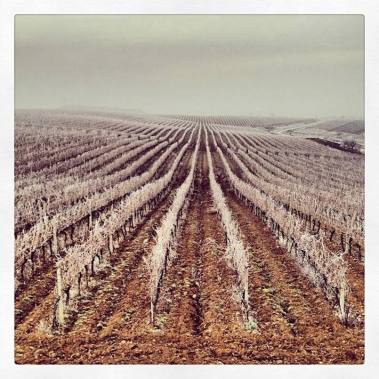
Macedonia vineyards in winter. Courtesy Bovin Winery
Today the Republic of Macedonia annually produces 100 – 125 million liters of wine, about 3-4 percent of the world’s wine production.
The tiny (2 million population) country’s best-known indigenous grape might be Vranec, a red grape giving a deep purple wine full of dark berry characteristics with moderate tannins and balanced with great acidity.
Other leading varietals include Cabernet Sauvignon, Pinot Noir, Merlot and white grapes Chardonnay and Assyrtiko.
I recently had the opportunity to taste a sampling of several Macedonian wines including two from the Bovin Winery, the first private winery in Macedonia .
According to its website, Bovin produced 120,000 bottles of wine in its first year (1998). Production now is around 1 million bottles per year, 70-percent red wines.
The winery list of international awards includes having its Pinot Noir named top wine at the “Food And Wine” Fair 2000 in Copenhagen, besting more than 650 various wines from France, Italy, Spain, South Africa, California, Chile and others.
Bovin 2012 Dissan Barrique – Made 100-percent from hand-picked and hand-sorted Vranec, this deep-purple/red wine has luscious berry and cheery flavors with dark chocolate notes. Moderate tannins (six months in Macedonian oak) and mouth-filling acidity. MSRP $30
Bovin 2013 Cabernet Sauvignon – This is Bovin’s intro level Cabernet Sauvignon with notes of black cherries, blackberries and hints of thyme and tobacco leaf. MSRP $15. Bovin wines imported by AG MAC Import Export Co., Western Hills, Ohio.
Stobi Winery Macedon 2013 Pinot Noir – Located in Tikvesh, the best-known of Macedonia’s wine regions, Stobi produces roughly 6 million bottles per year in the four Macedonian categories – Premium, Elite, Classic and Traditional.
The Pinot Noir (Classic) is an Old World-style wine with earthy notes of plums, wild strawberry and red cherries finishing with a hint of white pepper. A terrific value at MSRP $15. Imported by August Wine Group, Seattle, Wa.
Stobi 2014 Zilavka – An easy-drinking white wine with notes of dried figs, apricots and green apple. MSRP $15. Imported by Winebow, Montvale, N.J.
Tikves 2014 Rkaciteli – Also known as Rkatsiteli, this white grape offers a complex nose of citrus and tropical fruits along with fennel and other herbs. Tikves, founded in 1885, claims to be Macedonia’s largest and oldest winery. MSRP $11.
Thanks to Arielle Napoli of Coloangelo & Partners of New York City for the samples.
Third year’s the charm for grape harvest
Without reflecting on whether they were naught or nice, one thing is sure: Christmas 2015 came early for western Colorado grape growers.
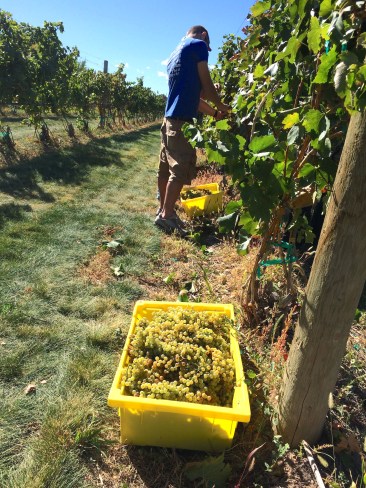
Harvesting the 2015 Chardonnay at Colorado State University’s Ram’s Point Winery near Palisade.
A conflation of factors – plenty of late-season moisture in 2014, a mild winter and more moisture going into the growing season last spring – resulted in a grape crop that was larger, much larger in some cases, than even the most-optimistic grower would imagine.
The 2015 harvest “was fantastic,” said John Barbier of Maison La Belle Vie Winery in Palisade. “For the first time in 11 years, it was best I’ve seen.”
Barbier farms four acres of grapes, which he says gives him more control over the quality of his fruit.
Bruce Talbott of Talbott Farms in Palisade, who is the state’s largest wine-grape grower with about 130 acres of Vinifera grapes along with another 30 acres of cold-hardy hybrid varieties, said his crop this year came in well over early estimates.
“We knew there was a good crop but as we went through harvest we realized we had far more than we thought,” Talbott said. “We’d go out and start picking and say, ‘This looks like a normal crop,’ but then we’d pick 50 percent more than we thought.”
And it wasn’t over-cropping; there simply were more grapes – high-quality grapes – out there than anyone expected.
“Before harvest we estimated our crop would be around 460 tons and we came in something around 587 tons,” said Talbott, his voice still reflecting the immensity of the crop. “That’s 125 percent of what we thought when we started.”
And it wasn’t just in the Grand Valley. Growers in the North Fork Valley also report unexpectedly generous crops.

Some grape growers across western Colorado this fall reported their biggest harvest in a decade or more.
“Our crop this year was huge, the biggest I can remember,” said Devon Petersen of Alfred Eames Cellars in Paonia. “The berry size was good and the quality was excellent.”
And here’s the kicker: No one is claiming 2015 was a perfect year.
A cool, wet spring delayed the growing season by about two weeks or more before summer really kicked in.
While suitable heat spikes in August and September provided the necessary heat-degree days for maturation, the delayed entry resulted in some later-ripening varieties barely making it to ripe before the onset of cool fall weather.
“Shorter season varieties like Chardonnay, Gewurtztraminer and Merlot did fine,” Talbott said. “In fact, our whites, especially, had amazing production.
“But the longer-season grapes like Cabernet Sauvignon, Cabernet Franc and the Italian varietals, those need a whole season to finish ripening.”
Devon Petersen, who along with his father Eames makes noteworthy Pinot Noir and other varieties in the North Fork Valley, said the short summer there was a bit brief for Pinot Noir.
“Our (Pinot Noir) grapes got ripe but I would liked another week or so,” he said.
He held up two fingers less than an inch apart.
“Oh, the quality is very good but we were that close to being perfect,” he said, shaking his head. “Maybe two days before the grapes were perfect, it started to rain and we had to pick.”
Everyone said they could have done a few things differently to manage this year’s bumper crop, but then, how often does something like this happen?
“This is an anomaly,” cautioned Talbott. “I don’t see it happening again.”
Take it from Eames Petersen: If it does happen again, it likely won’t be next year.
‘It seems every three years we have a really big harvest,” he said, reflecting on previous vintages. “You go back to 2009, and then 2012 and now this year. It’s strange how it’s worked out that way.”
Strange? Yes. But nice? Yes, again.
(In my original article appearing in the Dec. 9 issue of The Daily Sentinel, I misstated the acreage of grapes farmed by Bruce Talbott. The correct total is reflected above.)
Supertaster? Reading between the vines
The wine world is nearing what’s probably the most-confounding season of the year.
It’s hard enough to decide what wine you’ll be serving with (or taking to) the annual Thanksgiving Day get-together; listening to what comes from writers and critics will make your head spin.
Ratings, vintages, big oak vs. no oak, residual sugar, smells and tastes and “notes of cassis, blackberry, black fruit, incense and camphor.”
Incense and camphor? At risk of sounding more like gifts from the Magi instead of fruits of the vine, those are notes from wine critic Robert M. Parker as written about by Nocholas Hines on the Grape Collective website (www.grapecollective.com).
Hines wondered if Parker, or anyone, actually could notice slights hints of such exotic smells and flavors.
Could it be that Parker, as many people in the wine world suppose, is a “supertaster and getting more out of wine than the rest of us?”
Or is he merely a snob, confounding the masses with a vocabulary, if not a palate, unavailable to most of us?
First, though, we need to figure out what a supertaster is.
Linda Bartoshuk, a physiological psychologist at the University of Florida’s Center for Smell and Taste, is credited with coining the term “supertaster” in 1991 while she was working at Yale.
Bartoshuk discovered certain people found the distinct bitter tastes of the chemical propylthioracil, or PROP, acutely unbearable while others hardly noticed.
The first group was dubbed supertaster, while the latter was dubbed nontaster. Those sensed the bitterness but had neither extreme were the average tasters.
John Hayes, professor of food science at Penn State, said in an interview with Live Science, “Supertasters are more sensitive to the burn from ethanol, the sweetness of sugar, the burn of chili peppers and the astringency of red wine.”
Simply put, says Bartoshuk, “Supertasters live in a ‘neon’ taste world, while others live in a ‘pastel’ world.”
Supertasters also have more of those tiny mushroom-shaped bumps (called fungiform apillae) than less-sensitive tasters.
Bartoshuk said supertasters can have as many as 60 fungiform papillae packed into a small space; nontasters can have as few as five.
“If you look at a bunch of tongues, some are covered with fungiform papillae,” said Bartoshuk. “Others are just polka-dotted and don’t have that many.”
Bartoshuk’s research says about 25 percent of people are either supertasters or nontasters, while around 50 percent of people are average tasters.
Research indicates people of Asian, African and South American descent, as well as women, are more likely to be supertasters than male Caucasians.
Evolution may have a role in this. If you had to survive by eating what and when you could, being able to discern quickly what’s poisonous or not could save your life.
“When it comes to settled environments, however, average and nontasters are open to trying and consuming more foods than their supertaster companions,” said Hines.
So which are you?
Jay Youmans, Master of Wine and owner of the Capital Wine School, and a professional wine taster for more than 30 years, offers his students a quick question, “How do you take your coffee?”
According to Youmans, people who drink their coffee black are generally in the range of nontasters (look for tannin-rich, single-variety Cabernet Sauvignon or Malbec) while those who add cream and sugar to their coffee might prefer a blend of lighter reds, such as Burgundy (Pinot Noir).
But as Hines noted,“In the end, wine is all a matter of personal taste.”
And if you read closely all those Thanksgiving wine columns, that’s just what they are saying.
Science, truth and red wine: Looking through the glass
If you ever read one more article about the confounding studies on red wine and health, make it this one by Erika Syzmanski, recent winner of the “Investigative/Journalistic” category for the 2015 Born Digital Wine Awards.
CSU students get cluster education
Among the grapegrowers and winemakers in the Grand Valley and North Fork Valley tackling what’s expected to be the biggest harvest since 2011, a recent morning found a handful of pickers studiously moving up and down the rows of grapes at the Orchard Mesa Research Center.
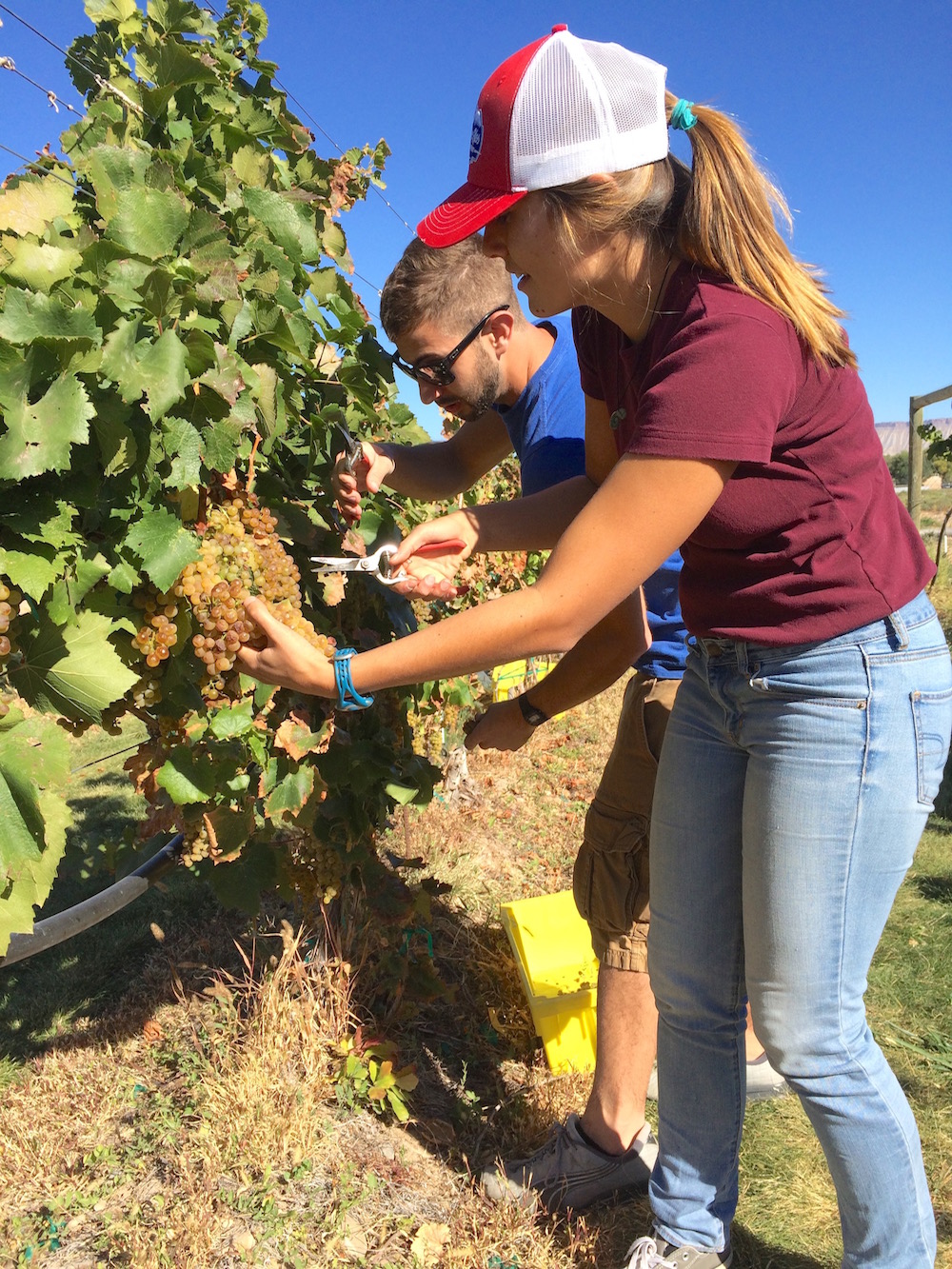
Morgan Bowen and Rob Hausmann, horticulture students at Colorado State University, harvest Chardonnay grapes during a weekend at the school’s research vineyards and winery on Orchard Mesa. Bowen and Hausmann were among nine members of the student Vines to Wines club
These weren’t your typical ag workers, if there is such a thing in an industry where labor normally is a get-it-when-you-can proposition.
Instead, a cluster of students from Colorado State University, which operates the Orchard Mesa Research Center, were sampling first-hand what it takes to transform grapes into wine.
Among the students were Morgan Bowen and Rob Hausmann, working with the morning sun at their backs, snipping off clusters of marble-sized Chardonnay grapes and carefully dropping them into the canary-yellow totes for transport to the research center’s pocket-sized winery.
“We’re all members of the Vines to Wines club at CSU and we’re trying to get the students out here to experience this part of it,” said Bowen, a horticulture major with an emphasis in enology/viticulture and currently president of the club.
She laughingly admitted she came to Colorado from California’s Livermore Valley, a wine-growing region on the east side of San Francisco Bay, where her family owns vineyards and “a small boutique winery.”
“My family’s in the (wine) business back home and I thought I didn’t want to have anything to do with it,” said Bowen, who is working on degrees in horticulture as well soil and crop science. “I was visiting different schools and I knew CSU had an enology program.
“I came her and I thought, ‘Maybe, I think I’ll try it again” and found it’s something I love.”
State viticulturist Horst Caspari, a professor at CSU, said the school offers a degree in horticulture and students can take a concentration in enology and viticulture.
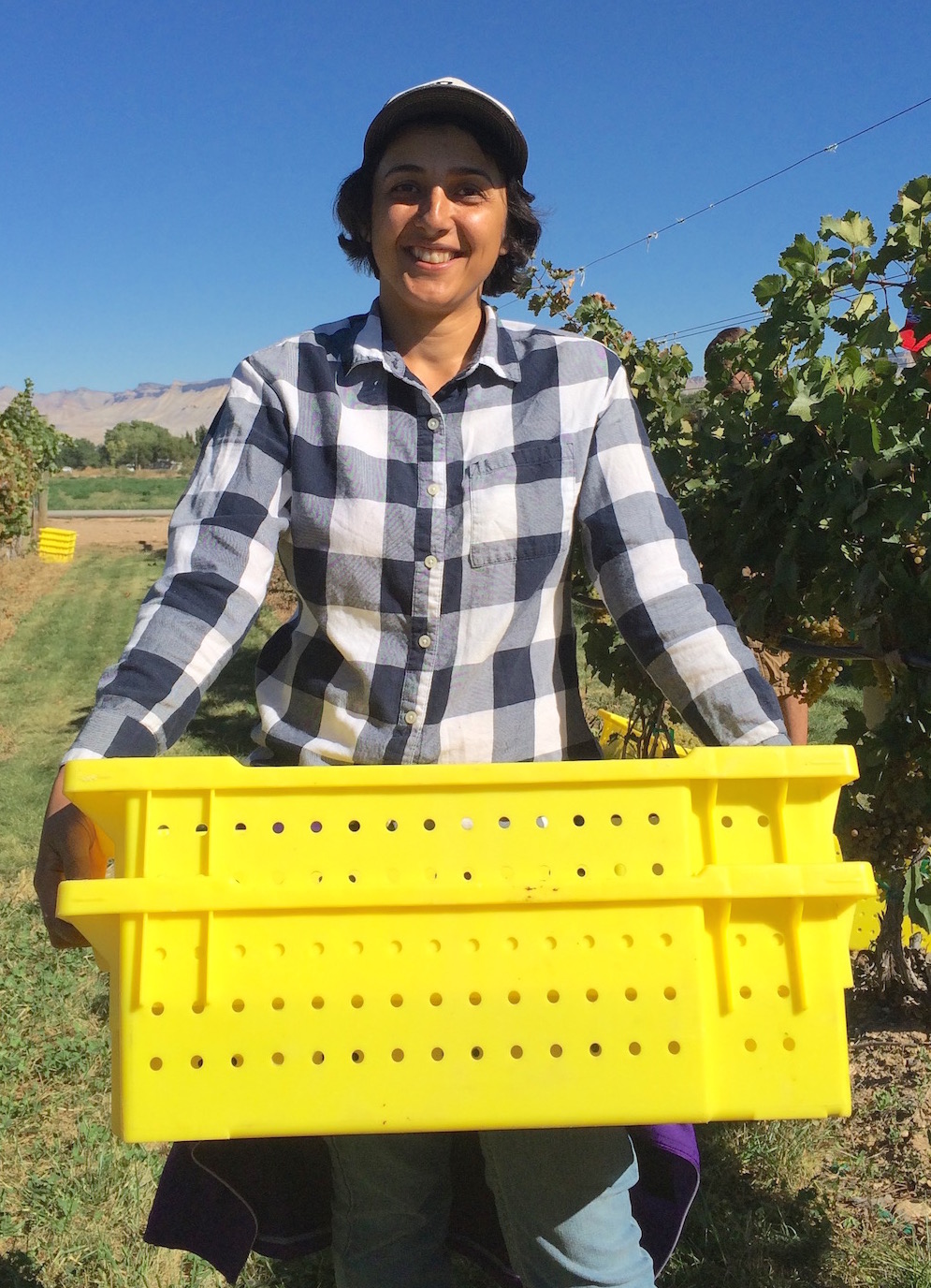
Colorado State University graduate assistant Manijeh Varzi of Iran was among the CSU students working recently in the school’s research vineyards on Orchard Mesa.
Prior to the Islamic Revolution of 1979, which prohibited alcohol consumption, parts of Iran were famous for their wines, including the region of Shiraz.
“There are probably 30 to 40 people in the program at any one time,” Caspari said. “And numbers are up every year, which is encouraging.”
Not everyone picking grapes was a budding winemaker. Hausmann, from Kampsville, Ill., is studying fermentation and said he helped plant the strings of hops spiraling up guide wires nearby.
And down the row of grapes were Aman Vashisht of India, working on a research project about water banking, and graduate assistant Manijeh Varzi of Iran, a PhD. candidate in civil engineering emphasizing irrigation.
The small winery on Orchard Mesa, named the Ram’s Point Winery after the school mascot, is aimed at training future wine-industry talent, said state enologist Steve Menke, also a CSU professor.
“I can only give them the basics” in the classroom,” Menke said. “We like them to come over here and do the harvest, to pick and press and bottle some of our experimental wines from last year.”
Having an alcohol-themed club on the CSU campus is a bit tricky, said Bowen, given the school’s strict alcohol regulations.
All the students under 21 are closely regulated by a “taste and spit” rule, similar to that used by under-age culinary students learning how to pair food and wine.
“It’s been a little tricky, being a club on campus,” Bowen said. “But we’re very careful and this week we’re going to have our first tasting at an Italian restaurant off-campus.”
The wines won’t be Colorado wines, she said.
“No, not this time,” she said, ruefully. “But in the future we’d like to help expand people’s palates into Colorado wines and other cool-climate wines.
It’s the weather: Italy claims lead in world wine production
According to a report cited today on the website Wine Industry Insight, new data from the European Union says Italy has surpassed France to take to crown of world largest wine producer in 2015.
The story, written by Umberto Bacchi of the International Business Times UK, says Italy’s projected wine production is up 13% on the previous year thanks to benign weather conditions have resulted in an abundant grape harvest across the Mediterranean peninsula.
Italy’s overall wine production is expected to up 5% on the average for the past five years. That’s a total output of 48.8 million hectolitres (129 million gallons U.S.) say figures submitted in mid-September by member states to the EU Commission.
Bacchi’s story says Italy and France have long been the sole duellists for the title of world top wine producer, both in terms of quantity and quality. However, Bacchi reports, 2015 has arguably been a particularly favorable year for the Italians after Ferrari (Trentodoc) won the prestigious sparkling wine producer of the year award.
Spain is set to maintain the third place in terms of wine output with 36.6 million hectolitres (96.7 million gals. U.S.). Other EU states follow at distance: Germany ranks fourth in the continent with 8.7 million hectolitres, trailed by Portugal (6.7 million) and Romania (four million). Britain is last among the top 18 EU producers, with 470,000 hectolitres.
Worldwide, the US, Argentina, Australia, South Africa, China and Chile traditionally placed themselves between Spain and Germany producing from 25 million to 10 million hectolitres each.
Alto Adige dodges the furor, continues Tre Bicchieri run
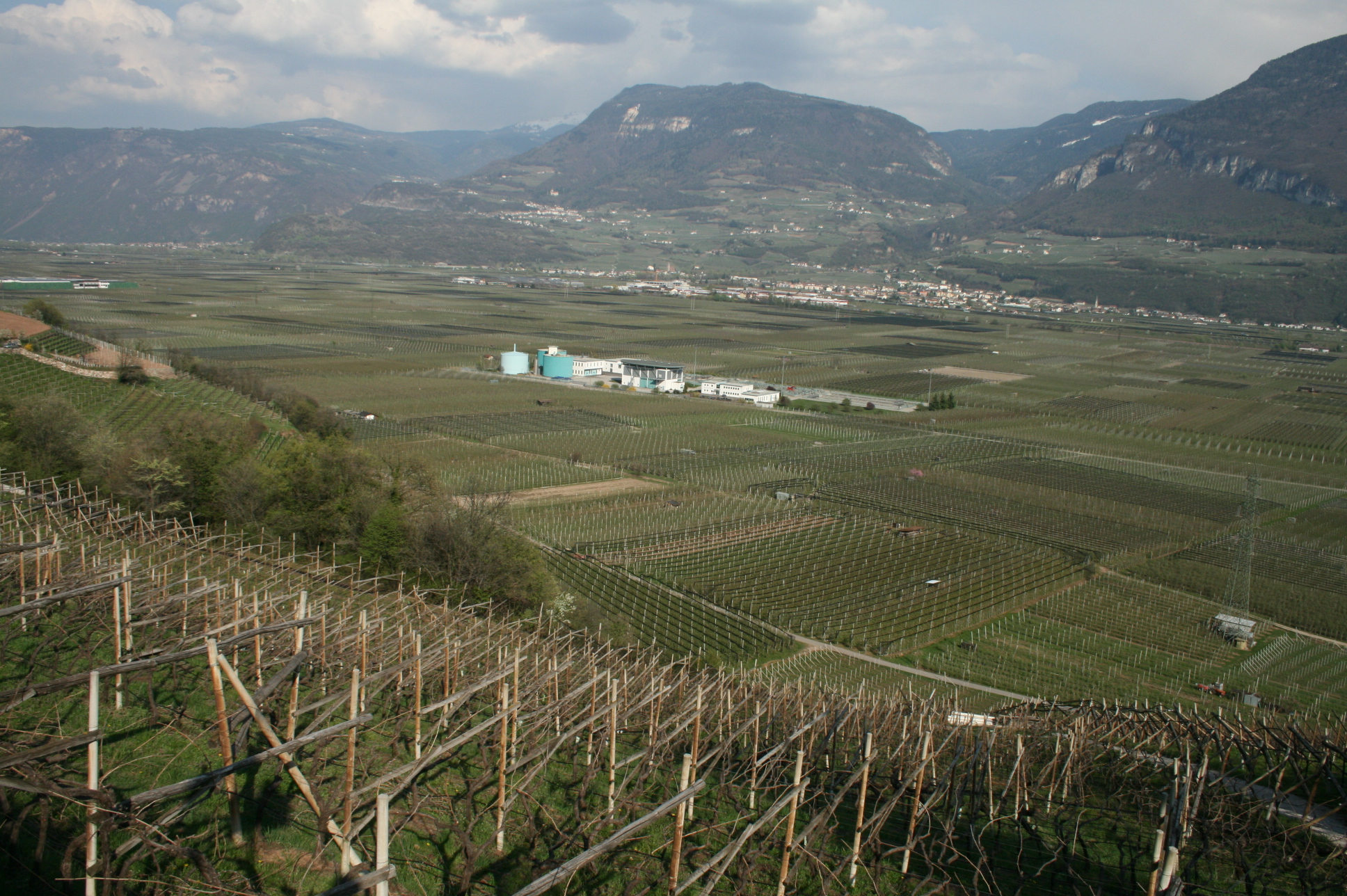
Miles of vineyards (here seen in early spring) span the immense valley making up the Alto Adige region of northern Italy. Photos by Dave Buchanan
Amidst the fury enveloping Friulian winemakers accused of illegally using flavor-enhancing additives in their Sauvignon Blanc (Jeremy Parzen has it well-covered here), the news comes without such concern that Alto Adige continues to sparkle.
This far-northern Italy winemaking region, split by the Adige River and with expanses of vineyards running high into the limestone foothills of the Dolomites, perhaps is best known for its crisp, elegant white wines yet 40 percent of the wines from the Sudtirol region are rossos.
That split was reflected when the latest regional results were released by the Gambero Rosso, Italy’s leading wine guide. The guide’s coveted 2016 “Tre Bicchieri” awards went to 27 Alto Adige wineries and of the 27 “Tre Bicchieri” wines 17 are whites.

Winemaker Alois Lageder of Magré, Italy, represents the fifth generation of the family winery founded in 1823.
Winning a Tre Bicchieri (Three Glasses) award is much more than simply accruing street cred. Having the famed reputation is akin to being awarded a Michelin three-star award: The wines’ sales can soar, it offers winemakers some “flexiblity” in pricing and it puts you on a world tour (three stops in the U.S.) which offers unprecedented exposure to the important American wine market.
Of the 27 Alto Adige “Tre Bicchieri” winners, four were Pinot Bianco; three each of Sylvaner and Riesling; two Guwurtztraminers and two Saubvignon Blancs; a Müller Thurgau, a Terlano and a white blend.
The red wines included two Schiava wines (also known as Trollinger and Vernatsch, at 850 hectares the most-cultivated grape in Alto Adige); four Lagrein, two Cabernet Sauvignon and a Pinot Noir. Also awarded was the Moscato Giallo Passito Serenade 2012, a sweet wine from the Cantina Kaltern Caldaro.
I was pleased to see the highly respected Alois Lageder be awarded a Tre Bicchieri for his Alto Adige Cabernet Sauvignon Cor Römigberg 2011. Each spring Lageder sponsors Summa, which invites around 70 quality-conscious winemakers from all over the world to the historical Casòn Hirschprunn in Magrè, This year was the 17th and was held March 21-22, attracting about 2,000 visitors from 35 countries. In collaboration with the charity Help without Frontiers, Summa collectis in excess of 37,000 € (about $42,000) for several projects in Burma.
More Tre Bicchieri results will come as they are released.
Today’s weather ~ visual
An eye on western Colorado weather



Shirt tales from an early visit to Marsuret Azienda Agricola
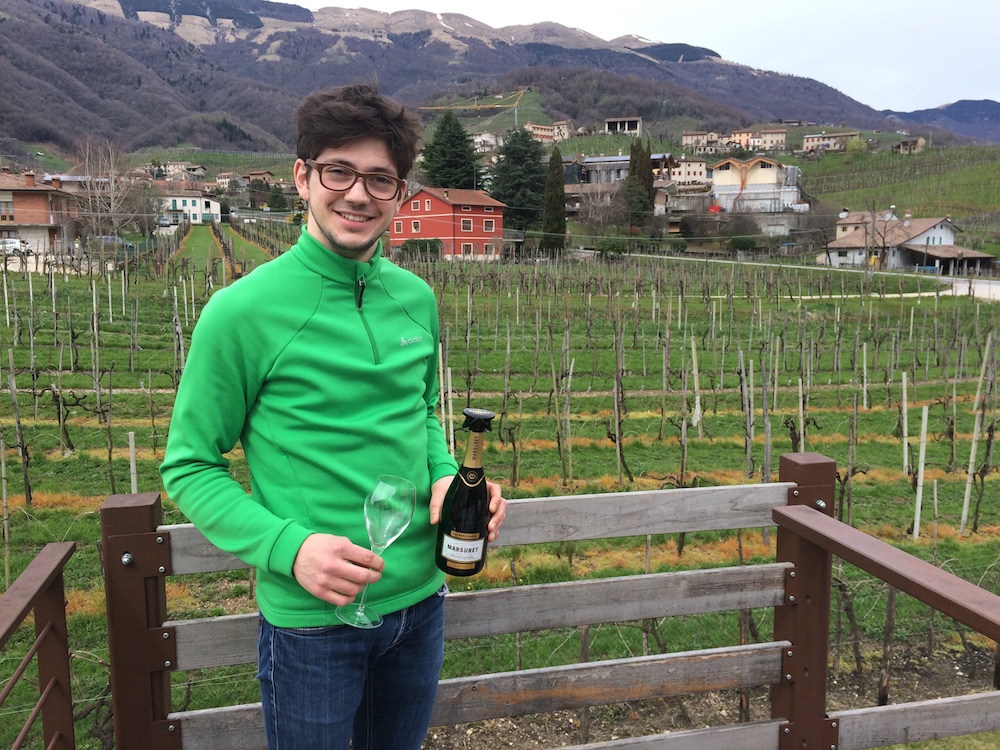
Alessio Marsura of Marsuret Azienda Agricola shares his family’s prestige Cartizze Prosecco DOCG on a cool spring day in Valdobbiadene. Marsuret makes a full line of Prosecco but only five DOCG, all reflective of this extraordinary area.
The advent of the grape harvest (and the “everything else” harvest) in western Colorado reminds me how the hopes of spring and efforts of summer come to fruition in autumn.
Last spring, as is habit, I was in northern Italy’s Veneto, the heartland of Prosecco DOCG where in a steep-hilled triangle roughly denominated by Valdobbiaddene, Conegliano and Vittorio Veneto some of the world’s best sparkling wine is made.
Two days earlier I had left Verona and Vinitaly and now was enjoying the view from top of the Marsuret winery in 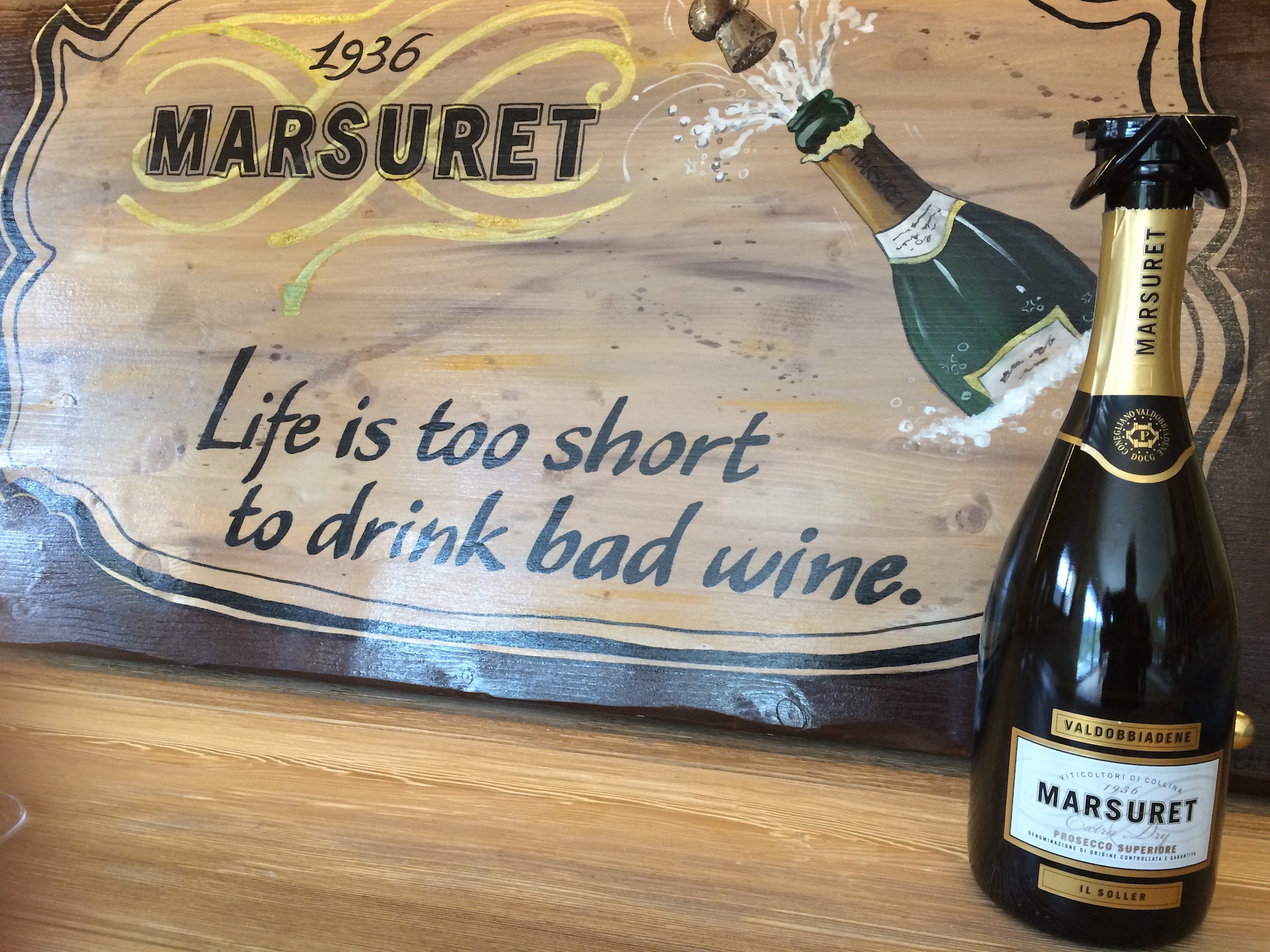 Valdobbiaddene with Alessio Marsura, who was explaining to a couple of visitors the lay of his family’s vineyards.
Marsuret Azienda Agricola was founded in 1936 by Alessio’s grandfather Augostino Marsura (Marsuret is a family nickname) and nearly 80 years later the family continues to produce award-winning wines in the heart of the most-prestigious of the Prosecco DOCG zones.
Despite also still recovering from the hectic experience that is VinItaly, Alessio said he was enjoying the quiet of the surrounding vineyards as he graciously shared his family’s Superiore di Cartizze Prosecco DOCG.
“From here,” he said, turning toward the still winter-brown hills, “You can almost see the vines where this wine is grown. It looks better in the summer, of course, but this gives you an idea of the difficulty of growing grapes in such steep area.”
The he turned.
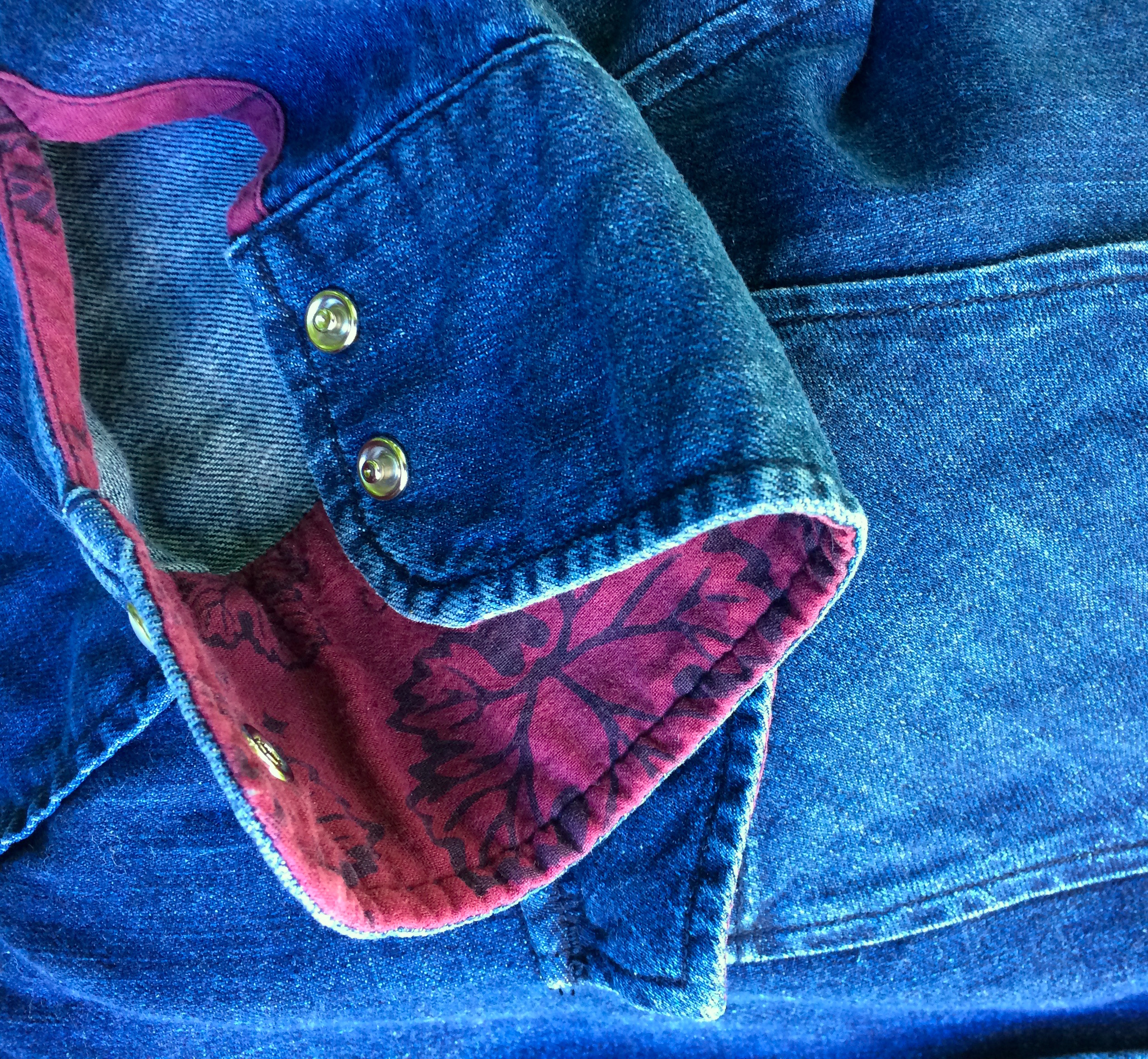
This denim shirt, made in by Crawford Denim & Vintage Co., is hand-dyed with the Robert Mondavi Heritage Red blend.
“We make only five of our Valdobbiadene DOCG Proseccos and during the fair (VinItaly) someone called them ‘cult wines’, ” he said with a laugh. “Like your shirt.”
At the time I was wearing a wine-dyed jean shirt from Robert Mondavi and he was referring to article from the Vinitaly press corps that said the deep-indigo shirt was one of “two cult objects to be worn” during the fair.
The shirt, made by the Crawford Denim & Vintage Co. of Manhattan Beach, Cal., is hand-dyed with the Mondavi Heritage Red blend and features wooden buttons made from wine barrels.
Alessio turned away to look at the bare vines, and said the promise of summer seemed a long way off.
“There is much to be done between now and harvest, it’s barely spring,” he said. “So maybe it’s a good time to drink good Prosecco and get ready for a summer’s work.”
Cork: A New Understanding Of What Is Behind Every Stopper
The well-traveled author Susannah Gold this week is in Sardegna, the second-largest island in the Mediterranean Sea (Sicily is the largest) and as she notes in this post, home of Europe’s second-largest cork factory. Enjoy.

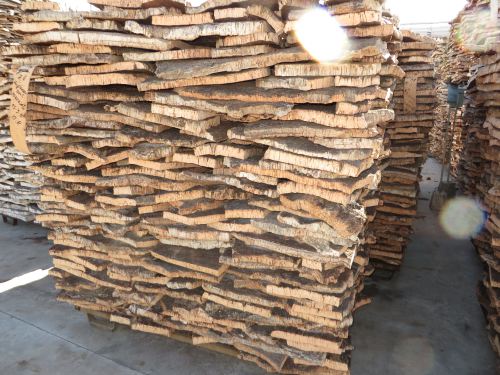
I have the good fortune to be in Sardegna as I am writing this. A magical and mysterious land, I think of it as a place of beaches, crystal blue water, rocks, sun, sheep, silence, Vermentino, Cannonau and Pecorino,. What I didn’t know was that it also has the second largest cork factory in Europe after Amorim. I once interviewed the head of that Portuguese company but I have never had the opportunity to visit a factory – until now.
Italy is one of the most important producers of cork in the world. Of the 2.2 million hectares of cork forests, some 225,000 of them are in Italy, 90% of which are in Sardegna and the other 10% in Sicily, Calabria, Lazio, Tuscany and Campagna. The wine industry is without a doubt the largest client of the cork industry and uses 70% of Italy’s total cork production.
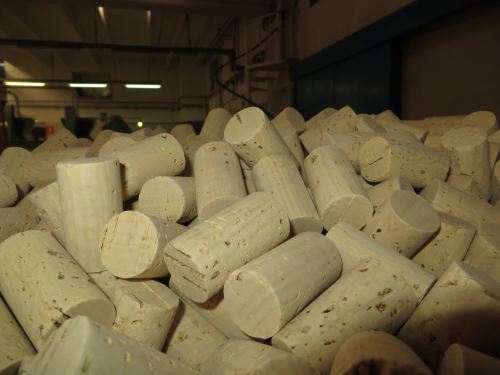
While some countries…
View original post 326 more words
 Wine Openers