Archive
It was 40 years ago the American wine revolution occurred
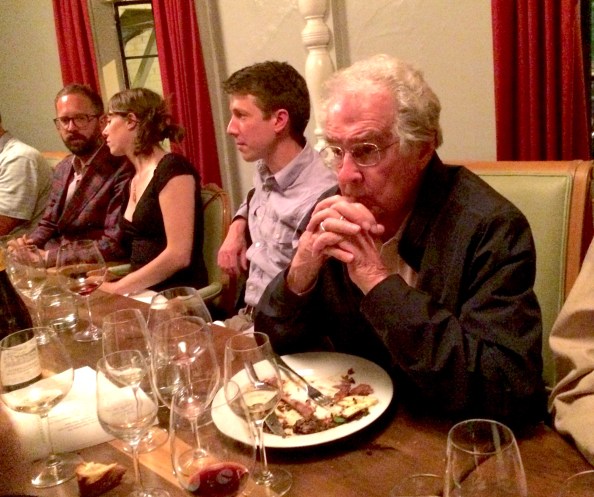
Warren Winiarski, whose 1973 Stag’s Leap Cellars Cabernet Sauvignon placed first among red wines at the 1976 Judgment of Paris, played a key role in the early days of the modern Colorado wine industry. To Winiarski’s right is Kyle Schlachter of the Colorado wine Industry Development Board.
A face familiar to Colorado winemakers is celebrating a 40th anniversary this year.
But it’s not your usual anniversary. This time it’s Warren Winiarski, the renowned California winemaker who nearly 50 years ago played midwife to a nascent Colorado wine industry, celebrating what is considered the most-consequential event in American winemaking.
Winiarski, the son of Polish immigrants and whose last name can be translated as “winemaker,” made the 1973 Stag’s Leap Cellars Cabernet Sauvignon that in 1976 bested the top red wines of France in a blind tasting that’s known as The Judgment of Paris.
At the same tasting, a 1973 Chateau Montelena Chardonnay made by Miljenko “Mike” Grgich won out against the best French white Burgundy.
This unexpected result in what was planned as a slam-dunk showing of the “best of the best” of the French wine industry at the expense of the upstart Americans stunned the wine world and put Napa Valley, and by extent the American wine industry, on the map.
May 24 marks the 40th anniversary of The Judgment of Paris and to commemorate the event, Winiarski and the Smithsonian are hosting in May two sold-out wine dinners.
The dinners will be held at the National Museum of American History and will bring together individuals who organized and attended the 1976 tasting in Paris, the winemakers who made the winning vintages, and individuals who are carrying on the legacy of fine winemaking in America.
Two other notable guests will be attending the events: wine writer Steven Spurrier, who arranged the competition, and George M. Taber, a Time magazine reporter and the only journalist to cover the event. Writer and wine critic W. Blake Gray called Taber’s four-paragraph story about the tasting “the most significant news story ever written about wine.”
At the time, however, no one realized how significant it was, least of all Winiarski.
He had been asked to submit a wine for the tasting but he was in Chicago, not Paris, on the day of the judging.
“I was in Chicago when Barbara (his wife) called me to say I had won,” recalled Winiarski during a recent conversation. “I said, ‘That’s nice.” I didn’t know what wines were being tasted or who the judges were.”
Once he realized the impact of what he and Grgich had accomplished, he says it “changed the way we looked at things.”
Meaning American winemakers, and back then it almost entirely was California, no longer had to play caddie to the European wine industry.
“Nothing was the same after that,” Winiarski said. “It certainly changed the way I looked at things and opened many horizons for me and the industry.”
It certainly angered and frustrated much of the French wine industry, Winarski recalled, including one French judge who demanded her ballots be returned.
“Afterwards I received several letters from members of the French wine industry saying that the results of the 1976 tasting were a fluke,” he said.
The 2008 movie “Bottle Shock,” which focuses more on Grgich’s chardonnay, is an interpretation of the judging.
A bottle of Winiarski’s award-winning 1973 Cabernet Sauvignon is displayed in the Smithsonian’s “FOOD: Transforming the American Table 1950-2000” exhibition.
In its November 2013 issue, Smithsonian magazine included this bottle as one of the “101 Objects That Made America.”
“I always was striving to achieve a sense of completeness, of balance, in my winemaking,” Winiarski said. “I think the wine that went to France reflected that balance.”
Winiarski was inducted into the California Vintners Hall of Fame in 2009.
CAVE brings new look to wine sampling events
There may be no better way develop a good foundation in the intricacies and intimacies of wines and winemaking than to visit wine regions, tour the wineries and meet the people behind the wines.
However, when you already live in a wine region, as do we in the Grand and North Fork valleys, the very proximity of wineries sometimes gets lost.
Just as you can glance at the skyline and see Grand Mesa without fully comprehending the beauty you see there, it’s easy to overlook the marvel of winemaking when it’s being done on a daily basis in your backyard.
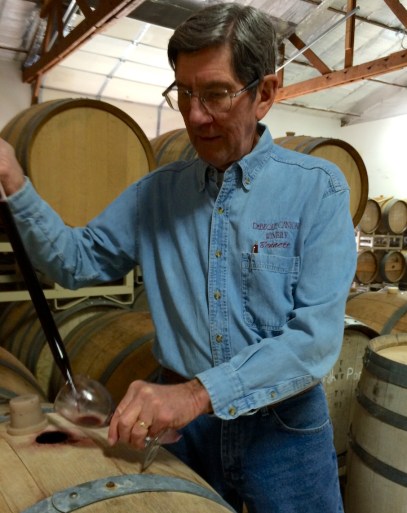
Winemaker Bennett Price of DeBeque Canyon Winery in Palisade uses a wine “thief” to pull a sample during a recent Barrel into Spring tasting.
The wineries are there, and most are open year-round, it’s just a matter of us devoting the time to open the doors and walk in.
Maybe it takes a formal invitation, which is what the Grand Valley Winery Association has offered with its annual Barrel Into Spring wine tasting.
Seven local wineries open their wineries for two weekends (this year it’s April 23-24 and May 14-15) for winery tours, wine tastings and unique insights.
It’s a great opportunity to increase your wine knowledge and perhaps taste wines you’ll not taste otherwise.
But, and it’s a big one, Barrel Into Spring highlights only seven wineries and invariably sells out early. Because the event is very popular, and but to keep the weekend enjoyable for everyone, attendance and tickets are strictly limited.
This year tickets ($70 per weekend) went on sale Jan. 4 and were sold in a blink.
Now, though, you have another chance. The Colorado Association for Viticulture and Enology (CAVE), the same terrific folks who each September bring us Colorado Mountain Winefest, is introducing a statewide spring barrel tasting called A Taste of Spring. Read more…
Dreading tax season? It never ends for winemakers
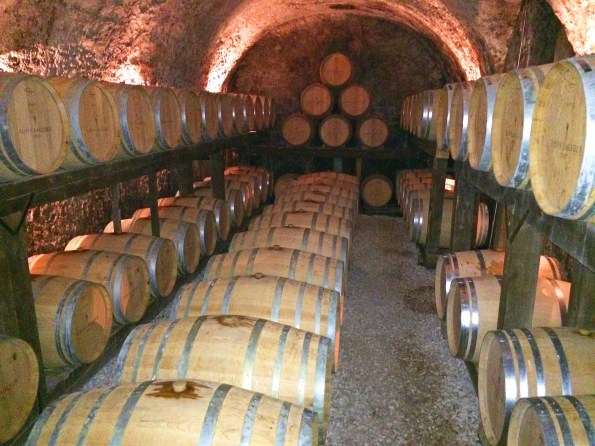
Wines being aged in barrels or bottles are counted as produced wine but aren’t taxed until the wine is moved out of bond.
Readers of a certain age will recall a 1960s TV series called “The Untouchables” featuring Robert Stack as Elliot Ness, a Prohibition agent in Chicago in the late 1920s.
Ness, under the aegis of the then-Bureau of Prohibition, was credited with breaking mobster Al Capone’s hold on Chicago by destroying Capone’s extensive bootlegging network.
Photos of Ness and his hand-picked team smashing huge vats and beer tanks and pouring illicit booze out into the streets helped viewers forget Ness was not simply an axe-wielding, anti-alcohol Carry Nation but a federal tax agent, making a case against Capone for tax evasion.
Ness and Capone are gone but the feds, through the Alcohol and Tobacco Tax and Trade Bureau (TTB), still keep a sharp eye on who pays their excise taxes.
Wines are taxed at state and federal levels at varying rates according to the wines’ alcohol-by-volume content (it’s similar for beer and spirits). The higher ABV, the higher tax per gallon. The rates goes from $1.07 a gallon (21 cents per .750 ml bottle) for wine with up to 14 percent ABV up to $3.15/gallon for wine with 21-24 percent ABV.
Wineries can either pay the taxes as they come due (see below) or post a bond, an insurance policy of sorts, against the tax bill.
Bonds are fairly cheap, as low as $100-$200 for the smallest wineries.

Excise taxes are due on wines when they become available for public consumption or purchase.
“The concept of a bond was the feds having some assurance you will pay your excise taxes,” said Bob Witham of Two Rivers Winery and Chateau on the Redlands.
Once a wine is “produced”, meaning fermentation is done, it is subject to excise tax. A winery doesn’t have to pay the tax until the wine is ready to be sold or consumed. By storing (aging) the wine in bottle or barrel in specially designated bonded areas, the winery can delay paying these taxes.
Once the wine moves out of the bonded area, which may be somewhere in the winery or an offsite storage unit, the excise taxes are due. Read more…
Millennials, especially women, flexing their wine muscle
If you’ve been out cruising downtown any night this winter, you’ve probably noticed how busy some of the city’s more-popular restaurants have been.
And if you looked twice, you might also have noticed how many of those guests with a glass of wine in front of them were younger women.
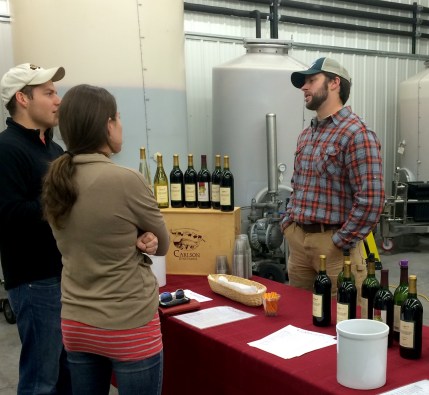
Winemaker Garrett Portra talks business during a open house at Carlson Vineyards. A recent survey says Millennialls last year purchased 42 percent of all wine drunk in this country.
That trend gets analyzed in a recent report from the Wine Market Council, which says people in their 20s and early-to-mid 30s now drink almost half the wine bought in the US.
What’s more, in what’s called the “high-frequency drinker” segment, women under 30 women are out-purchasing men two-to-one when it comes to wine.
Now, “high-frequency drinker” isn’t as lascivious as it sounds. According to the WMC, it refers to someone who drinks wine more than once a week. That faction buys and consumes 81 percent of all the wine drunk in America, says WMC.
Again, the WMC report says Baby Boomers account for the largest group in the high-frequency class, but Millennials (those people born between 1978 and 1995) are right behind them, making up 30 percent of frequent drinkers.
How fast the kids grow up. Read more…
What do you mean, ‘It’s time to go?’ Look at all the wines…
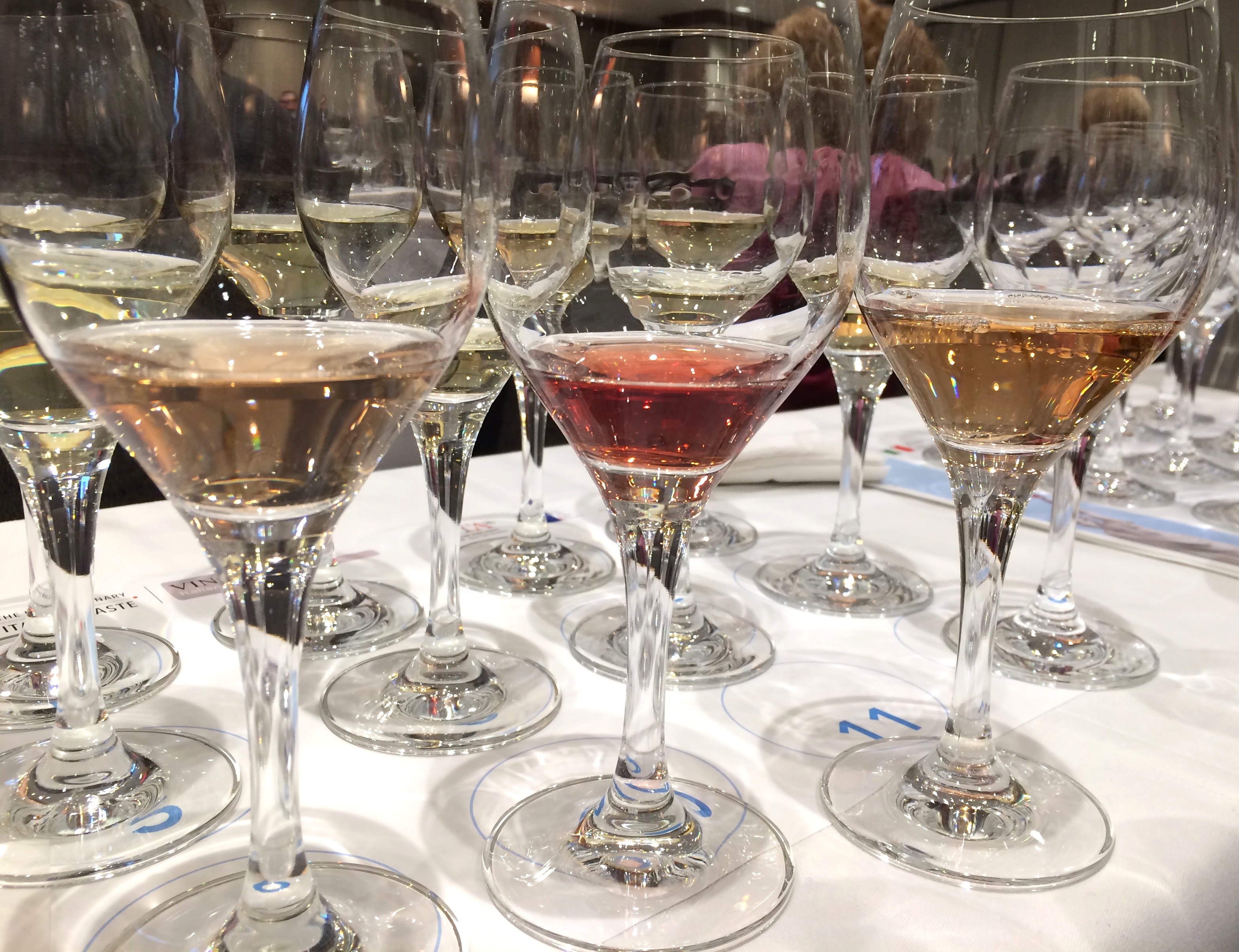
Wine enthusiasts faced a daunting lineup of choices at the Vino 2016 and the Tre Bicchieri International Tour events recently held in New York City.
The plane had barely lifted out of La Guardia, headed west over the snow-covered country of upstate New York, and I already was thinking about the wines I missed during my brief stay in New York City.
Three days of Italian Wine Week/Vino 2016 in New York City’s Midtown Hilton with a brief interlude at the Tre Bicchieri 2016 International Tour tasting simply wasn’t time enough to do justice to all the wines and winemakers at the two events.
One of the expected drawbacks to having 160-plus winemakers and about 1,000 different labels in one room, as was the case with the two Vino 2016 Grand Tastings, is you simply can’t meet every winemaker even with an afternoon to do so.

Prosecco maker Graziano Merotto, shown here pouring at his winery in Col San Martino, this year was awarded his fifth consecutive Tre Bicchieri.
Undoubtedly many gems went untasted or there simply wasn’t time to return to re-taste some of the more-interesting wines. I’m certainly not complaining, given the breadth and depth of the wines I did taste, and there are many worse places to be than surrounded by talented and ambitious winemakers.
It was an abundance of riches including a fascinating seminar about olive oil from Marco Oreggia (a fine article here from Susannah Gold).
The wine-cup-runneth-over was something I mentioned at the Vino 2016 tasting to Marco Funiati, owner and general manager of Agricola Messapica in Salento.
“Yes, there are many (winemakers) here trying to attract the American market,” said Funiata. “We don’t have much time to make an impression, and the American market is so big.”
He was pouring his 2014 Salento Chardonnay, an 80/20 blend of Chardonnay and Verdeca. Crisp, fresh and bright, available in the U.K. but still seeking a U.S. importer.
I stopped a few tables away to try Alex Polencic’s Pinot Grigio and although it hadn’t been in bottle long, was impressed by the rich mouthfeel and velvety apple/pear fruit, far different (and way better) than the sea of plonky Pinot Grigios now flooding the U.S. market.
“2014 was one of the most difficult years in the last 15,” Polencic said. “But 2015 was much better” with late-summer rain softening the earlier heat.
Over at the Tre Bicchieri International Tour tasting at the Metropolitan Pavilion, I slipped through the crowd to find Elvira Bortolomiol pouring her family’s 2014 Brut Prior Prosecco Superiore, the 2014 Brut Lus Naturae and the 2015 Extra Dry Bandarossa. Prosecco sales continue to climb and it’s no wonder after tasting the outstanding wines from Bortolomiol and those Maria Luisa dalla Costa was pouring for Graziano Merotto, both from the rugged hills of the Conegliano Valdobbiadene Prosecco Superiore DOCG.
This, by the way, was Merotto’s fifth-consecutive Tre Bicchieri, honoring his Cuvèe del Fondatore.
Also of note were the 2014 Lugana Molin and 2014 Lugana Prestige from Cá Maiol on the southern end of Lake Garda. The wines, not surprisingly, were delicious, reflective of the area’s complex history and geography.
And all too quickly the weekend was over.
The search goes on: Getting a foothold in the U.S. wine market

A few of the estimated 160 Italian wine producers at Vino 2016 in New York City. An estimated third of the winemakers were seeking an entry into the U.S. market.
NEW YORK – Romano Baruzzi took a breath and looked out at the sea of faces in front of him.
“Buona sera a tutti, welcome everyone,” said Baruzzi, deputy trade commissioner for the Italian Trade Commission in New York City. “Welcome to the biggest event promoting Italian wines in the U.S.”
Baruzzi had the opening podium on Feb. 8 for the start of Italian Wine Week/Vino 2016, just ahead of the much-awaited panel discussion titled “On the Bright Side: What’s Ahead for 2016.”
This first-night talk promised to give the many producers, importers and the occasional journalist insights into what the immediate future may hold for Italian wine. While providing a suitable answer for such a complex question is akin to stuffing an elephant into a suitcase, Baruzzi and the other speakers were giving it their best.
Vino 2016 attracted more than 160 Italian wine makers and their representatives, most of them proudly showing off their latest vintages to almost that many importers and buyers while other winemakers, reported as high as nearly one-third of those present, simply were seeking someone trustworthy in whom to entrust their wines.
“We have more than 1,000 labels here this year,” Baruzzi said during his opening remarks. “I hope everyone can find a (business) partner in the U.S.”
But as many smaller Italian winemakers learned during the two-day event, hope may be their best hope. Read more…
A few words from the (Italian) wise
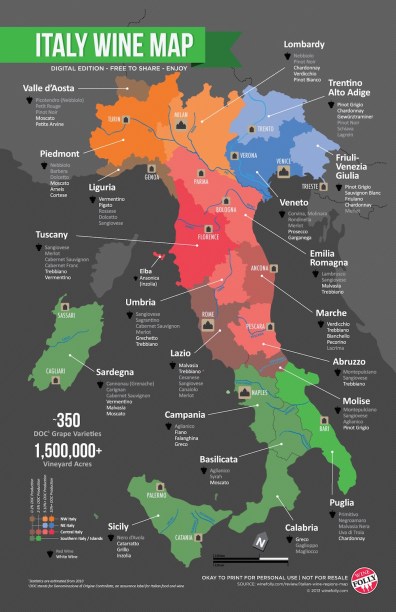
courtesy winefolly.com
NEW YORK CITY – On the first full day of Vino 2016, wine writer and author Elin McCoy unexpectedly summed up what countless other speakers would spend hours talking about over the next two days.
Looking out at a well-lit seminar room on the second floor of the midtown Hilton Hotel, at tables laden with wine glasses and lined with eager listeners, McCoy informed her audience that “It couldn’t be a better time for wines from southern Italy.”
It was a theme to be repeated, although never again quite as succinctly, throughout the all-too-short run of this year’s Italian Wine Week presented by the Italian Trade Commission. Subtitled “The Grandest Italian Wine Event Ever Held Outside of Italy” and focusing this year on wines from Calabria, Campania, Puglia and Sicily, the event (this year was its fifth edition) brought together about 200 Italian wineries (not all from the south and about a quarter of which were looking for a U.S. importer) and countless importers and distributors and other wine-trade people.
Among the many memorable remarks from the week’s speakers and guests:
“This week there is a peaceful invasion of Italian producers and wine experts.” – Maurizio Forte, Trade Commissioner and Executive Director for the Italian Trade Commission.
“The U.S. market is the most-important market for Italian wine; we export almost $1.5 billion per year.”– Maurizio Forte
Wines from southern Italy are largely unknown to the U.S. market because “most American tourists still do not visit Southern Italy.” – former wine director Charles Scicolone.
“They are a ‘hand-sell, meaning that it often takes talking about these wines and explaining them to the customer in order to get them to try a bottle or two.” – Charles Scicolone
“People want to know who you are, not just your wines.” – Chad Turnbull, president of New York-based importer Savorian, Inc., told the producers. “One of the most fundamental things you can do is to introduce yourself to your market.”
“Puglia and Calabria are at the edge of the western world.” – blogger/importer/Italophile Jeremy Parzen. “They just needed a small nudge to enter the modern world of winemaking.”
“Verdeca. I’m on a mission to find it.” – sommelier Jeff Porter, of the little-known white grape grown in central and southern Italy, including Puglia and Campania.
“When you taste (the wines of southern Italy), it’s hard to imagine what the wines were like 20 years ago.” – Elin McCoy. “These were wines you didn’t want to know about.”
“Sicily is sexy; it was sexy even before the wines were so good.” Roberta Morrell, president and CEO of Morrell Wine Bar and Café, New York City.”The good reds came before the good whites…now the whites are fresh, fruity and minerally.”
“I’m consumer driven. If you can’t say it, you can’t buy it.” – author/wine educator Kevin Zraly.
“In Italy, people mostly eat at home.” – restaurateur/ author Lidia Bastianich. “First, because good eating means eating their mother’s cooking, nobody makes it better, and secondly, because of the economic crisis that is currently afflicting the country.”
“Buying a wine made in Italy means buying a piece of wine history from a country that has made wine for a thousand years.” – journalist Luciano Pignataro.
Voters may decide fate of grocery store wine sales
Grocery store chains in Colorado again this year are expected to ask voters to be allowed to sell full-strength beer, wine and other spirits, something currently reserved under state law for liquor stores.
Petitions being circulated spout blather like “produce jobs,” “increase consumer choices,” “lower prices” and “economic development.” Sounds good on the surface but like most arguments, this one isn’t black and white.
From a liquor-store owner’s view, a grocery store selling wine or booze means unwanted competition in an already tight market.
“There’s just no possibility I can go out there and compete with grocery stores,” said Kim Schottleutner, chair of the Colorado Licensed Beverage Association and owner of DTC Wine and Spirits in Greenwood Village, in an interview with Channel 7 TV in Denver.
Industry watchers say if grocery stores get beer, wine and spirits, many of the state’s small liquor stores, already operating on a tight margin, may disappear, along with the jobs they provide and taxes they pay.
“You will affect jobs. You will affect businesses,” said Schottleutner. “That’s something that the petitions aren’t telling anybody.”
Keep Colorado Local, formed by the Colorado Licensed Beverage Association and the Colorado Brewers’ Guild, says the state risks losing nearly 1,600 independent liquor stores, 287 craft breweries, 135 wineries and 46 distilleries.
Fewer competitors won’t mean lower prices or better selection. Have you been into a state-owned liquor store in Utah, one of the 18 states that are state-controlled?
The wine/liquor selection is limited because every store sells only what someone in the state office mandates. Want something different? Drive to Colorado, something Utahns already do.
According to the Huffington Post, Colorado is one of only five states that limit grocery stores to selling 3.2-percent ABV beer. The exception is that each chain in Colorado is limited to one full-strength license.
Another concern is the impact grocery store beer sales will have on craft brewers.
“We have a lot of craft beers that come in here on a day-to-day basis, from vendors that would like to see new placement,” said Schottleutner.
One argument for the success of craft brewers and distillers in Colorado is that liquor stores are able and willing to make room for new brands from small companies, something grocery chains can’t do because of limited shelf space reserved for national brands.
“It’ll kind of create an issue in the market where you’re only getting the top-selling brands,” Gaele Lopez with Beverage Distributors of Aurora, is quoted in the same Channel 7 interview. “A smaller brewery might have to close.”
An editorial last year in the Denver Post said Kevin DeLange, founder of Dry Dock Brewing in Aurora, said his business never would have achieved its success if not for Colorado’s regulations allowing breweries to self-distribute directly to liquor stores.
As is the case with any small producer looking to increase market options, DeLange said he poured samples of his Vanilla Porter and Apricot Blonde beers to owners and managers in neighboring liquor stores in efforts to entice them to sell his beers.
“We can go in there, and we can negotiate visibility and get the product in within a week,” Lange is quoted in the editorial.
However, Lange said he was rebuffed when he went to the Safeway store in Littleton, the chain’s only Colorado store (see the Huff Post entry above) that can sell full-strength beer.
“(The manager) actually chuckled,” DeLange is quoted as saying. “He said, ‘You have to go to California. You have to ask the home office.’ It took four months. There is no decision made at the local level of where they display products or signage.”
One argument for booze in the grocery store says it will break the monopoly held by liquor stores. Do you seriously think one City Market/King Soopers will compete (have lower prices) than the rest of the chain?
Walk into most Grand Junction liquor stores and someone’s there to help you find the right wine, beer or spirit. Ask for help choosing a wine in a grocery store and maybe you’ll get a produce clerk, onion in hand. Not fair to either person but for now, he or she is your only hope.
Local liquor stores also means your money stays in the community instead of the pockets of far-distant corporate stockholders.
In Grand Junction, the bigger stores –Fisher’s Liquor Barn, Andy’s Liquors, it’s a short list – may survive by cutting costs (that means jobs) and capitalizing on customer service, something large-chain grocery/liquor stores can’t provide.
But look at it this way.
I’m sure Little Sammy will be happy to run across town to the mega-box grocery store for bread, milk and a pint of Jack.
It gives him one more chance to try that fake ID.
(This column originally appeared in the Dec. 22, 2015 issue of the (Grand Junction, Colo.) Daily Sentinel.)
Making the connection between Italy and the U.S.
As we head into Italian Wine Week Feb. 3-9, with special events held in New York City, it’s fitting to remember the roles of five men key to the wine connection between Italy and the U.S.
With the Jan. 5 passing of winemaker Harry F. Mariani of Banfi Wines, another chapter in that American wine history could be written.
Mariani, 78, and his brother John, who survives, made their fortunes introducing

Harry and John Banfi, 1986. Banfi Wines
Americans to Italian wines. They were working for Banfi, founded in 1919 by their father and his three brothers, when in 1967 the brothers began importing Riunite, a chilled, sparkling sweet red wine that by 1973 was the nation’s largest-selling imported brand.
If you’re of a certain age, you’ll remember Riunite Lambrusco’s promotional slogan, “Riunite on ice, that’s nice,” which was updated in 2002 to the trendier “Just chill.”
Imports of Riunite peaked at 11.2 million cases in 1984 and accounted for 27 percent of all foreign wines sold in the United States, according to Banfi Wines.
That success as importers allowed the brothers to branch out, purchase their own vineyards in Italy and on Long Island and by the mid-1990s Banfi was the nation’s leading wine importer, according to the New York Times.
Today, Italian varieties are the leading imported wine in the U.S. and Americans now are drinking more Italian wines than Italian themselves, said the Italian Wine and Food Institute.
Which brings us to three other major players in the Italo-American wine connection.
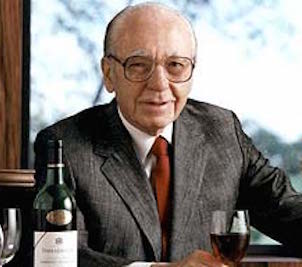
Ernest Gallo
In 1933, brothers Ernest and Julio Gallo founded E. & J. Gallo Winery, eventually producing 16 brands of wine and cornering more than 25 percent of the American market.
At one time the company owned nearly half the vineyard acreage in California with annual revenues estimated at $1 billion.
Ernest was in charge of marketing and his desire, according to his biography, was to see the company become the “Campbell Soup Company of the wine industry.”
The Gallos marketed their cheap White Port and Thunderbird wines in inner city markets along with a catchy jingle that in part went, “What’s the word? /Thunderbird/ How’s it sold?/ Good and cold/…”
The company gradually shed its low-rent image to become the largest winemaker in the country and today is the largest privately held wine company in the world.
Ernest Gallo died at the age of 97 on March 6, 2007, less than a month after his brother Joseph. Julio Gallo died in 1993.
The third of our Italian triumvirate is Robert Mondavi, who, dismissed in 1952 from
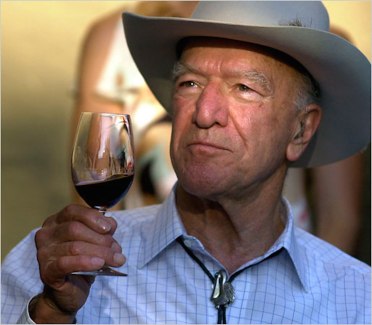
Robert Mondavi
Charles Krug, the Mondavi family winery, went on to build his own eponymous winery and his great fortunes.
As Mondavi noted in his 1998 memoir, “Harvests of Joy,” he found his mission doing “whatever it took to make great wines and to put the Napa Valley on the map right alongside the great winemaking centers of Europe.”
In 1968, he took Sauvignon Blanc, at the time an unpopular variety, and rebranded it as “Fumé Blanc,” figuring it was something Americans could pronounce. The wine was so successful that Fumé Blanc became an accepted synonym for Sauvignon Blanc.
By the time Mondavi sold his winery in 2004, it was sixth-largest winery in the U.S. with annual sales of 9.7 million cases, according to Wine Business Monthly.
Mondavi remained as chairman emeritus until his death on May 16, 2008 at the age of 94.
In 1993, Mariani told the New York Times that wine was always a part of his life, “it was never taboo.”
And at every meal, Harry Mariani would toast: “A tavola non s’invecchia,” which can be translated to “At the table with family and friends, one does not grow old.”
Take note: It’s time to make your own memories
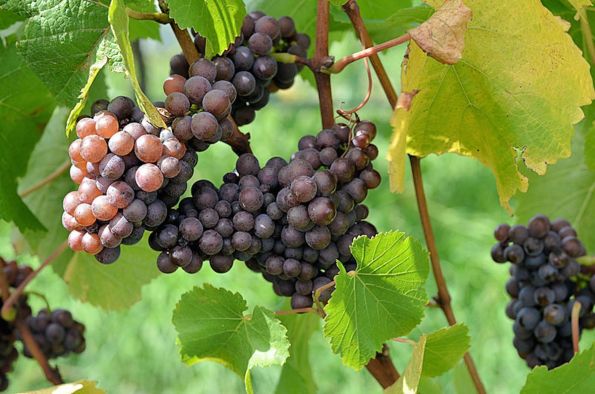
Pinot Gris (aka Pinot Grigio) is the most-popular imported wine in the U.S. More than 6 million cases were sold worldwide in 2014. Photo Wikipedia Commons
Wandering recently around a near-deserted Crossroads Fitness, I heard a distant voice say, “Don’t worry. Next week all the New Years’ resolutions will kick in and this place will be packed.”
Making a New Years’ resolution about wine is like promising to lose weight or improve your math – without an occasional reminder, we forget what path we’re on.
What path will your wine world take in 2016?
You could drink more, meaning not in quantity but rather in quality, but why do so unless you do it mindfully?
To me, that means paying attention not only to what’s in your glass today but what may be in it tomorrow and the other 363 tomorrows in 2016.
It includes being aware of the growers and the vintners and the grape varieties that bring you the juice to fill your glass.
You don’t need to be an expert, whatever that is, but simply a person who goes beyond quenching a thirst.
A couple of examples:
So-called “Grower Champagnes” became a bit of a rage in 2015 when Champagne lovers turned away from mass-produced Champagnes from the better-known big houses and instead focused on wines made by the same estate that owns the vineyards (rather than buying the grapes to make the wine).
The theory long espoused (Ed McCarthy wrote about Grower Champagnes in 2012) is that these growers/vintners would know how to make the best wine possible from home-grown grapes.
And most times, they do.
Yet if it’s consistency you want, it’s likely the “better” (just different, that’s all) Champagnes come from the large and better-known Champagne houses, who makes their wines from a blend of grapes from top vineyards.
That same goes for any wine. You can follow what’s trending, which is fine as long as you know why you’re following it and what it is you’re looking for.
Drink Pinot Grigio? It’s the second-most popular white wine (behind Chardonnay) in America even though most of the stuff poured at bars and restaurants is awful. It’s cheap (to make and to pour) and generally forgettable stuff.
But good Pinot Grigio (and Pinot Gris, the French name) can be charming and satisfying, ranging from the full-bodied, spice and stone-fruit wines of Alsace, France, to the luminous acidity of peach and nectarine from Northern Italy and the pear, ginger and allspice notes of Pinot Gris from J Vineyards in California.
If you learn what Pinot Grigio should taste like, you won’t be satisfied with the norm.
Perhaps you like the science side of wine and winemaking?
Erika Szymanski is studying for her doctorate in microbial enology and in her spare time writes the scientifically leaning (and always informative) blog Wine-o-scope, which she describes as a wine geek keeping notes. Her latest column for the online wine magazine, The Palate Press, is titled “The Some science behind canned wines.”
Which brings us to taking notes.
Nothing fancy or complicated, maybe no more than few words scribbled on a label, but a reminder of what you liked or didn’t like about a particular wine.
Rick Rozelle at Fisher’s Liquor Barn loves to recount stories about people asking for a “wine like the one I had last night.”
“Sometimes all they remember is that it was red or white,” Rozelle said. “It’s tough to find the right one.”
A few simple notes, either by hand or using one of the apps available for your smartphone (don’t forget the phone’s camera), will make wine in 2016 much easier to remember.
 Wine Openers