Archive
Warren Winiarski: Colorado wines “show a completeness.”
DENVER – A curious thing happened last week during the Colorado Governor’s Wine Competition: The judges argued amongst themselves.
What makes this remarkable is that one, this was a regional wine competition, something not often host to strong opinions, and second, among those people stating their cases was renowned Napa winemaker Warren Winiarski, famous as the California winemaker whose Stag’s Leap Cellars 1973 Cabernet Sauvignon bested the best French wines at the 1976 Judgment of Paris, turning the wine world on its head.
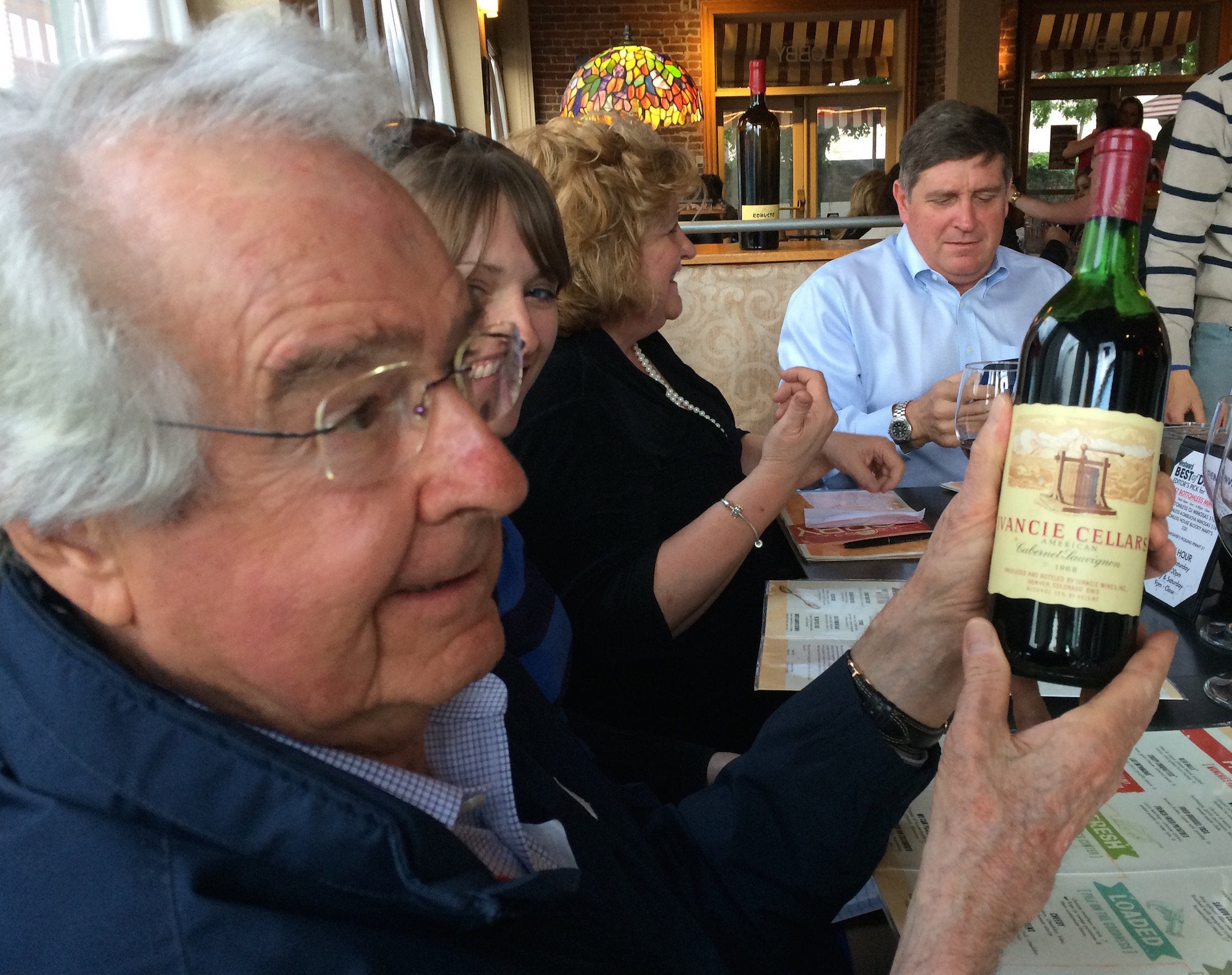
Warren Winiarski holds a bottle of the 1968 Ivancie Cellars Cabernet Sauvignon, a wine he created for Gerald Ivancie and Colorado’s first post-Prohibition commercial winery. Winiarski, founder of Stag’s Leap Cellars, is renowned as the winner of the 1976 Judgment of Paris.
What Winiarski was asserting last weekend was not whether the Colorado wines were any good – that fact already having been established in earlier rounds – but whether two unoaked Chardonnays both were deserving of a Double Gold.
“I think the wines shows great balance and wonderful winemaking skills,” Winiarski said, turning in his seat to face the 14 other judges perched around the sensory lab at Metropolitan State University of Denver’s Hospitality Learning Center. “This is the kind of winemaking we should be encouraging in Colorado.”
Winiarski, not surprisingly, won that particular battle and several others during the daylong judging of 190 Colorado wines (a separate judging was held a week earlier for meads, ciders and fruit wines).
The judging was to pick the best of Colorado wines and among those standouts a final 12 wines to include in the Governor’s Case, a collection of top wines used for marketing purposes.
 A complete list of the medal winners will appear here when the list is released by the Colorado Wine Industry Development Board. (You can read Wine Curmudgeon Jeff Siegel’s view of the competition here.)
Winiarski was impressed enough by the wines presented during the recent tasting to push for several Double-Gold wines and a fat handful of gold medals to other wines.
“The Colorado wine industry continues to grow and improve and I’m quite pleased with what I’ve seen and tasted this year,” he said during a break in the judging. “The wines have come a long way, even since last year, and I think show a completeness that comes when the winemakers are figuring it out.”
Winiarski, 84, perhaps is best known in Colorado for being the winemaker behind the Ivancie Cellars label, which nearly 50 years ago became the first post-Prohibition commercial winery in Colorado.
Winiarski was working for Robert Mondavi in Napa and thinking he needed a change when he was approached by Ivancie in his quest to bring wine to middle America.
Winiarski turned out several vintages of Ivancie Cellars wine but returned to California in 1970 when he realized the demand for Colorado wine was not as strong as Ivancie’s desire to make it and Winiarski sensed the future wasn’t long for the winery, which closed in 1974.
The wines were good, he said, but “the idea just never caught fire.
“We underestimated how difficult making wine in Colorado was going to be,” a sentiment echoed even today by every winemaker in Colorado.
One of the weekend’s highlights came during dinner the second night when three of Ivancie’s children – Molly, Tom and Steve – made an unexpected appearance (Gerald Ivancie lives in Denver but wasn’t able to attend). Winiarski clearly was delighted and touched to see the threesome and they shared many poignant memories about those early days of Colorado winemaking.
At one point, the three Ivancies presented Winiarski with a precious bottle of the 1968 Ivancie Cellars Cabernet Sauvignon, and he cuddled the still-dark wine like a newborn baby.
“This is wonderful, marvelous,” he said. “Gerald (Ivancie) had such a great love of wine and I think he would be pleased to see where his dream has gone.”
Gloria Collell: Convincing the world one wine drinker at a time
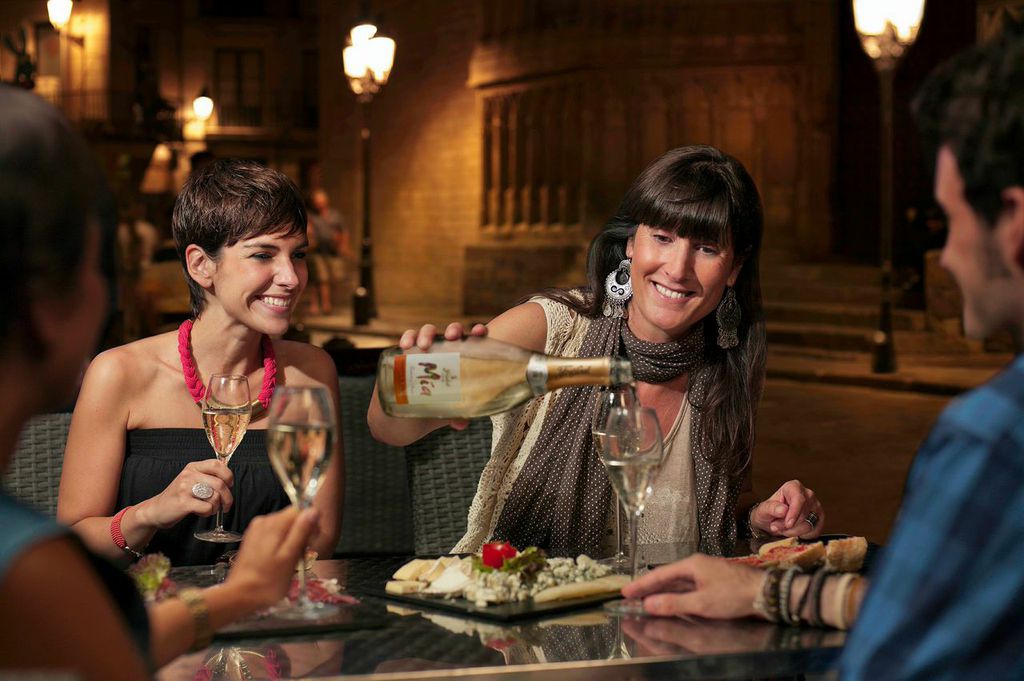
Spanish winemaker Gloria Collell shares her Mia sparkling Moscato with good friends and good conversation. Gloria insists her line of Mia wines be made with traditional Spanish grapes.
In the world of big-time winemaking it’s rare for a winemaker to be offered the opportunity to develop her own line of wines.
It’s especially rare when a well-established name in the wine business – one that is world famous for sparkling wines – listens when a winemaker says the best to grow the brand is with a still wine.
But so it is with Gloria Collell, the bright and energetic winemaker for Mia Wines, her new line of still wines under the Friexenet umbrella.
Gloria Collell is from the small Catalan town of Sant Sadurní d´Anoia near Barcelona in the Penedes region of Spain, and for more than 20 years she has been with the Ferrer Wine Estates, part of whose portfolio includes Freixenet, the world’s biggest-selling Cava, in the distinctive black bottle.
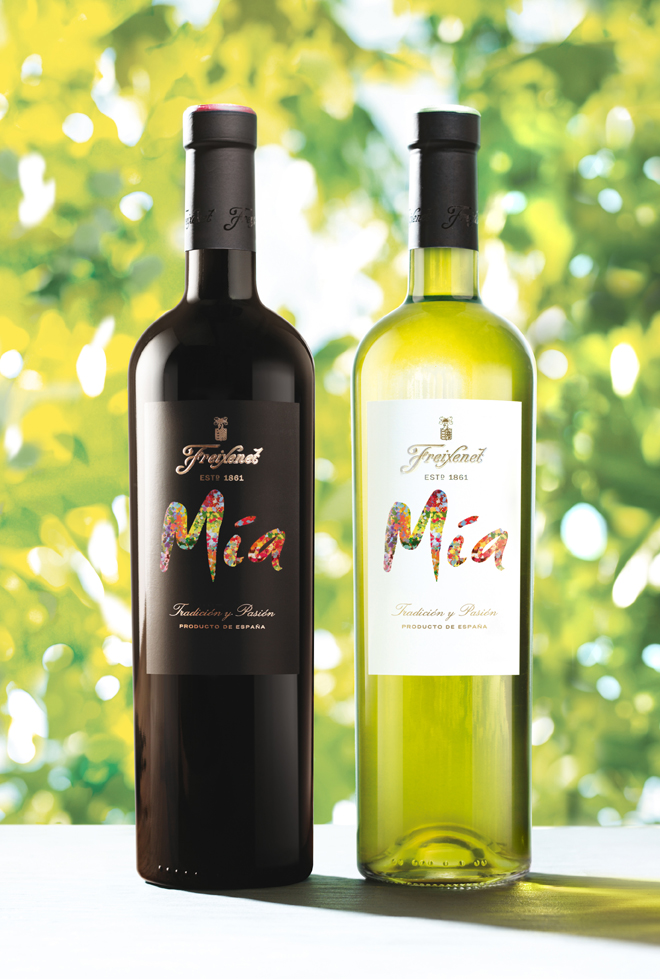
The easy drinking Mia lineup of wines include a Mia red, of 100 percent Tempranillo, and the Mia white, of Macabeo, Xarel-lo and Parellada with a touch of Moscatel.
In 2010, she was invited to sit in during one of the company’s international marketing meetings and to her surprise, the table turned to her for advice.
“They invited me because I have this knowledge about wines so we started brainstorming where the company should go,” Gloria said in a recent interview. “To me, it was evident we should develop a still wine.
“But I was quite honest with them: If we wanted to do it with the Freixenet name, we have to be consistent in quality and honest with the consumer.
If it has the Freixenet name on it, it has to be good.”
That means consistent with the level of quality consumers already know and expect from Freixenet and honest with the traditions of Spanish winemaking.
Freixenet Cava is the sparkling wine opened every day by millions of people across the globe who expect it to be consistently good and consistently affordable, and Gloria deemed it vital any still wine from Freixenet had to be the same.
“Freixenet has been opening the door to many people to the consumption of sparkling wine,” she said. “I told them we should do the same with a still wine. Be honest, easy drinking and focus on good grapes.”
The marketing department liked what it heard and went Gloria one better, offering her the chance to develop this new concept of Freixenet wines.
“And everything started from that point,” she said with a laugh. “For me, it was a fantastic opportunity to get to know the consumer and to make good wine for them and to open the door for them into a wine culture.”
“Our objective is the new wine drinker and to make approachable, fruity, easy-drinking wines,” Gloria said.
That means foregoing the long-standing D.O. [Denomination of Origin] regulations and make wine with the best Spanish grapes available.
“I wanted to make good wine and I wanted Mia to be an ambassador for Spain and Spanish grapes,” Gloria said. “So I decided we would do something with Spanish grape varieties from all over Spain.”
The Mia label (mia means mine in Spanish) appeared in 2011 and today the wines are opening doors in nearly 50 countries.
The Mia white is made with Macabeo, Xarel-lo and Parellada, classic Cava grapes, and with a touch of Moscatel to give it an appeal to the younger wine drinking market.
The Mia red is 100-percent Tempanillo, unoaked and spicy, with a fruit-forward style for people wanting a lighter, easy to drink red.
In keeping with the goal of using traditional Spanish grapes, Gloria makes the Mia rosé with the little-known Bobal grapes from Utiel-Requena in Valencia.
She says the Bobal is winning over consumers more familiar with the Provence style of dry rosés.
There also are two sparkling Moscatos, light and refreshing on the palate and, like most of the Mia wines, targeted for women and younger wine drinkers.
The Mia wines aren’t the first line of wines Gloria helped introduce. In 2009, the Tapeñas line of wines was introduced and while popular, Gloria felt they weren’t “unique enough.”
Instead, she said that when making Mia, “it was a relief for us not to be limited to one appellation.”
She said developing the different Mia wines took a lot of trial and error, trying new blends on her friends.
“I was bringing home (the new wines) without labels and sharing them with my friends, and some of them are really snobs,” she said, laughing. “Soon, I had the reputation of always bringing home all these obscure wines.”
And once in a while, someone would say, “You finally brought a wine I like.”
“We don’t realize that 95% of the consumers drink wine for joy,” she said. “They don’t want to know about the terroir and the climate and the soil and all those things. All they want is something pleasing to drink and good conversation.”
The Mia conversation will continue at Prowein in Dusseldorf when Mia introduces a Sangria.
“The plan is to launch three styles of Sangria, a white, red and one flavored with mojito,” Gloria said. “Sangria is something you drink when you want to relax. The Sangria moment prepares you for lunch and more serious wines.”
Arrivederci e grazie, VinItaly.
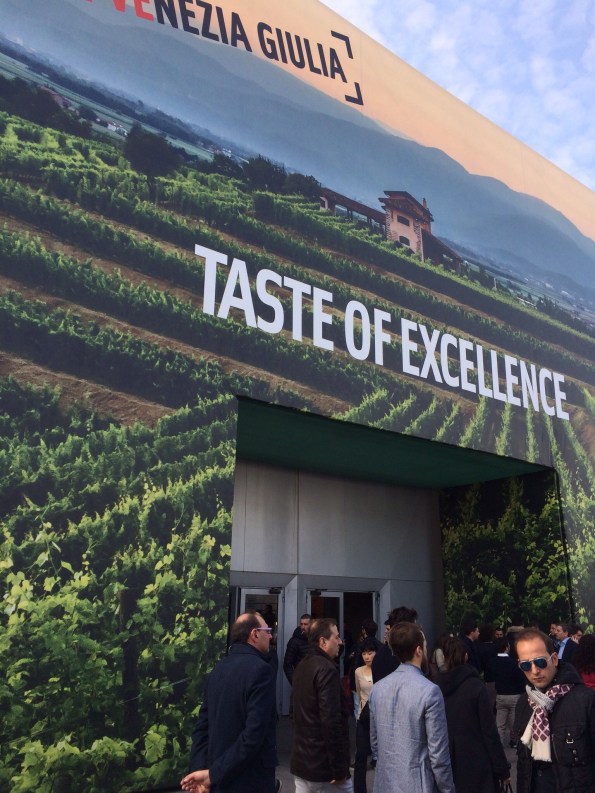
The ground-level view of VinItaly is a Taste of Excellence in every pavilion, although Venezia Giulia make the most of it here.
VERONA – With a rush, VinItaly arrived, flourished and left. In its wake are memories of great wines and some so-so wines, wonderful people (and at times too many not-so-wonderful people) and the serendipity of enjoying yourself even more that you expected.
Great wines? Almost too many to remember but here goes a shot at recalling a few: Susanna Crociani’s delightful and quite drinkable Riserva 2010 Vino Nobile de Montepulciano; Graziano Merotto’s Cuvee del Fondatore Prosecco DOCG (tre bicchieri from Gambero Rosso four years running, even though Merotto isn’t one to shout about it); Antonio Bonottto’s Raboso del Piave; Ornella Molon’s Raboso and her 2009 Merlot from 15-year old vines in Piave; Luigi Peruzetto of Casa Roma and his 2009 Malanotte, 100-percent Raboso with 15 percent of passito; Cinzia Canzian of Alice and her A Fondo Prosecco DOCG.
And many more (Ambra Teraboschi at Ca’ Lojera, Bortolomiol, Cantina Salute, Nani Rizzi, most of Franciacorta, Sorrella Branca), many of which we will discuss as the month continues. Special thanks to Silvia Loriga, the knowledgeable and extremely hospitable Event Manager for the Consorzio del Vino Nobile di Montepulciano. Sylvia walked me through a mini-history of the wine and its makers and showed me how the wine comes alive in different ways in the hands of different winemakers.
Not surprisingly there were some of the usual frustrations with the crowded VinItaly scene but this year some of those frustrations boiled over and made it into print, at least cyber-print on the Internet. Alfonso Cevola (Italian Wine Guy) had some scathing remarks and his years of VinItaly experience and vast knowledge of the Italian wine scene certainly make him someone whose opinions and comments should be honored.
And yes, the Wifi was bad, the crowds were full of young (under 25) drunks staggering around at closing time and a couple of winemakers complained about the general lack of manners. But there also were many delightful and cordial winemakers and their supporters who were willing to answer my questions, not laugh too hard at my stumbling Italian and make sure this VinItaly was a unforgettable as the previous seven.
Next time I promise to focus on the wines. But where do I start???
Surviving the fair, booth by booth
There really is nothing quite like VinItaly 2015, which is a blessing and a curse. It would be great (or groovy, as Dr. J would say, over @dobianchi) if there were more opportunities where states and countries brought together their best wineries and winemakers for an intense show-and-tell weekend.
But it’s a blessing they don’t – not sure I could survive more than one VinItaly or ProWein (the German version) per every 6 months.
- Today was Day 2, and my friend and ad man numero uno Patrick Casely and his talented and lovely wife Gloria Giovara let me tag along as they made the rounds of every wine region at the fair. There were many highlights, not the least of which were Patrick and Gloria and the patient winemakers and helpers who gave this visitor leeway in the foreign language area.
– Morisfarms and its delicious “Morellino di Scansano” Riserva. 90% Sangiovese, 10 each Cab Sauv and Merlot; ripe, spicy, dark red fruits, well-made and perfect balance. Only 16,000 bottles, get your order in soon.
About the name, which sounds like a corn field in Iowa: the founders of Morisfarms (originally Moorish invaders) came to Maremma from Spain more than 200 years ago and turned the undeveloped land into an extensive operation which continues to be family operated.
Marnie Old tackles the matter of wine with taste, style
As do most people with a computer that’s turned on more than a few hours a day, I collect a lot of emails from people I don’t know.
There are bankers from Nigeria seeking my account number, lonely widows from Siberia pleading for a plane ticket to the United States, even some bookies from everywhere promising me the win of a lifetime if I only send them my Social Security number.

Marnie Old is a popular and entertaining speaker and presenter at the Food&Wine Classic in Aspen and her latest book is reflection of her ability to entertain and educate.
But I also get some emails from places and people I can’t wait to meet.
Wineries and public relations people from Italy to California send me greetings and news about the latest releases, and sometimes the FedEx guy shows up at the office with an unexpected bottle of wine. Sweet!
Mostly, though, it’s news about the wine biz, and one recent email reminded me how much I miss on the national scene by living in fly-over country.
Earlier this month, Raymond Vineyards of St. Helena, California, deep in the heart of the Napa Valley wine country, hosted Marnie Old, author, sommelier and all-around terrific wine personality, for a one-day book-signing. I couldn’t make the signing but the notice reminded me of how much I enjoy listening to Marnie Old talk about wine.
I’ve seen and listened to Old several times at the Food & Wine Classic in Aspen (yes, she’s scheduled to return this year) and to me she is one of the most-talented, bouyant and unpretentious wine talkers you’ll listen to.
Her latest book is titled “Wine: A Tasting Course” and subtitled “A Class in Every Glass” (DK Penguin Random House, 2013, $25 hardcover, $15.99 ebook, 2013, 256 pages.) Old’s premise is that the best way to learn about wine is by tasting it and in this book she takes you on a visual tour of the world’s wine styles while challenging wine myths and standard orthodoxies.
The book is organized by wine styles and flavors, not grape varieties, which allows readers to learn by what’s pleasing to their palate.
This is a “learn at your own pace” book and as I moved through the book I found myself jumping ahead to future chapters with appealing topics and subjects.
The chapters cover most of the expected and necessary wine-basic topics, such as identifying wine smells and tastes, interpreting the confusing world of wine labels, proper storing and pouring of wine and more.
But Old, who formerly was director of wine studies for the well-known French Culinary Institute in Manhattan, also delves ably into the deeper stuff, such as interpreting wine styles, finding the styles that resonate with you and even tackling the daunting subject of the world’s major wine regions (alas, Colorado isn’t among those on the list).
Reading this book is almost as much fun as meeting Marnie Old in person. This may not be the only wine book you’ll ever need, but if it’s the only one you have, you won’t be sorry.
Old-vine Grenache dominates in McLaren Vale

Grenache bush vines in McLaren Vale. These low-growing, head-pruned vines produce smaller, intense berries reflecting the history of wine-making in the region.
Here are some of the things I like about Australia: The vast distances between here and the horizon, the wide-open beaches and wave-pounding surf, native artists such as Stephen Hogarth of the Kamilaroi Tribe and, of course, given the scope of this blog, the wines.
My most-recent favorite is the Yangarra 2012 McLaren Vale Old Vine Grenache ($24).
McLaren Vale officially is about 35 km (21 miles) south of Adelaide but you might not notice the distance because of the continuing encroachment on the area by Adelaide’s expanding suburbs.
In spite of increasing citification, the area is considered by many as the most-important wine-producing area in the Fleurieu Peninsula and certainly the Grenache stronghold of Australia.
Vines were first planted in the area in the early 1800s, shortly after Captain Arthur Phillip dropped anchor in 1788 in Sydney Cove with a ship carrying Australia’s first grape vines from Brazil and the Cape of Good Hope.
But while many wine regions around the world had an initial spurt of production but then saw the vines ripped out or starved by Prohibition, some of the McLaren Vale Grenache vines survived and today there are wines being made from vines more than 100 years old.
The Yangarra 2012 McLaren Vale Old Vine Grenache comes from vines almost 70 years old, originally planted by Frederick Arthur Smart after returning from World War II.
On the surface, little has changed since Smart, who still lives in the area, first planted his early vineyards, with dry-farmed vines thriving on the deep sandy soils and Mediterranean climate at the foot of the Southern Mount Lofty Range.
To understand what has changed calls for a deeper look.
In 2000, Jess Jackson and his wife Barbara Banke (proprietors of Jackson Family Wines) purchased Yangarra Estate and soon appointed Peter Fraser as the winemaker and Michael Lane as viticulturist.
In 2008, the Yangarra team began farming the estate organically and in 2012 the property, according to the Yangarra press information, was certified A-grade organic as well as biodynamic.
What difference did this make in the wine?
One of the precepts behind biodynamic farming is to enliven the soil and make the organic nutrients in the soil available to the plants living there.
A press release explains that in order to further that transfer of a sense of the land to his wines, winemaker Peter Fraser incorporates traditional and time-consuming winemaking methods in his wine-making.
These including pre-soaks, indigenous yeast, open-top fermentation, hand punch downs, barrel fermentations, and the two-stage rack-and-return process, all key to Fraser’s drive to create balanced wines reflecting the terroir of McLaren Vale.
“I’m not interested in numbers on a piece of laboratory paper,” Fraser is quoted on the Yangarra website. “I’m interested in flavor.”
The 2012 Old Vine Grenache easily delivers all the flavor you might want, this brightly elegant wine brimming with dried red cherries, leather, black fruit and hints of white pepper.
In addition to Grenache, Yangarra produces other southern Rhone varietals including Shiraz, Mataro, Cinsault, and Carignan among the reds; Roussanne and Viognier are the major whites.
Maggy Hawk’s Pinot Noir keeps Anderson Valley on right track
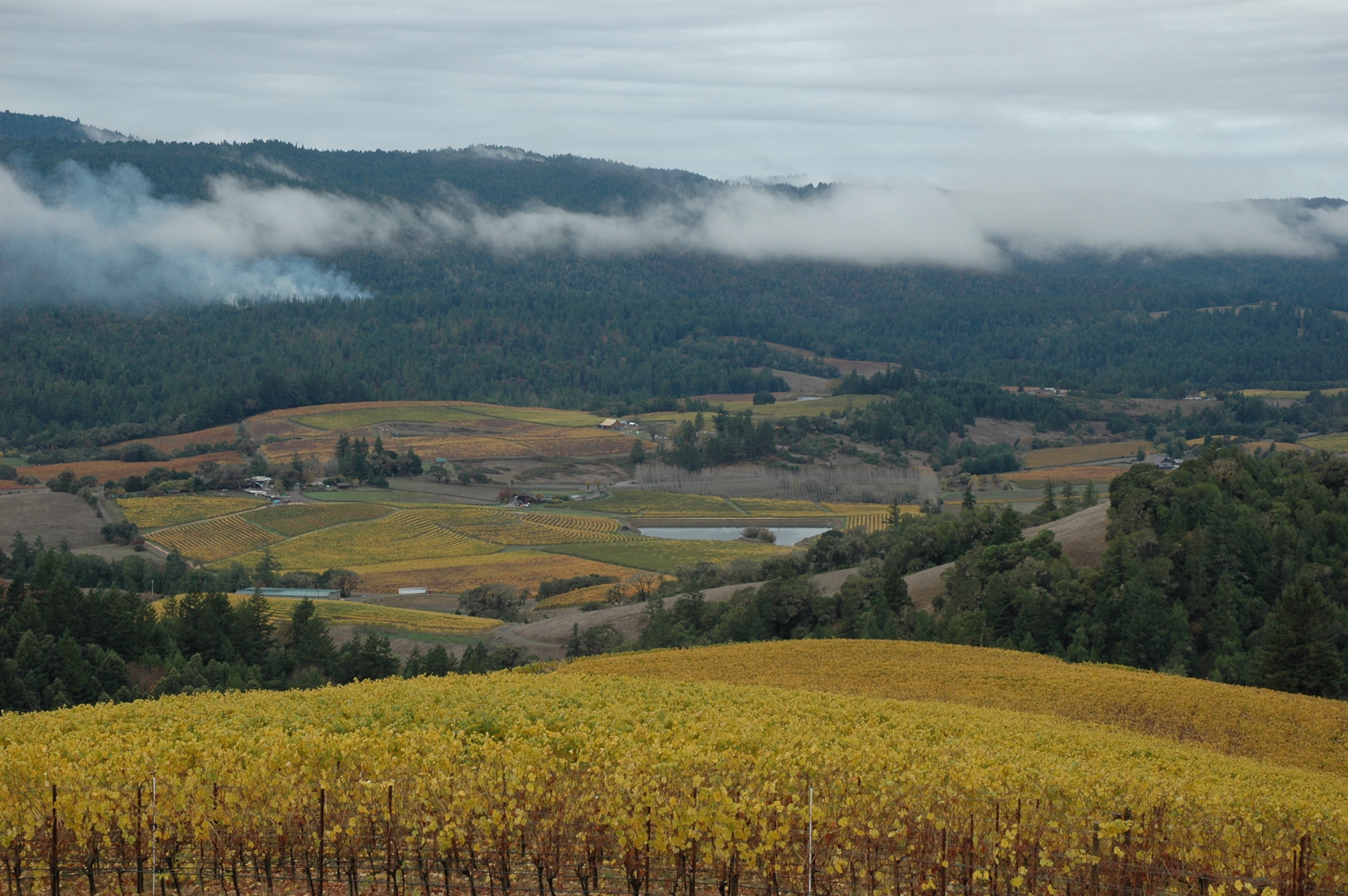
This view of Northern California’s Anderson Valley shows the coastal influence of cool, foggy mornings, perfect for producing world-class Pinot Noir and Alsatian varietals. Photo: Anderson Vally Winery Assoc.
It must have been the mid-60s when I first saw the Anderson Valley, tucked into a remote corner of California’s Mendocino County, about 2.5 hours north of San Francisco.
We were on our annual family vacation, kids packed into the back half of the black-and-white Nash Rambler station wagon while my ever-westering parents kept an eye out for the promised land.
Not that they were looking for a new homestead – Colorado had everything they really wanted – but rather simply in search of America and all that it offered.
I faintly remember stopping along Highway 128 where it headed northwest into the valley after leaving U.S. Highway 101, amidst towering forests of redwoods and Douglas fir, perhaps the same view pioneer Walter Anderson enjoyed when he first saw the valley in 1851.
I don’t remember seeing any vineyards during that summer trip but I do remember my father shivering in the cool breeze, even though the ocean was about 15 miles off, and hurrying back to the car.
Today’s tourists are not so quick to dismiss the Anderson Valley, which has earned its reputation for sterling Alsatian varietals (Gewurstztraminer, Pinto Grigio and Chardonnay) and the purity of its Pinot Noir.
I recently received samples of two Anderson Valley wines, the 2011 Jolie Anderson Valley Pinot Noir from Maggy Hawk Winery and the Wind Racer 2011 Anderson Valley Chardonnay.
In recent years Pinot Noir has become a major focus in the Anderson Valley, where a 2011 vineyard census showed 1,453 acres out of the 2,244 total planted acres in the valley.
Those 76 different properties produce a range of Pinot Noirs, some of a distinctly opulent but hard-edged Russian River Valley style with its out-sized flavors.
But the latter still are the outsiders, because the true Anderson Valley style of Pinot Noir is modest and restrained, bright with red fruit flavors.
The highly allocated Maggy Hawk 2011 Jolie (242 cases, $66 SRP) is one of a line of wines named for the progeny of Maggy Hawk, a race horse owned by proprietor Barbara Banke.
Banke also is the head of Jackson Family Wines and the widow of famed California winemaker Jess Jackson, who died in 2011.
The Jolie was floral and tightly wound, showing plum, cherry and cranberry with a minerally acidity and soft tannins, a tribute to the skills of winemaker Elizabeth Grant-Douglas in dealing with the problematic 2011 growing season.
And while I know how much the Hosemaster hates to read this sort of thing, this was one of the best Pinot Noirs I’ve had the privilege of tasting.
Grant-Douglas also is director of winemaking at La Crema Winery, also owned by Jackson Family Wines.
The Wind Racer 2011 Anderson Valley Chardonnay (463 cses, $40 SRP) – This precise and well-focused wine is another effort from Barbara Banke (along with co-proprietor Peggy Furth) and shows a light touch of oak highlighting vibrant apple, spice and pear flavors. The delicate fruit is buoyed by more of the Anderson Valley bright minerality and acidity.
The best gift is the one you give yourself
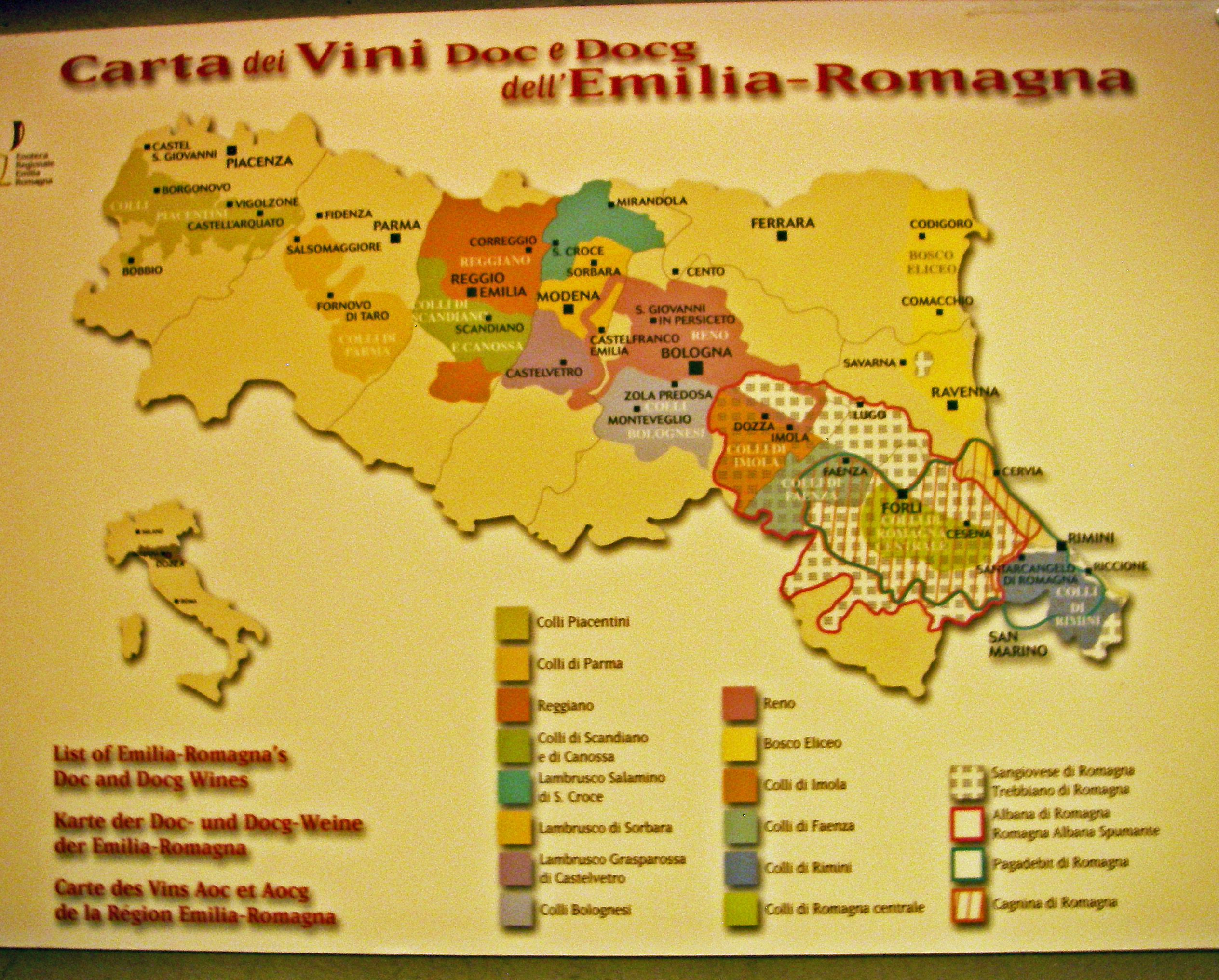
This map shows the some of the wine-producing areas of the Emilia-Romagna region of Italy. There are 20 such administrative regions in the country, each enough to fill an entire vacation.
Christmas is a time for lists and it seems every writer online and in the glossy magazines is anxious to share his or her list of things you need for that perfect gift.
Need? How many people really need another cork puller or wine book or more wine glasses?
Well, all of us, perhaps, although I disagree with the “need” part. Those things and more make welcome gifts, but they certainly aren’t things we can’t live without.
And it’s almost agonizing how much time and money we spend trying to make someone else happy, when that happiness is theirs to make, not ours.
There is one thing you and all wine lovers can do this Christmas and that’s to give yourself the gift of wine in 2015.
It could be education, diving into one of the many fine books covering every topic of wine, from the basics of wine and grapes to insights on winemakers and the regions where wine is made.
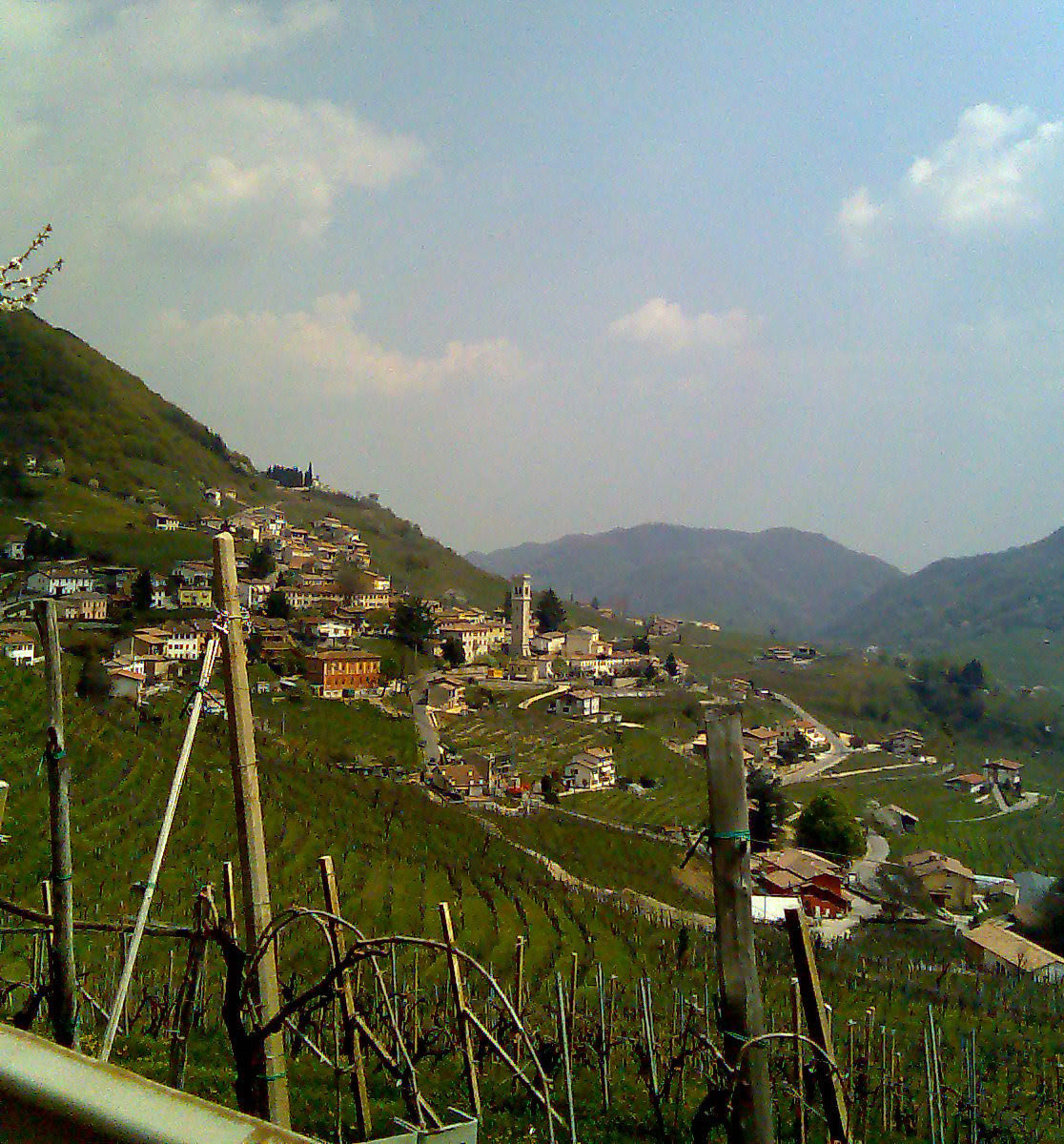
One of the best parts of wine travel: Walking and driving the steep hills of Valdobbiadene in the Veneto region of Italy and getting an education into the difficulties of producing Prosecco DOCG and what makes it a special wine.
It could travel, getting to know what it means when someone talks about the “place” from where wine comes. Travel doesn’t have to expensive, although you certainly can make it so.
A long weekend trip to California, Oregon or just around Colorado can teach you a lot about those regions, and by expressing an interest you’ll be surprised how doors may open and how friends you will make.
Or perhaps you can make a visit to one of the Big Three – Italy, Spain and France, each with more than enough to fill your two-week vacation.
Italy, for example, has 20 administrative regions and each of those has wine-producing sub-regions.
Why do the mind-numbing “If it’s Tuesday, this must be Tuscany?” trip? Pick a region or two and focus there.
Find yourself an inexpensive B and B, rent an inexpensive car, and spend a week driving from one vineyard to the next.
Or maybe visit one of the areas you’ve dreamed of, such as Germany, Sicily, Argentina and Chile, the Less-Big Four, and all of which are on my list of places to visit.
Australian and New Zealand not only have great wine and great beaches, they also have friendly natives who speak English, something not to be discounted.
Every major wine region has a tourist association or consortium anxious to assist you with visits to their region.
If you’re hesitant or simply can’t make up your mind, you can have a great time and learn things you might never learn alone by traveling with a tour arranged by a local restaurant or travel agent.
Closer to home, there are many ways to improve your wine knowledge.
Watch for and attend a seminar or two, hang out at wine tastings and go to dinners with winemakers, talk to the wine steward at your favorite store or restaurant, and buddy up to a wine salesperson.
The easiest way is to drink more and different wine, because you have to pop a lot of corks to learn what you like and why. Don’t be afraid to experiment with a wine you’re not familiar with, to take notes and read the notes of those who have more experience than you.
Wine education is a great gift to give and it comes in many forms, most of them enjoyable. But like any education it takes a bit of effort. That’s effort with an “F,” as in fun.
The Mendoza terroir: Malbec as a place
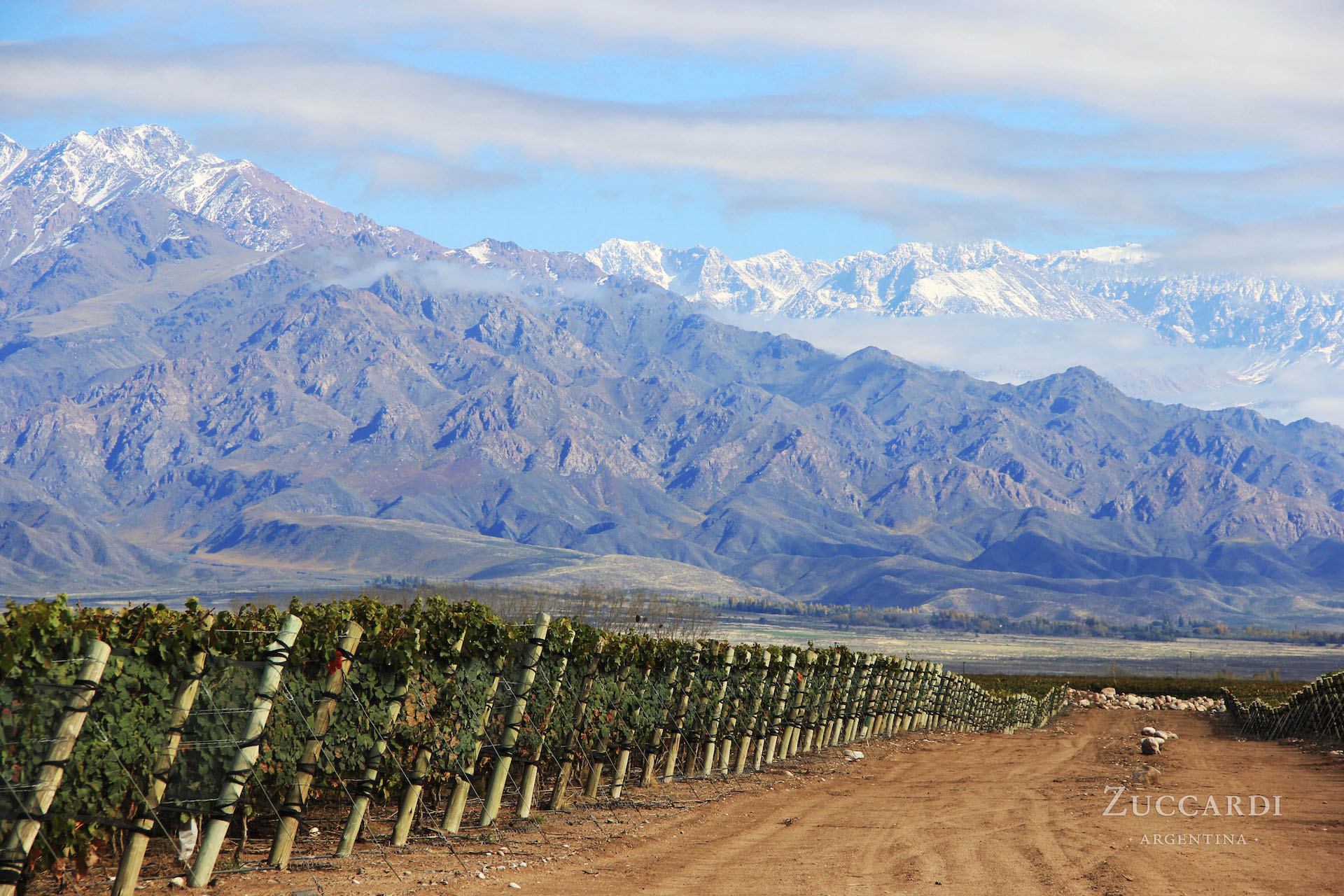
The vineyards of Bodega Famila Zuccardi in Mendoza, Argentina, lie in the alluvial soils at the foot of the Andes.
Three months after meeting Sebastián Zuccardi at the Food & Wine Classic in Aspen (noted in a previous post), three friends and I jumped the border from Brasil to the Uco Valley of Argentina, just outside Mendoza, dodging rainstorms in a land resembling the high-desert terrain of western Colorado.
Except, that is, for the Andes, looming on a close horizon and towering thousands of feet up.
Despite its modest appearance, Mendoza, which sits at 2,500 feet elevation on the east slope of the Andes, is one of the great wine cities of the world, where even modest restaurants unblinkingly serve world-class Malbecs, Syrahs, Petit Verdots and other varietals.
Malbec is the both the workhorse and the star of the Argentina wine industry, and according to the website Wines of Argentina, the country has 76,600 acres of Malbec vineyards, the most anywhere.
Our first morning found us headed to Bodega Familia Zuccardi in the Uco Valley, where Julia Zuccardi had arranged us a tour.
Julia and her two brothers, Sebastian and Miguel, compose the latest generation of Zuccardis to be involved with a winery established in 1963.

Sebastián Zuccardi, winemaker and head terroirist at Bodega Familia Zuccardi of Mendoza.
Each has their niche – Sebastian is the winemaker and responsible for the vineyards, Julia does the marketing and tourist development and Miguel has developed the bodega’s compelling olive oil market.
The Uco Valley resembles my home valley in western Colorado: High elevation, semi-arid climate, heavy alluvial soils watered by irrigation, mountains on the horizon – familiar indeed, except for the snow-covered Andes, including the impressive 22,837-foot Aconcagua looming over the region.
Irrigation from Andean snowmelt is key to Mendoza’s agriculture, and 50 years ago Sebastián’s grandfather Alberto Zuccardi developed an irrigation system that soon became a standard of the local wine-making industry.
While the system was a success, Alberto found his true calling in making wine from the grapes he was watering.
Today Zuccardi makes around 20 million liters (about 25 million bottles) a year, most of which is Malbec with smaller bottlings including Bonarda (which Zuccardi and others think may be the Malbec of the future), Cabernet Sauvignon, Syrah, Tempranilllo, Torrontes and Chardonnay/Viognier.
One thing a visitor to Mendoza quickly learns is there is no shortage of Malbec in Argentina.
“Everyone in Mendoza makes a Malbec of some sort,” said Zuccardi spokesperson Monserrat Porte, who gave our small group a personal and insightful tour of the Zuccardi winemaking facilities. “What sets Zuccardi apart is its insistence in quality.”
Perhaps a translation is needed, since every winery around the world likes to say it emphasizes quality.
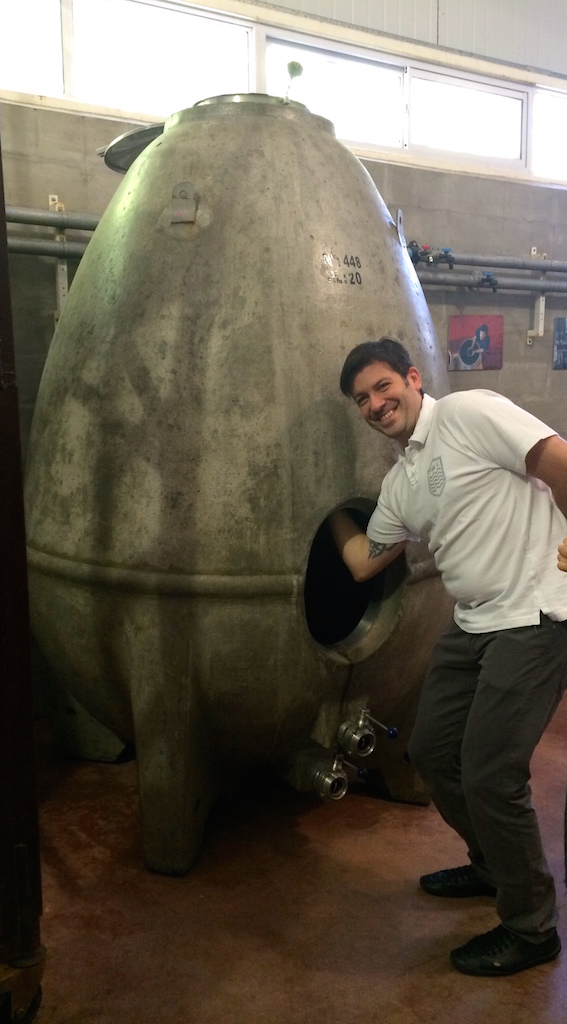
Carlos Gloger of Curitiba, Brasil, tests the inside of the 10-foot concrete egg used for a moderate and controlled fermentation at Zuccardi.
What Porte was responding to was the question, “With so many Malbecs to chose from, and so many that taste similar, what sets Zucccardi apart from the rest?”
Consistent quality, of course, which stems from Sebastián’s belief in the terroir of individual vineyards.
‘I’m always talking about the origins of the grapes,” Sebastián said in Aspen. “Each region, each sub-region offers something different.”
He said walking through the vineyards and tasting the grapes will reveal the individuality of the vines.
“You can taste the individual terroirs and that is what we are promoting,” Sebastián said, waving his hand at the selection of Zuccardi wines near him. “You will notice I am always talking about the origin of the grapes, not just the fact they are Malbec.”
Which also means Malbec is more than a grape: it’s also a place.
“It’s that origin that we must promote to ensure our future.”
Which entails using sustainable and organic agricultural practices, and focusing on micro-climate terroirs in the various vineyards and soils of Maipu and Santa Rosa along the eastern foot of the Andes.
Every wine is estate grown, hand-picked and estate produced in a modern, state-of-the-art facility.
Not too modern, though: Scatttered through the fermentation are several bunker-like concrete fermentation tanks and 10-foot concrete eggs scattered around the winery. So strong is Sebastián’s belief in terroir he uses only local concrete in making the amphora-shaped eggs and the concrete tanks in which he uses to age specific varietals, including Bonarda.
Bodega Zuccardi produces three lines of wines: the premium Zuccardi; Julia (named after Julia Zuccardi); and the Malamado line of fortified wines.

The 2014 holiday season is bright for Eames Petersen of Alfred Eames Cellars in Paonia, particularly with the continued emergence of his son Devin as partner and second-generation winemaker. The winery’s annual holiday open house and barrel tasting drew a lively crowd this past weekend. Photo by Jim Brett
PAONIA – The holiday season officially began here last weekend with a rousing chorus of Jingle Bells resounding through the barrel room at Puesta del Sol and Alfred Eames Cellars, the vineyards and winery south of Paonia, Co.
Here, on the flank of Mt. Lamborn, Eames and Pam Petersen, along with their son Devin and daughter Lais, hosted their annual holiday open house and barrel tasting with friends sharing wine, good food and the locally renowned Madrigal Choir.
There is much to celebrate this year at the winery, although some things you might not notice unless told.
Eames has two new knees, the latest (his right) being installed less than a month ago to balance his new-found gait with the first transplant from 6 months past.
The thought of unencumbered movement significantly brightens his aspect on life, especially life hiking and climbing the mountains he loves.
“I’m already thinking about Gunnison lakes,” said Eames, speaking of the trek to the lakes half-hidden on the upper shelf of 12,725-foot Mt. Gunnison in the West Elks Wilderness.
“Last time I went, I made it about halfway and had to stop,” recalled Eames. “Devin kept going but I had to come back down.”
There’s also the not-small fact that Devin, whose name means “poet” in the original Gaelic, is fitting comfortably into the life of a second-generation winemaker, a move that pleases Eames as much as his two new knees.
“He added 10 years to my life,” said Eames, watching Devin easily haul three cases of wine to a guest’s car. “He knows everything I do, probably more. We’re partners but he’s taken on a huge responsibility for the operation of the winery.”
Devin, 30, admitted to a bit of indecision a few years back but now he’s solidly committed to being the resident winemaker.
“I’m excited about being here,” he said. “This is my home, now.”
Which is more good news. Like many Colorado winemakers, Eames and Pam spent years building their business and faced an uncertain future if and when it came time to retire.
Now, listening to Devin talk easily with guests enjoying the barrel samples in the cement-lined, cave-like barrel room, it seems the winery’s future is assured.
“We built this to be like a cave, with thick walls and buried in the ground, to maintain a near-constant temperature,” Devin, pointing around the expanse while speaking to a few listeners. “It fluctuates less than 10 degrees though the year.”
During a brief break in his wione-pouring duties, he mentioned the winery is a cross roads.
“I’d like to grow the business but we’re so limited in what we can expand into,” he said, lifting his hands to the solid walls of the winery around him. “Not just as far as building sales and increasing capacity but finding the resources to make more wine.”
That last part is key in a business where weather makes half your business decisions for you.
“We’re limited both by our physical space but also the supply of fruit,” said Eames with a laugh. “You have to learn to adjust.”
Getting bigger could mean losing some “intimacy” with the business, Devin said.
“It’s really about where we want to be, both in the quality of our product and in our way of life in doing it,” he said.
For now, that way of life continues unchanged. There is wine to rack and bottle, cases to move and the myriad other tasks that take up a winemaker’s winter.
Well, maybe for Devin to move.
“I just shuffle around and do quality control,” said Eames, laughing again. “Now, I have time to sit down with my guitar and watch Devin.”
 Wine Openers