Archive
Heading to VinItaly? Seven, make that eight, tips to keep in mind

Ponte di Castelvecchio Vecchio spanning the Adige River in Verona, Italy. On the night of 25 April 1945, together with all the bridges of Verona, it was blown up by retreating Germans. Photo and story by Dave Buchanan
As sure as the swallows return each spring to the old mission at San Juan Capistrano, Italian winemakers each spring pack up their road show and head to Verona for the annual return of VinItaly, which bills itself as the world’s leading wine trade fair.
This year’s event (April 10-13) marks VinItaly’s 50th anniversary and understandably the buzz has been in the air for months, since no one can outdo the Italians when it comes to celebrating big events, especially one that attracts an international audience (last year more than 150,000 attendees from 30 countries) of wine buyers, importers, critics and wine lovers.
It can be a bit overwhelming – this year’s fair is expected to feature more than 4,100 exhibitors covering an impressive 100,000 square meters (that’s about 1.07 million square feet) of exhibition space. That’s big.
It was 40 years ago the American wine revolution occurred
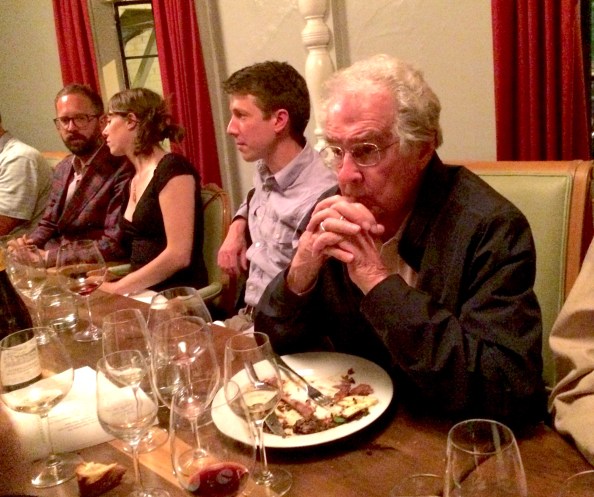
Warren Winiarski, whose 1973 Stag’s Leap Cellars Cabernet Sauvignon placed first among red wines at the 1976 Judgment of Paris, played a key role in the early days of the modern Colorado wine industry. To Winiarski’s right is Kyle Schlachter of the Colorado wine Industry Development Board.
A face familiar to Colorado winemakers is celebrating a 40th anniversary this year.
But it’s not your usual anniversary. This time it’s Warren Winiarski, the renowned California winemaker who nearly 50 years ago played midwife to a nascent Colorado wine industry, celebrating what is considered the most-consequential event in American winemaking.
Winiarski, the son of Polish immigrants and whose last name can be translated as “winemaker,” made the 1973 Stag’s Leap Cellars Cabernet Sauvignon that in 1976 bested the top red wines of France in a blind tasting that’s known as The Judgment of Paris.
At the same tasting, a 1973 Chateau Montelena Chardonnay made by Miljenko “Mike” Grgich won out against the best French white Burgundy.
This unexpected result in what was planned as a slam-dunk showing of the “best of the best” of the French wine industry at the expense of the upstart Americans stunned the wine world and put Napa Valley, and by extent the American wine industry, on the map.
May 24 marks the 40th anniversary of The Judgment of Paris and to commemorate the event, Winiarski and the Smithsonian are hosting in May two sold-out wine dinners.
The dinners will be held at the National Museum of American History and will bring together individuals who organized and attended the 1976 tasting in Paris, the winemakers who made the winning vintages, and individuals who are carrying on the legacy of fine winemaking in America.
Two other notable guests will be attending the events: wine writer Steven Spurrier, who arranged the competition, and George M. Taber, a Time magazine reporter and the only journalist to cover the event. Writer and wine critic W. Blake Gray called Taber’s four-paragraph story about the tasting “the most significant news story ever written about wine.”
At the time, however, no one realized how significant it was, least of all Winiarski.
He had been asked to submit a wine for the tasting but he was in Chicago, not Paris, on the day of the judging.
“I was in Chicago when Barbara (his wife) called me to say I had won,” recalled Winiarski during a recent conversation. “I said, ‘That’s nice.” I didn’t know what wines were being tasted or who the judges were.”
Once he realized the impact of what he and Grgich had accomplished, he says it “changed the way we looked at things.”
Meaning American winemakers, and back then it almost entirely was California, no longer had to play caddie to the European wine industry.
“Nothing was the same after that,” Winiarski said. “It certainly changed the way I looked at things and opened many horizons for me and the industry.”
It certainly angered and frustrated much of the French wine industry, Winarski recalled, including one French judge who demanded her ballots be returned.
“Afterwards I received several letters from members of the French wine industry saying that the results of the 1976 tasting were a fluke,” he said.
The 2008 movie “Bottle Shock,” which focuses more on Grgich’s chardonnay, is an interpretation of the judging.
A bottle of Winiarski’s award-winning 1973 Cabernet Sauvignon is displayed in the Smithsonian’s “FOOD: Transforming the American Table 1950-2000” exhibition.
In its November 2013 issue, Smithsonian magazine included this bottle as one of the “101 Objects That Made America.”
“I always was striving to achieve a sense of completeness, of balance, in my winemaking,” Winiarski said. “I think the wine that went to France reflected that balance.”
Winiarski was inducted into the California Vintners Hall of Fame in 2009.
CAVE brings new look to wine sampling events
There may be no better way develop a good foundation in the intricacies and intimacies of wines and winemaking than to visit wine regions, tour the wineries and meet the people behind the wines.
However, when you already live in a wine region, as do we in the Grand and North Fork valleys, the very proximity of wineries sometimes gets lost.
Just as you can glance at the skyline and see Grand Mesa without fully comprehending the beauty you see there, it’s easy to overlook the marvel of winemaking when it’s being done on a daily basis in your backyard.
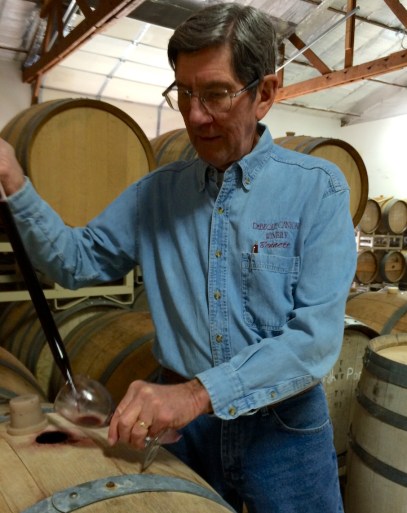
Winemaker Bennett Price of DeBeque Canyon Winery in Palisade uses a wine “thief” to pull a sample during a recent Barrel into Spring tasting.
The wineries are there, and most are open year-round, it’s just a matter of us devoting the time to open the doors and walk in.
Maybe it takes a formal invitation, which is what the Grand Valley Winery Association has offered with its annual Barrel Into Spring wine tasting.
Seven local wineries open their wineries for two weekends (this year it’s April 23-24 and May 14-15) for winery tours, wine tastings and unique insights.
It’s a great opportunity to increase your wine knowledge and perhaps taste wines you’ll not taste otherwise.
But, and it’s a big one, Barrel Into Spring highlights only seven wineries and invariably sells out early. Because the event is very popular, and but to keep the weekend enjoyable for everyone, attendance and tickets are strictly limited.
This year tickets ($70 per weekend) went on sale Jan. 4 and were sold in a blink.
Now, though, you have another chance. The Colorado Association for Viticulture and Enology (CAVE), the same terrific folks who each September bring us Colorado Mountain Winefest, is introducing a statewide spring barrel tasting called A Taste of Spring. Read more…
Dreading tax season? It never ends for winemakers
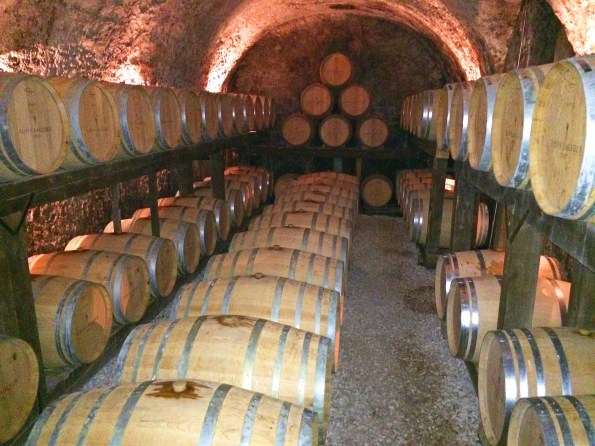
Wines being aged in barrels or bottles are counted as produced wine but aren’t taxed until the wine is moved out of bond.
Readers of a certain age will recall a 1960s TV series called “The Untouchables” featuring Robert Stack as Elliot Ness, a Prohibition agent in Chicago in the late 1920s.
Ness, under the aegis of the then-Bureau of Prohibition, was credited with breaking mobster Al Capone’s hold on Chicago by destroying Capone’s extensive bootlegging network.
Photos of Ness and his hand-picked team smashing huge vats and beer tanks and pouring illicit booze out into the streets helped viewers forget Ness was not simply an axe-wielding, anti-alcohol Carry Nation but a federal tax agent, making a case against Capone for tax evasion.
Ness and Capone are gone but the feds, through the Alcohol and Tobacco Tax and Trade Bureau (TTB), still keep a sharp eye on who pays their excise taxes.
Wines are taxed at state and federal levels at varying rates according to the wines’ alcohol-by-volume content (it’s similar for beer and spirits). The higher ABV, the higher tax per gallon. The rates goes from $1.07 a gallon (21 cents per .750 ml bottle) for wine with up to 14 percent ABV up to $3.15/gallon for wine with 21-24 percent ABV.
Wineries can either pay the taxes as they come due (see below) or post a bond, an insurance policy of sorts, against the tax bill.
Bonds are fairly cheap, as low as $100-$200 for the smallest wineries.

Excise taxes are due on wines when they become available for public consumption or purchase.
“The concept of a bond was the feds having some assurance you will pay your excise taxes,” said Bob Witham of Two Rivers Winery and Chateau on the Redlands.
Once a wine is “produced”, meaning fermentation is done, it is subject to excise tax. A winery doesn’t have to pay the tax until the wine is ready to be sold or consumed. By storing (aging) the wine in bottle or barrel in specially designated bonded areas, the winery can delay paying these taxes.
Once the wine moves out of the bonded area, which may be somewhere in the winery or an offsite storage unit, the excise taxes are due. Read more…
Mondavi and Tachis – A world apart yet not so different
It wasn’t until the obituaries were noted and carefully read that some fascinating parallels were revealed in the careers of winemakers Peter Mondavi and Giacomo Tachis.
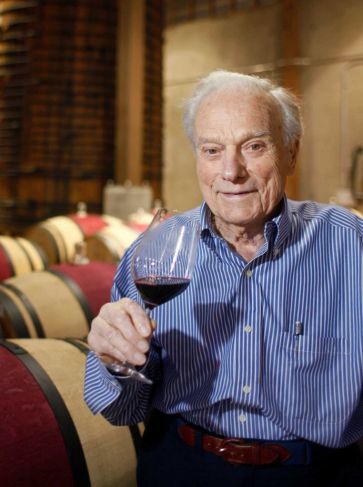
Peter Mondavi, 1914-2016 (AP photo)
Two men separated by nearly two continents and 6,000 miles yet whose impacts on wine and winemaking will last far longer than many of the current winemakers.
Plus, the fact both were of Italian lineage cements a long-held belief that the world of wine owes much to its Italian heritage.
Mondavi died Feb. 19 at 101 and in early partnership with brother Robert, a remarkable winemaker in his own right who died in 2008, made their family-owned Charles Krug winery one of the early leaders in Napa Valley wine history.
According to several articles, Peter Mondavi adopted ideas he had learned while doing graduate at the University of California, Berkeley, to turn California from a general source for unremarkable wines into one of the world’s premier wine regions.
He’s said to have been the first Napa Valley winemaker to use cold fermentation and sterile filtration to produce crisp, fruity whites.
Also, his winery was the first in Napa Valley to use new French oak casks for aging and to adopt the uncommon (for then) practice of vintage-dating its varietal wines.
Such was his passion for winemaking, and even more his passion for protecting his family business, that he still going into the office at the age of 100.
The Charles Krug Winery, during this Golden Age of California cabernet, became famed for its well-structured and elegant Vintage Selection cabernets.

Giacomo Tachis, 1933-2016
Tachis, meanwhile, who died Feb. 5 at the age of 82 at his home in San Casciano in Val di Pesa, Tuscany, equally was known for his pioneering use of temperature-controlled fermentation and aging in oak barrels.
It once was said that there are two eras in the history of winemaking in Tuscany: before Giacomo Tachis and after Tachis.
One of Tachis’ most notable accomplishments was his role in using French grape varietals (notably cabernet sauvignon and cabernet franc) in developing what became known as “Super Tuscan” wines. There had been a few earlier experiments with using non-Italian grape varieties but it wasn’t until 1961, with the state of Chianti in sorry shape, when Tachis helped develop the Bordeaux-influenced, sangiovese-based Sassicaia (with Marchesi Incisi della Rocchetta), Tignanello (with Marchese Piero Antinori, whose family had been experimenting with cabernet blends since the 1920s) and Solaia, among them the first of the so-called Super Tuscan wines.
These wines with their French-grape components didn’t fit the restrictive Italian regulations and rather than be lumped with common and less-distinctive vino da tavola, the term Super Tuscan was developed.
“They opened the door to a new market — as well as the road to a better-quality wine — at a time when, especially in Tuscany, Chianti was a weak, cheap wine,” Giacomo Tachis told Decanter Magazine in 2003.
The wines lifted the reputation of all Italian wines, and while now some of the polish has worn off this so-called “international style,” it paved the way to success and worldwide markets for many Italian winemakers.
After Tachis was named Decanter magazine’s Man of the Year in 2011, wine expert Jancis Robinson wrote “Giacomo Tachis changed the style of Italian wine, dragging it – kicking and screaming – into the 20th century.
“And by changing the style of the wines, he changed the way in which they are perceived,” wrote Robinson. “Without him, Italian wine would not be as successful as it is today.”
Tachis, in his post-Antinori career, developed highly acclaimed and sought-after red wines in Sicily, Sardinia, and the Marches region of central Italy.
There was one notable difference between these two innovative winemakers, separated as they were by miles if not temperament and passion. While they almost simultaneously pioneered similar techniques (cold fermentation, oak aging) to improve what went into the bottle, they differed in what they put on the bottle.
Mondavi introduced the use of varietal labeling on wine while Tachis adopted less-descriptive labeling, thus perhaps starting the trend to fanciful labels on wines.
Two men, two imprints, and the world of wine made better.
A recent note from Giovanni Mantovani, General Director for Veronafiere, the site of the annual VinItaly wine exposition, said this year’s VinItaly, the 50th anniversary, will be dedicated to the legacy of Giacomo Tachis.
“Giacomo Tachis represented the renaissance of Italian wines and will remain forever in the history of Italian winemaking and in the hearts of those who knew him,” said Montovani in the announcement.
Millennials, especially women, flexing their wine muscle
If you’ve been out cruising downtown any night this winter, you’ve probably noticed how busy some of the city’s more-popular restaurants have been.
And if you looked twice, you might also have noticed how many of those guests with a glass of wine in front of them were younger women.
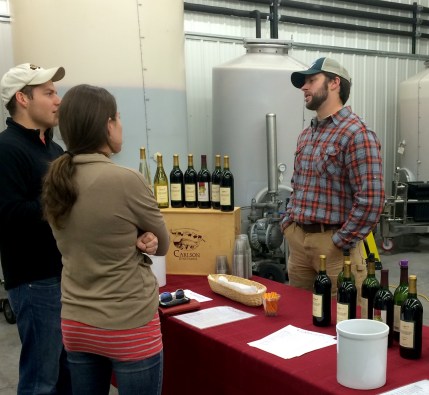
Winemaker Garrett Portra talks business during a open house at Carlson Vineyards. A recent survey says Millennialls last year purchased 42 percent of all wine drunk in this country.
That trend gets analyzed in a recent report from the Wine Market Council, which says people in their 20s and early-to-mid 30s now drink almost half the wine bought in the US.
What’s more, in what’s called the “high-frequency drinker” segment, women under 30 women are out-purchasing men two-to-one when it comes to wine.
Now, “high-frequency drinker” isn’t as lascivious as it sounds. According to the WMC, it refers to someone who drinks wine more than once a week. That faction buys and consumes 81 percent of all the wine drunk in America, says WMC.
Again, the WMC report says Baby Boomers account for the largest group in the high-frequency class, but Millennials (those people born between 1978 and 1995) are right behind them, making up 30 percent of frequent drinkers.
How fast the kids grow up. Read more…
What do you mean, ‘It’s time to go?’ Look at all the wines…
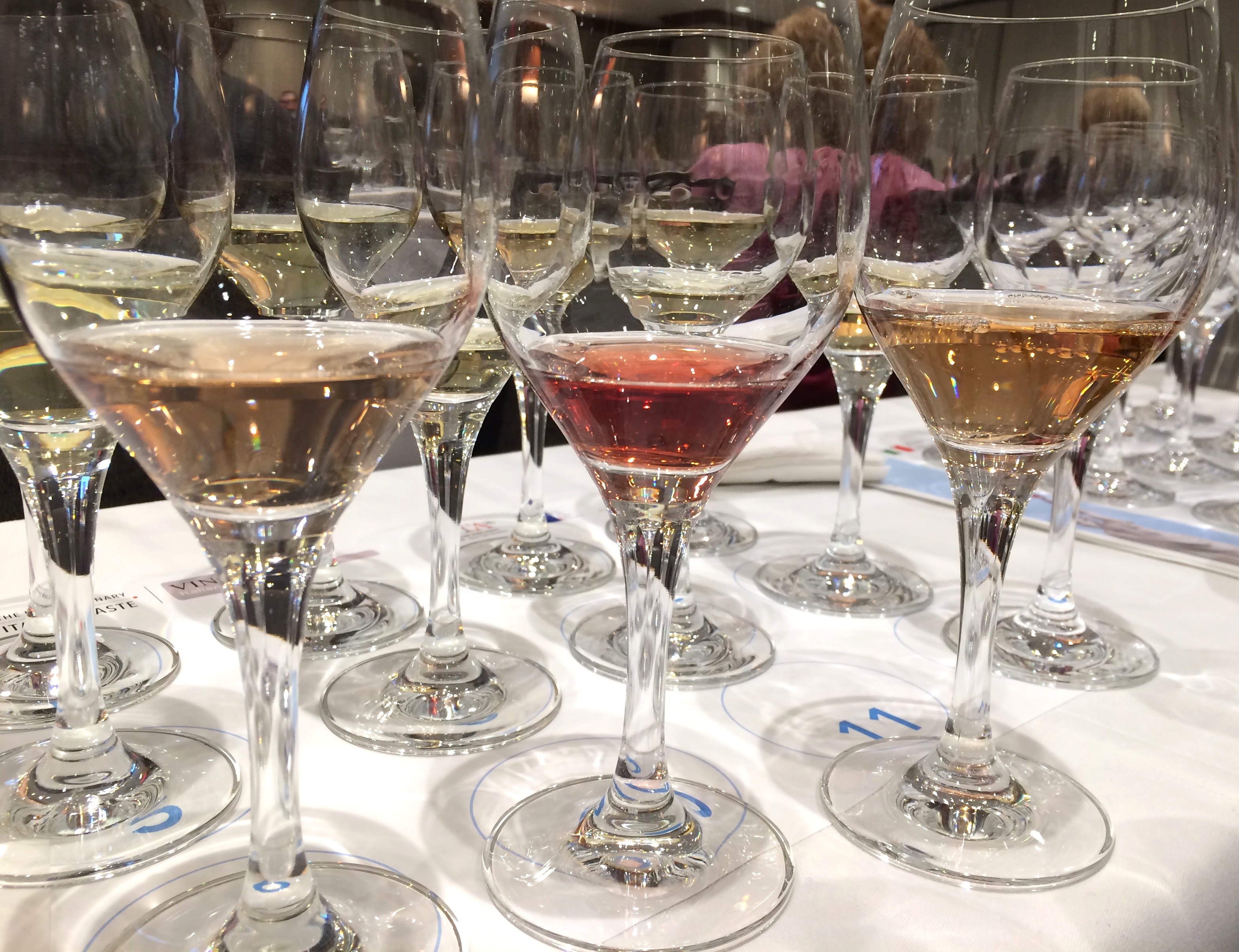
Wine enthusiasts faced a daunting lineup of choices at the Vino 2016 and the Tre Bicchieri International Tour events recently held in New York City.
The plane had barely lifted out of La Guardia, headed west over the snow-covered country of upstate New York, and I already was thinking about the wines I missed during my brief stay in New York City.
Three days of Italian Wine Week/Vino 2016 in New York City’s Midtown Hilton with a brief interlude at the Tre Bicchieri 2016 International Tour tasting simply wasn’t time enough to do justice to all the wines and winemakers at the two events.
One of the expected drawbacks to having 160-plus winemakers and about 1,000 different labels in one room, as was the case with the two Vino 2016 Grand Tastings, is you simply can’t meet every winemaker even with an afternoon to do so.

Prosecco maker Graziano Merotto, shown here pouring at his winery in Col San Martino, this year was awarded his fifth consecutive Tre Bicchieri.
Undoubtedly many gems went untasted or there simply wasn’t time to return to re-taste some of the more-interesting wines. I’m certainly not complaining, given the breadth and depth of the wines I did taste, and there are many worse places to be than surrounded by talented and ambitious winemakers.
It was an abundance of riches including a fascinating seminar about olive oil from Marco Oreggia (a fine article here from Susannah Gold).
The wine-cup-runneth-over was something I mentioned at the Vino 2016 tasting to Marco Funiati, owner and general manager of Agricola Messapica in Salento.
“Yes, there are many (winemakers) here trying to attract the American market,” said Funiata. “We don’t have much time to make an impression, and the American market is so big.”
He was pouring his 2014 Salento Chardonnay, an 80/20 blend of Chardonnay and Verdeca. Crisp, fresh and bright, available in the U.K. but still seeking a U.S. importer.
I stopped a few tables away to try Alex Polencic’s Pinot Grigio and although it hadn’t been in bottle long, was impressed by the rich mouthfeel and velvety apple/pear fruit, far different (and way better) than the sea of plonky Pinot Grigios now flooding the U.S. market.
“2014 was one of the most difficult years in the last 15,” Polencic said. “But 2015 was much better” with late-summer rain softening the earlier heat.
Over at the Tre Bicchieri International Tour tasting at the Metropolitan Pavilion, I slipped through the crowd to find Elvira Bortolomiol pouring her family’s 2014 Brut Prior Prosecco Superiore, the 2014 Brut Lus Naturae and the 2015 Extra Dry Bandarossa. Prosecco sales continue to climb and it’s no wonder after tasting the outstanding wines from Bortolomiol and those Maria Luisa dalla Costa was pouring for Graziano Merotto, both from the rugged hills of the Conegliano Valdobbiadene Prosecco Superiore DOCG.
This, by the way, was Merotto’s fifth-consecutive Tre Bicchieri, honoring his Cuvèe del Fondatore.
Also of note were the 2014 Lugana Molin and 2014 Lugana Prestige from Cá Maiol on the southern end of Lake Garda. The wines, not surprisingly, were delicious, reflective of the area’s complex history and geography.
And all too quickly the weekend was over.
The search goes on: Getting a foothold in the U.S. wine market

A few of the estimated 160 Italian wine producers at Vino 2016 in New York City. An estimated third of the winemakers were seeking an entry into the U.S. market.
NEW YORK – Romano Baruzzi took a breath and looked out at the sea of faces in front of him.
“Buona sera a tutti, welcome everyone,” said Baruzzi, deputy trade commissioner for the Italian Trade Commission in New York City. “Welcome to the biggest event promoting Italian wines in the U.S.”
Baruzzi had the opening podium on Feb. 8 for the start of Italian Wine Week/Vino 2016, just ahead of the much-awaited panel discussion titled “On the Bright Side: What’s Ahead for 2016.”
This first-night talk promised to give the many producers, importers and the occasional journalist insights into what the immediate future may hold for Italian wine. While providing a suitable answer for such a complex question is akin to stuffing an elephant into a suitcase, Baruzzi and the other speakers were giving it their best.
Vino 2016 attracted more than 160 Italian wine makers and their representatives, most of them proudly showing off their latest vintages to almost that many importers and buyers while other winemakers, reported as high as nearly one-third of those present, simply were seeking someone trustworthy in whom to entrust their wines.
“We have more than 1,000 labels here this year,” Baruzzi said during his opening remarks. “I hope everyone can find a (business) partner in the U.S.”
But as many smaller Italian winemakers learned during the two-day event, hope may be their best hope. Read more…
A few words from the (Italian) wise
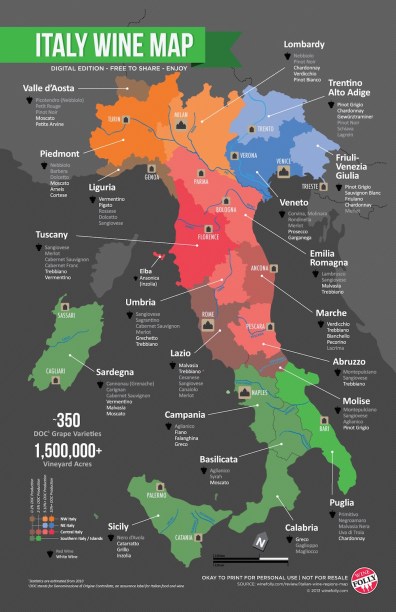
courtesy winefolly.com
NEW YORK CITY – On the first full day of Vino 2016, wine writer and author Elin McCoy unexpectedly summed up what countless other speakers would spend hours talking about over the next two days.
Looking out at a well-lit seminar room on the second floor of the midtown Hilton Hotel, at tables laden with wine glasses and lined with eager listeners, McCoy informed her audience that “It couldn’t be a better time for wines from southern Italy.”
It was a theme to be repeated, although never again quite as succinctly, throughout the all-too-short run of this year’s Italian Wine Week presented by the Italian Trade Commission. Subtitled “The Grandest Italian Wine Event Ever Held Outside of Italy” and focusing this year on wines from Calabria, Campania, Puglia and Sicily, the event (this year was its fifth edition) brought together about 200 Italian wineries (not all from the south and about a quarter of which were looking for a U.S. importer) and countless importers and distributors and other wine-trade people.
Among the many memorable remarks from the week’s speakers and guests:
“This week there is a peaceful invasion of Italian producers and wine experts.” – Maurizio Forte, Trade Commissioner and Executive Director for the Italian Trade Commission.
“The U.S. market is the most-important market for Italian wine; we export almost $1.5 billion per year.”– Maurizio Forte
Wines from southern Italy are largely unknown to the U.S. market because “most American tourists still do not visit Southern Italy.” – former wine director Charles Scicolone.
“They are a ‘hand-sell, meaning that it often takes talking about these wines and explaining them to the customer in order to get them to try a bottle or two.” – Charles Scicolone
“People want to know who you are, not just your wines.” – Chad Turnbull, president of New York-based importer Savorian, Inc., told the producers. “One of the most fundamental things you can do is to introduce yourself to your market.”
“Puglia and Calabria are at the edge of the western world.” – blogger/importer/Italophile Jeremy Parzen. “They just needed a small nudge to enter the modern world of winemaking.”
“Verdeca. I’m on a mission to find it.” – sommelier Jeff Porter, of the little-known white grape grown in central and southern Italy, including Puglia and Campania.
“When you taste (the wines of southern Italy), it’s hard to imagine what the wines were like 20 years ago.” – Elin McCoy. “These were wines you didn’t want to know about.”
“Sicily is sexy; it was sexy even before the wines were so good.” Roberta Morrell, president and CEO of Morrell Wine Bar and Café, New York City.”The good reds came before the good whites…now the whites are fresh, fruity and minerally.”
“I’m consumer driven. If you can’t say it, you can’t buy it.” – author/wine educator Kevin Zraly.
“In Italy, people mostly eat at home.” – restaurateur/ author Lidia Bastianich. “First, because good eating means eating their mother’s cooking, nobody makes it better, and secondly, because of the economic crisis that is currently afflicting the country.”
“Buying a wine made in Italy means buying a piece of wine history from a country that has made wine for a thousand years.” – journalist Luciano Pignataro.
Kroger proposal could change the way we see wine
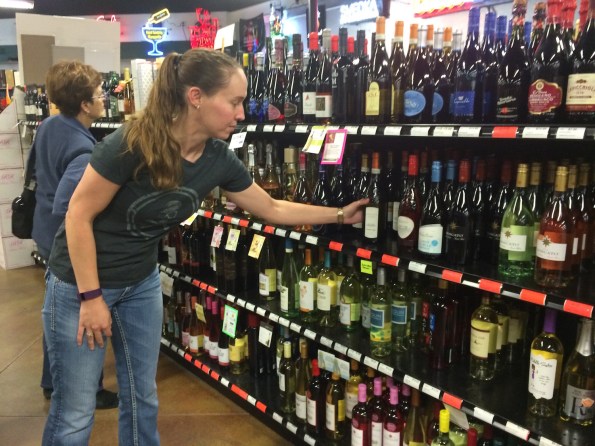
Wine buyers seeking a specific brand or label may find it harder to locate if shelf space becomes a pay-for-presentation reality.
As this space noted earlier, voters in Colorado will face the question whether to allow grocery stores to sell wine, spirits and full-strength beer.
Since that posting, a new consideration has arose.
Kroger Co., the country’s largest supermarket chain and owner of the eponymous Kroger grocery stores as well as King Soopers, City Market and others, has “proposed a plan that would let a private distributor oversee how much prominence brands get in stores,” according to the Wall Street Journal.
Plus, the WSJ goes on, the alcohol companies will be asked to pay for the distributor to find shelf space. (The original article is behind the WSJ paywall but you can read a summary here in an article from Money magazine).
In other words, pay for exposure.
Already this sounds like bad news for locavores supporting small-batch producers.
Not every small winery, brewer or distiller will notice the change. Many of them are too small to use state or national distributors and many of them sell most of their product through the front door.
But for those who depend on a distributor, or simply rely on the willingness of a retailer to find room on a shelf, the Kroger proposal is bad news.
Finding a place to sell small-batch wine, beer and spirits already is tough; just ask the winemakers, distillers and brewers who make weekly rounds of stores, making sure they haven’t lost shelf space to large distributors also trying to find space for their products.
Competing for premium shelf space just got harder, as writer W. Blake Grey assets here, against national distributors who can pay for better positioning.
 Wine Openers