Archive
Beating nature-deficit disorder one wine bottle at a time
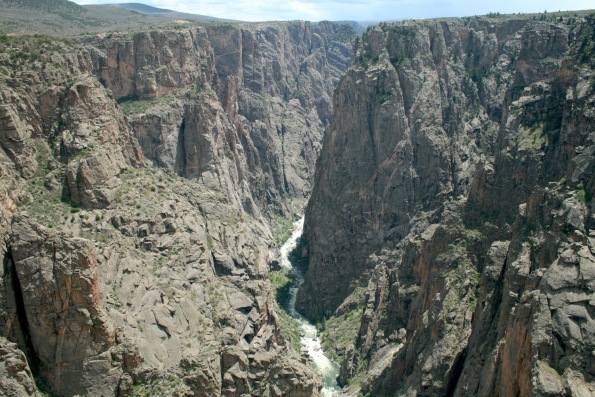
The Gunnison Gorge National Conservation Area is one of three NCAs in western Colorado offering world-class outdoor experiences. Colorado Canyons Association is a non-profit, nonpartisan organization aimed at fostering good stewardship of the NCAs.
Yo, bro: Pass the Desert Rat Red.
A unique partnership between Colorado Canyons Association and Carlson Vineyards, forged through a spirited commitment of giving back to the community as well as finding needed resources to get young people into the backcountry, may provide the perfect pairing for your next canyon-inspired meal.
Sunday afternoon found Garret Portra, owner and winemaker at Carlson Vineyards, and a group of CCA staff and board members sampling wines, all in the name of conservation and defeating nature-deficit disorder.
Sunday’s working group, which included CCA executive director Joe Neuhof and assistant director Kate Graham, spent a few hours in the cool environs of the Carlson winery tasting various blends and rejecting them in turn until, as a little blonde girl once said, it was “just right.”
I know, tough work but someone has to do it, right?
Neuhof said the idea was born during a series of “Crazy about Canyons” fund-raising events sponsored by the CCA and held at Carlson Vineyards (the last one was June 11th).
“Garret and I would talk after the dinners and we both were looking for something to bring our efforts together,” Neuhof said. “This seemed like a natural.”
Once on the market, $1 from every bottle purchased will go the Colorado Canyon’s youth programs, Neuhof said.
“This might seem strange to some people but I think it’s a good fit for us and Carlson’s,” he said. “Our goal in 2017 is to get 3,500 kids into the backcountry and this will help that happen.”
The final decision is a blend of 72-percent Lemberger, also known as Blaufrankisch, the spicy red grape that adds a bit of ripe cherry fruit, acidity and medium tannins, and 28-percent Cabernet Franc, the savory Bordeaux blend grape that does well in the high desert climes of the Grand Valley.
The wine, which is yet to be bottled and named (don’t expect “Desert Rat Red”), will spend some time in French oak barrels and may be available late this fall, Portra said.
Neuhof said the front label will feature a photo, as of this writing undetermined, from the local canyon country.
Portra said the idea for the label came from Dave Phinney of Orin Swift winery in Napa Valley.
Phinney is known for his creative labeling and Portra saw the opportunity to do something eye-catching as well as provocative.
“We wanted something different,” he said. “Not only to stand out on the shelf but to let people know we support the CCA’s efforts. Cailin (his wife) and I are always looking for ways to give back to the community for our good fortune.”
As for Portra, this wine is his first opportunity to make his mark on the familiar and popular line-up of Carlson Vineyards wines.
“I’m really excited about this,” said the eternally upbeat Portra. “I didn’t think it would come this soon, but it’s my chance to put my stamp on Carlson wines.”
So many good things: North Fork wines, Colorado Mountain Winefest tickets on sale

Some of the happy celebrants at Black Bridge Winery in Paonia during the 2015 North Fork Uncorked.This year’s event takes place June 18-19. Photo courtesy Jim Brett.
Tickets now are on sale for the 25th edition of the Colorado Mountain Winefest, once again presented by Alpine Bank.
This year’s four-day Winefest (Thursday, Sept. 15 through Sunday, Sept. 18) includes special wine-and-food pairings at participating local restaurants; four different Colorado Wine Country bus tours; and the 25th Colorado Mountain Winefest Festival in the Park on Saturday, Sept. 17.
Tickets to all events are limited and last year was the first time all tickets for all events were sold. Many people, eager to attend the popular Festival in the Park and accustomed to purchasing a ticket at the gate on the day of the event, were turned away.
Tickets for the Festival in the Park are $50 general admission, $190 for VIP and $25 for the non-drinker. These tickets are limited and likely will sell out. Fewer than 100 of the VIP tickets were remaining as of Friday.
More information, tickets and a complete list of events are available at info@coloradowinefest.com and by calling 464-0111.
North Fork Uncorked June 18-19 – Join winemakers in Hotchkiss and Paonia celebrating Father’s Day weekend in style with their annual North Fork Uncorked, featuring wine and food pairings, winemakers dinners and special offers at participating wineries, open 11 a.m. – 5 p.m.
Winemakers dinners, Saturday, June 18 – Lee and Kathy Bradley, Black Bridge Winery, dinner by the river. Tickets are $55. Reservations: 970-270-7733 or 527-6838.
Brent and Karen Helleckson, Stone Cottage Cellars, four course, locally grown. Tickets $65. Information and reservations: 970-527-3444.
Sunday, June 19 – Alfred Eames Cellars, Sunday Brunch, 10 a.m.- 2 p.m. For menu and information on this and weekly brunches, call Pam Petersen at 970-527-6290.
More information on these and other North Fork Uncorked offers and activities is available at www.westelksava.com and at 527-3444.
This post was updated on June 9 to correct the dates for the 2016 Colorado Mountain Winefest (Sept. 15-18) and Pam Petersen’s phone number (527-6290).
Francesco Drusian: Preserving the heritage of Prosecco DOCG

The steep hills of the unique Valdobbiadene-Conegliano Prosecco Superiore DOCG rise abruptly from the Venetian plain. The border separating the DOCG from Prosecco DOC lies at the base the hills. Story and photos by Dave Buchanan
BIGOLINO di Valdobbiadene (TV) – Standing amidst rows of spring-fresh vines climbing the razorback hills rising steeply to of the pre-Alps of northeast Italy, Francesco Drusian smiles at the thought of this region becoming a UNESCO World Heritage site.
“We did everything we could to preserve our heritage,” Drusian says, reaching out to a light-green shoot just opening to the April sun. “Now, it’s up to others to decide if we did enough.”
It’s only a few days past VinItaly and I’ve called on Francesco Drusian in hopes of learning more about Prosecco and Drusian’s place in the narrative of Italy’s popular yet oft-underappreciated sparkling wine.
I’ll post more about our discussions in the future.
Few people would argue Francesco Drusian has done as much as anyone to preserve his heritage and that of Prosecco.

Born in the hills of Valdobbiadene-Conegliano and 100-percent Glera grapes. Photo courtesy Drusian FaceBook
According to Francesco, he’s the fourth generation of his family (the fifth, his daughter Marika, already is producing Prosecco DOCG under her own label) to make wine from these geometrically perfect vineyards overlooking the village of Bigolino, which itself lies on the north bank of the Fiume Piave near where the river cuts through the famed Valdobbiadene hills.
The winery began in the mid-19th Century with grandfather Giuseppe Drusian and then his son Rino making still wines. Francesco took over in 1984 and today the name Drusian connotes Prosecco Superiore DOCG, one of the best versions of the iconic Italian sparkling wine now soaring on a crest of popularity.
Francesco introduced sparkling wine to his winery in 1986, shortly after the autoclave afforded a way to control the secondary fermentation that gives Prosecco its sparkle and shortly before the world’s love affair with everything Italian became the tsunami we see today.
The advantages of the pressurized autoclave – including preserving bubbles and fresh flavors and reducing the labor and cost involved with metodo classico – suddenly made it possible for lovers of sparkling wine worldwide to enjoy a wine that is light, refreshing, food-friendly and surprisingly affordable.
“Prosecco DOC is the ultimate simple but sophisticated wine which personifies the unique Italian lifestyle” says the Prosecco DOC Consorzio website.
However, the international rush to adopt elements of the “Italian lifestyle” had its expected result: a flood of Prosecco, much of it poorly made and of dubious background (google “Paris Hilton prosecco”), hitting the market.
Even the very existence of a Prosecco DOC gives voice to the expansion, some say uncontrolled, of Prosecco as an industrial product.
By the mid-2000s, Prosecco, as with many other great things, had to be saved from its own success. Read more…
Wines to make the weekend festivities memorable
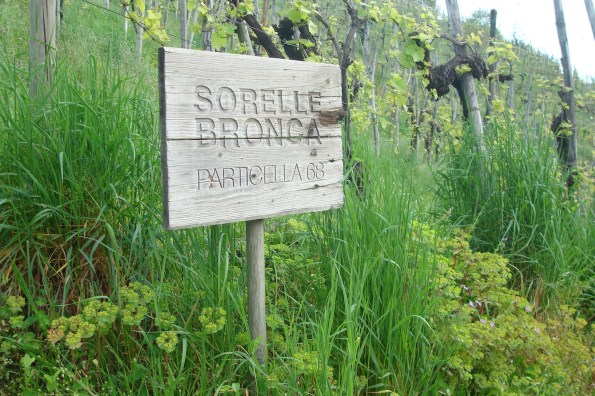
This steeply pitched vineyard in Valdobbiadene is the site where Sorelle Branca grows its eponymous Prosecco Superiore DOCG. Story and photo by Dave Buchanan
Spring 2016 began rather hesitantly, the past month being dominated with extended periods of cool and rainy weather.
However, the approach of Memorial Day brought distinct changes, including daytime temperatures nearing seasonal norms and plenty of blue skies.
And this to me indicates the long holiday weekend will see many outdoor gatherings, and there is nothing that fits the festive mood more than entertaining with sparkling wines, rosés and white wines.I opened a few boxes to come up with suggestions for your plein aire pairings to make the weekend truly memorable.
I admit to being a huge fan of great Prosecco and that was illustrated again this spring when I spent a few days after VinItaly exploring the heart of the Conegliano Valdobbiadene Prosecco Superiore DOCG.
When I returned home, stuffed into my bag were two bottles of winemaker Graziano Merotto’s best: his Valdobbiadene Prosecco Superiore DOCG Brut Rive di Col San Martino “Cuvée del Fondatore Graziano Merotto” Millesimato 2015 and his Valdobbiadene Prosecco Superiore DOCG Dry Rive di Col San Martin “La Primavera du Barbara” Millesimato 2015.
Had I more room, the third bottle would have been the non-vintage Sorelle Bronca, Valdobbiadene Prosecco Superiore DOCG Brut “Particella 68”.
Much of the U.S. market is flooded with lower-tier Proseccos (mostly DOC and not the top DOCG) and most Americans still haven’t discovered what a great value Prosecco DOCG offers, both in price and stylistically.
That situation should change as Prosecco DOCG makers continue to expand their American markets. The above wines can be found for around $20.
Merotto’s Rive di Col San Martino, made from grapes grown on a steep hill just behind the winery, has such a fine perlage the feeling is one of a floral creaminess rather than exploding bubbles. Complex and multi-layered minerality.
The “La Primavera du Barbara” (90 percent Glera, 10 percent Perera) is dry and bit softer than the brut Cuvée del Fondatore but still offers the steely clean lines and floral aromatics found in Merotto’s wines.
Sorelle Bronca, Valdobbiadene Prosecco Superiore DOCG Brut “Particella 68” – This well-structured wine comes from a low-yielding, steeply angled site and is made to show more of the pure grape flavor and minerality than sweet fruit.
Another big year? Mild spring produces crop of speculation

Grape vines in the Grand Valley have benefited from the mild, wet spring and some growers are predicting another large harvest.
While this spring, with its abundant moisture and cool temperatures, has presented several challenges to Colorado grape growers, including a slow start to the growing season, it also has set off speculation this year’s yield might top 2015’s record-setting harvest.
“Last fall’s harvest was the our largest on record and this one may be even bigger, depending on how people adjust their crop load,” said state enologist Stephen Menke at Colorado State University’s Orchard Mesa Research Center. “We really had no winter damage to speak of, so everything looks pretty promising right now.”
The 2015 harvest was a much-needed boost to winemakers around the state after two harsh winter years (2013 and 2014) cut production to about 50 percent of normal.
“Last year’s harvest was the biggest we ever had, both in terms of state-wide production and on a per-acre basis,” said Horst Caspari, state viticulturist at the Orchard Mesa Research Center. “Things look really good right now and I think 2016 could go past 2015 in terms of crop production.”
One factor, said Caspari, is that many acres of cold-hearty varieties planted to resist Colorado’s cold winters finally are old enough to be producing grapes.
“Because we have more acres now than we had before, we could end up with more grapes than we had last year,” Caspari said. “Not necessarily a higher yield per acre, although that’s possible, just more acreage producing grapes.”
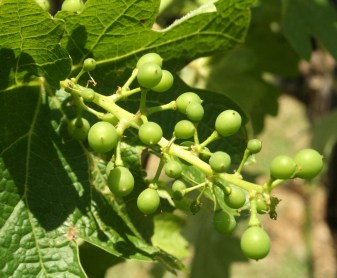
These grape berries are the result of a healthy primary bud. Each bud on a grape shoot consists of a primary, secondary and tertiary bud. Primary buds produce the most fruit but also are the most susceptible to frost damage.
An example is Whitewater Hill Vineyards on Orchard Mesa, where owners Nancy Janes and John Behr pulled out an acre of underproducing vines and planted St. Vincent’s, a French-American cold-hearty hybrid from Missouri.
“We didn’t get very much last year, just enough to make a couple of bottles,” Nancy said. “But this year the vines look great and I think we might get a whole lot more.”
She also said the mild spring means more buds, especially the productive primary buds, survive to produce fruit.
“Some of the newer growers have never had primary fruit before,” Nancy said. “They won’t believe how much fruit they can get.”
But the season hasn’t been without its downside.
A hailstorm ripped through the Palisade area a week ago, reminding Bennett Price of DeBeque Canyon Winery of a similar although more-extensive storm last spring.
“I looked at some vineyards (last year) that were shredded, every leaf ripped off and no fruit left,” Price recalled. “I don’t think this recent one was that bad, but that’s what spring can bring us.”
Price also voiced some concern about powdery mildew, a fungal disease that’s common in more-humid growing regions and is particularly damaging to vinifera grape vines, which include such favorites as Cabernet Sauvignon, Merlot and Chardonnay.
“It’s been such a wet and humid spring, I hope folks are thinking about spraying,” Price said.
Powdery mildew makes plant leaves look as if they are dusted with flour and robs the plant’s nutrients. If serious enough, the disease can kill a plant.
DeBeque Canyon Winery moves – Bennett and Davy Price recently moved their winery and tasting room in Palisade from its former location on South Kluge Street to 381 West 8th Ave. (U.S. Highway 6), the building formerly occupied by the Packing Shed Restaurant.
A new deck greets customers to the tasting room and wine shop. Winemaking facilities will occupy the adjacent building.
Hours are Tuesday through Friday, 11 a.m. until 6 p.m. and Saturday through Monday, 10 a.m. until 6 p.m. Information at 464-0550.
It’s the weather – Late freeze hits Europe’s wine regions

Anti-frost candles burn April 28 in a vineyard in Flaesch, in the Swiss canton of Grisons. The candles provide some protection to young grape shoots from unseasonably usual low temperatures. (Photo: KEYSTONE/Gian Ehrenzeller) Article by Dave Buchanan
Spring brings constant change to Colorado wine country.
We’ve already seen temperatures ranging from the 30s to the 80s, high winds, and daily weather ranging from scorching sun to rainy stretches reminiscent of winegrowing in the Northwest.
One thing we’ve dodged so far is temperatures below freezing affecting grape buds.
Orchardists haven’t been so lucky and several times this spring they’ve been rousted out of bed by the frost alarm going off.
Up to now winemakers count themselves lucky, and if things continue this way we may see a repeat of last year’s bountiful harvest, which was the largest so far seen and came at a time many winemakers’ reserves were running bony following several lean years.
One of the global impacts of climate change seen in fruit- and grape-growing regions from western Colorado to the Rhine and Burgundy is earlier bud breaks, which puts most stone fruits at a severe disadvantage because their young flowers are susceptible to late frosts.
Grapes break bud later than tree fruit, which normally puts grape buds still tightly wrapped and mostly unaffected during late frosts.
This year, however, the shoe dropped in some of the world’s most-famous wine regions, including Burgundy and elsewhere in Europe where a late frost on April 26-27 brought temperature below freezing.
A report issued by the Bourgogne Wine Board (BIVB) said the “extremely rare” frost affected vineyards across Burgundy.
Among the vineyards most affected were the higher vineyards in Chablis and the Grand Auxerrois, the north of the Côte de Beaune (Savigny, Chorey and down to Meursault, Pommard and Volnay) and the Côte de Nuits.
Early reports came too early to provide detailed analysis of the damage but this week its was reported nearly half (46percent) of the vineyards – covering 13,453 hectares (33,234 acres) – suffered damage to at least 30-percent of the young buds with 23 percent of the vineyards reporting losses of more than 70 percent.
The remaining 54% – 15,797 hectares– received less than 30% damage.
There also have been reports of equally severe frosts in the Loire and Languedoc regions of France and in the Abruzzo in Italy.
It’s not like Abruzzo, which borders the Adriatic Sea about midway along the east side of the Italian “boot” and perhaps more remembered for the 2009 L’Aquila earthquake, hasn’t suffered setbacks before.
But like many of the smaller wine regions in Italy, the last 40-50 years have seen a renaissance in Abruzzo, where winemaking dates back to the sixth century B.C.
Large cooperative wineries concentrated in the Chieti province produce vast amounts of wine, which then is sold in bulk to other Italian wine regions such as Tuscany, Piedmont and the Veneto for blending.
The region is famed for its Montepulciano D’Abruzzo, which in the late 20th and early 21st centuries became one of Italy’s most-exported wines.
Going natural: ViniVeri offers the best of the unexpected

Gianluca Piernera of Cantina Ninni in Spoleto was one of many “natural” winemakers sharing their products during the ViniVeri fair in Cerea, Italy. Story and photos by Dave Buchanan
Just pour, don’t filter.
You should never expect whatever you might consider “the normal” when exploring Italy’s wine country.
That “suspension of expectations” was reinforced earlier this month during ViniVeri, a wine fair and tasting at La Fabbrica, an immense and tastefully repurposed brick building in Cerea, Italy, an half-hour or so south of Verona.
The Consorzio ViniVeri promotes the annual event as featuring “wines as nature intended them,” this year’s theme emphasizing diversity and authenticity.
Maybe that should include a bit of audacity, as well.
That this wasn’t an ordinary wine tasting was cemented when one of the first tables poured a cloudy wine from a bottle bearing an imposing handprint and the words “Shake before use.” Read more…
Vino 2016: Italian winemakers looking to increase share in U.S. market
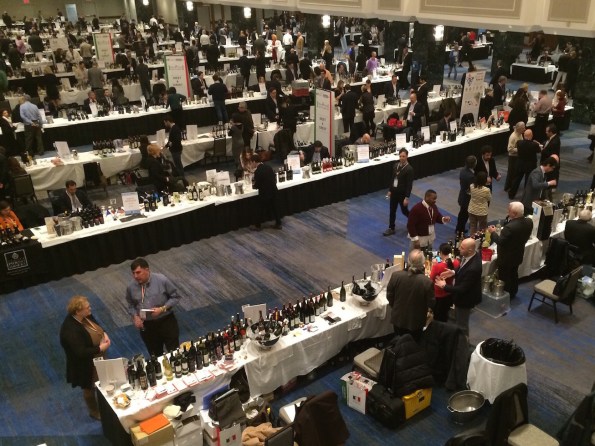
Vino 2016 in New York City offered a two-day immersion into the world of Italian wine. Article and photos by Dave Buchanan
NEW YORK – Romano Baruzzi took a breath and looked out at the sea of faces in front of him.
“Buona sera a tutti, welcome everyone,” said Baruzzi, deputy trade commissioner for the Italian Trade Commission in New York City. “Welcome to the biggest event promoting Italian wines in the U.S.”
It’s opening night for Italian Wine Week/Vino 2016 and the featured panel discussion is titled “On the Bright Side: What’s Ahead for 2016.”
This first-night talk offers the attending producers, importers and the occasional journalist insights into what lies ahead for the next two days of concentrated immersion into Italian wine.
More than 160 Italian wine makers and their representatives are here, some of them plying their wares to almost that many importers and buyers while other winemakers, nearly one-third of those present, simply are seeking someone trustworthy in whom to entrust their wines. Read more…
At the end, VinItaly 2016 offered a sparkling finale

VERONA, Italy – Days three and four at VinItaly are a contrast in energy and attitude. On day three winemakers still eagerly eye the passing throng, hopeful the next person at their stand is that much-awaited importer or buyer with deep pockets, ready to offer the ultimate deal. By day four, however, the pace has caught up with the reality, the mood is subdued and thoughts are trending to home, not of VinItaly.
Many of the winemakers and winery representatives have been running at full speed for nearly a week, with long days negotiating with buyers from around the world and often long nights entertaining (or being entertained by) those same buyers.
When you approach a booth in search of a sample or two, the edge of fatigue shows, the people ready to grab their bags and go.
“Yes, it’s been a long week,” said the woman standing behind a clear, ice-filled bucket, Franciacorta bottles splaying out like foil-capped roses. “Because you know we’ve been here before VinItaly and then it was constant pouring, pouring, pouring from open to close.
“It will be good to be home.”
But VinItaly, even with its hair in curlers, still is a marvelous place to find new wines and be surprised by old favorites. Read more…
Sometimes, it takes little courage to survive VinItaly
 VERONA – Day One for VinItaly 2016 and it’s happy half-century, VinItaly. Under sunny skies and mild temperatures, the 50th edition of the world’s largest wine fair opened Sunday with Italian president Sergio Mattarello among the thousands of enthusiastic wine lovers in attendance.
The opening day was a Sunday, which may account for the late-arriving attendees, but you still found the expected boisterous jam around many of the stands. Of course, having the President here, with his large contingent of security men and advisors, simply added to the general hysterics.
If you’re experienced at VinItaly, negotiating the crowds is no problem and if you are particularly fortunate you’ll find a friendly booth where you might escape for a few minutes to rest and learn about a new wine region or more about an old fave.

Susannah Crociani holds a bottle of her Vin Santo, a sweet wine made only in special vintages. Susanna is one of the handful of women winemakers in Italy.
I wedged myself into the tiny space occupied this week by winemaker Susanna Crociana of Montepulciano, who likes to say she was “nati en mezzo a botti e vigneti,” born among the barrels and vines.
Susanna makes several bottlings of Vino Nobile de Montepulciano, ranging from a lighter, everyday Rosso de Montepulciano IGT to the Riserva DOCG and the highly coveted Il Segreto di Giorgio. The latter is named after Susanna’s late brother Giorgio, who took over the winery following the death of their father but who in turn passed away in March of 2006.
His passing was particularly unfortunately in that he had just developed a special blend only to pass away before the first vintage was released. Susanna released that vintage in 2008 and now each year she releases the new vintage on Feb. 13, Giorgio’s birthday.
Susanna’s wines are made with the traditional Vino Nobile blend of 80 percent Sangiovese, 10 percent Canaiolo Nero and 10 percent Mamalo, an indigenous red grape that adds a rose-like bouquet to the wine. All of the wines are lush, deep in color and flavor and immediately approachable, although the 2012 Riserva still needs a year or two to blossom.
Women winemakers aren’t common in Italy and Susanna’s story stands out because she is running a successful business by herself, without parents or siblings for support or even advice. It’s no wonder her stand at VinItaly features four large murals displaying the words “Courage,” “Passion,” “Heritage” and “Time.”
We might have talked more but Susanna had an appointment with an importer and I was off to seek another quiet refuge in the buoyant chaos of VinItaly.
 Wine Openers